

What To Do If Your Landscape Beds Are Infested With Crabgrass
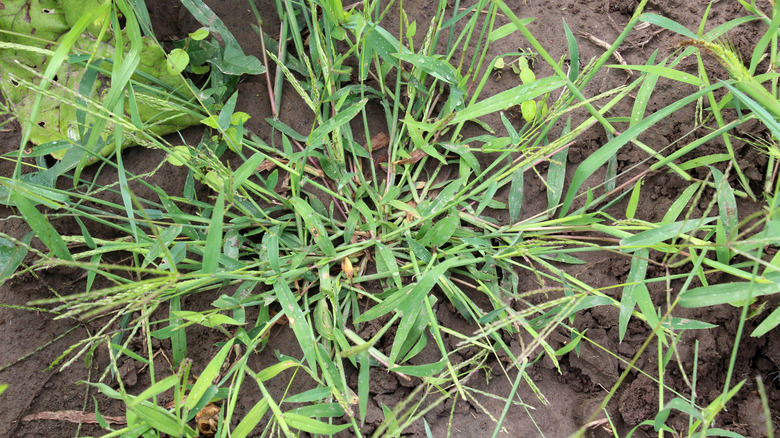
When people think of crabgrass, they are usually thinking about the dread of finding it proliferating in their lawn. Crabgrass isn't just a lawn problem, however — this weed is perfectly happy growing in garden beds as well. The first step to tackling any problem is to understand it. That, of course, begs the question: What exactly is crabgrass? Crabgrass is an annual grass that emerges each spring and dies back in the fall after the first frost. It is a tricky weed to kill, in large part because it is so prolific — just one plant can produce more than 100,000 seeds per year. That's a lot of new crabgrass plants come spring. Fortunately, it is possible to control crabgrass in your garden, especially if you work with its natural growing patterns. Because it is an annual and not a perennial like many weeds, existing plants will die in the fall regardless of what you do to them. The best strategy? Shift your focus to the seeds. This is done by using a pre-emergent, a weed killer, an herbicide, or by hand-pulling.
Though it won't eliminate the mature crabgrass in your garden today, one of the best ways to keep crabgrass from taking over your yard is to use a pre-emergent. Pre-emergents work by tackling the root of the problem — those pesky seeds. It won't kill the seed itself, but it will kill the new seedling that germinates from it. Timing is critical, as pre-emergents don't stay active in the soil forever. Because crabgrass germinates when soil temperature reaches 55 degrees for three to five days, you will need to apply your pre-emergent before this happens. Sometime around April 15th is usually the right time frame, but you'll need to account for the climate in your particular area.
Controlling mature crabgrass in garden beds
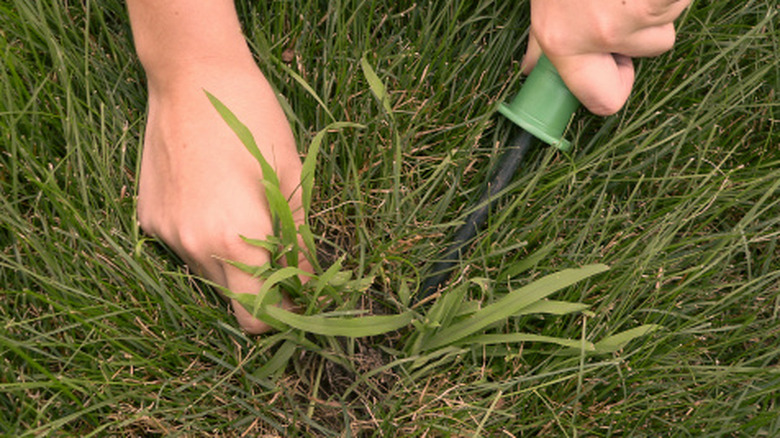
The best way to get rid of crabgrass without killing other plants is to pull it out by hand. It's not the advice most people want to hear, of course, but hand pulling is incredibly effective and almost completely eliminates the risk of killing your lawn or a prized perennial. For best results, make sure you pull it all out before it goes to seed. That way, you aren't just pulling out current plants; you are directly reducing the future generation as well. Hand pulling works best when the ground is soft just after watering or a good rain.
You can, of course, use weedkiller to control your crab grass problem. It's a bit tricky to kill with weedkillers because it is a type of grass, and most selective herbicides target broad-leaved plants. Fortunately, you should have little problem spot-spraying a selective grass-killer like fluazifop or sethoxydim on crabgrass growing in a garden bed, so long as you are careful when spraying near the edges of your lawn.
The other option (and perhaps the more effective route) is to use a non-selective herbicide. This type of weedkiller will kill any plant it touches, so caution is needed. If you choose to spray this type of weed killer, try placing a cardboard box or something similar over the plants you want to keep to protect them from the herbicide. As with hand pulling, this method is most effective if you do it before the crabgrass has a chance to go to seed.