

Bye Concrete — Homeowners Are Bringing Back This Retro Brick Yard Trend
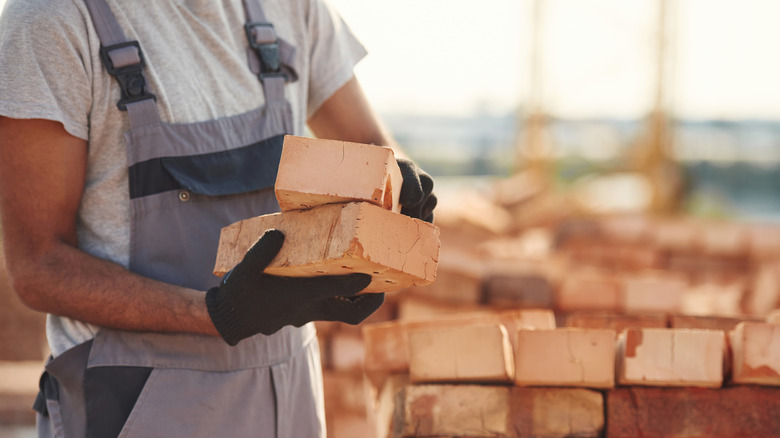
The types of backyards that many of us grew up in came into being as part of the suburban expansion of the United States following World War II. The lifestyle shift made places to play, rest, and gather necessary. The patio is a natural extension of this, creating a level, solid surface for outdoor furniture, plants, and cooking equipment. While concrete has been the go-to patio material for quite some time, today's homeowners are bringing back retro brick patios in a major way.
The main reasons bricks are back as a patio paving material is because they offer things that most concrete doesn't: texture, warmth, and character. Designer Katie Kiser tells Veranda, "I'm seeing clients moving away from the large-scale architectural pavers toward smaller-scale, rustic materials, such as brick pavers." This aligns with the more general trend of ditching concrete for retro materials like stone pavers.
Homeowners are looking to escape the cool grey of concrete, and bricks offer the timeworn look of natural clay. Terracotta, sandstone, light brown, and beige colors are all making their way back to patios because of how well they connect with the surrounding landscape. Bricks also bring a level of history and tradition, while still allowing homeowners to get creative with their use.
Bricks make for creative, long-lasting patios
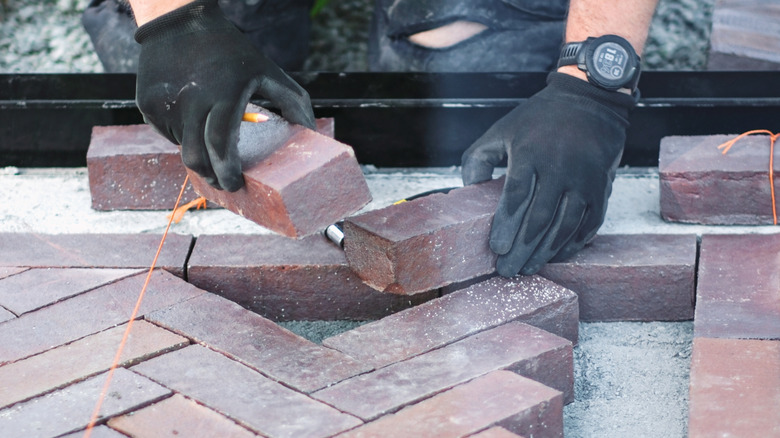
Since they are individual units, bricks can create timeless patio surfaces by using a number of different patterns. Some traditional ones, like basketweave or herringbone, create visual interest while still allowing for geometric uniformity. You could also come up with a pattern that is completely your own, thereby creating a space that is totally unique to your home.
Another benefit to using bricks is that they are very easy to maintain. A broken one can be easily replaced, and a sinking brick paver can be fixed with a screwdriver and leveling sand. With concrete, simple cracks or sinking could become larger issues that would require the whole slab to be taken up and re-poured.
One downside for bricks as an alternative to concrete is the price. Per square foot, bricks cost between $14 to $24 to install, whereas a concrete slab will typically cost $6 to $12. Don't panic, however. Facebook Marketplace is a great, yet often overlooked place to find affordable brick pavers. If you have the budget for it, you can also check out some brick reclamation or historical brick companies that offer bricks recycled from old builds. Bricks also have a potentially limitless lifespan, whereas concrete averages about 30 years even when properly maintained.