

Why You Should Spray Vinegar On Your Kitchen Sink
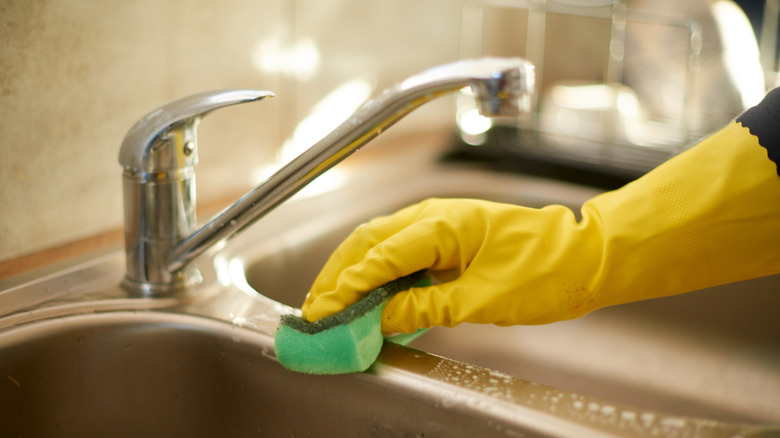
Is your kitchen sink lacking its usual luster? The solution to bringing a shine back to your dirty sink (and removing stubborn odors in the process) might already be hiding in your pantry. Affordable, available, and easy to use, white vinegar is the key for tackling grime, grease, and dirt buildup in the kitchen sink.
Vinegar consists of diluted acetic acid, which many DIYers find helpful in breaking down stubborn grease buildup and making it easier to wipe away. The acidity is particularly useful for removing ugly, chalky hard water stains resulting from minerals like magnesium or calcium. It's able to neutralize bad alkaline odors as well — so if your kitchen sink tends to trap smells from grease and stuck-on food, a quick vinegar spray could help take care of it.
Before using vinegar to freshen it up, consider your sink's construction. While white vinegar is a handy cleaning tool for every room in the home and is generally safe for installations like stainless steel, enameled cast-iron, or fireclay kitchen sinks, it's not meant for all materials. You shouldn't use it for cleaning natural stone counters like quartz, granite, or marble counters, as it could react with the mineral content and etch the surface. If you have an integrated sink — one that's made from the same material as your counters — you may want to reconsider using vinegar to clean it.
Safely using vinegar spray to clean your kitchen sink
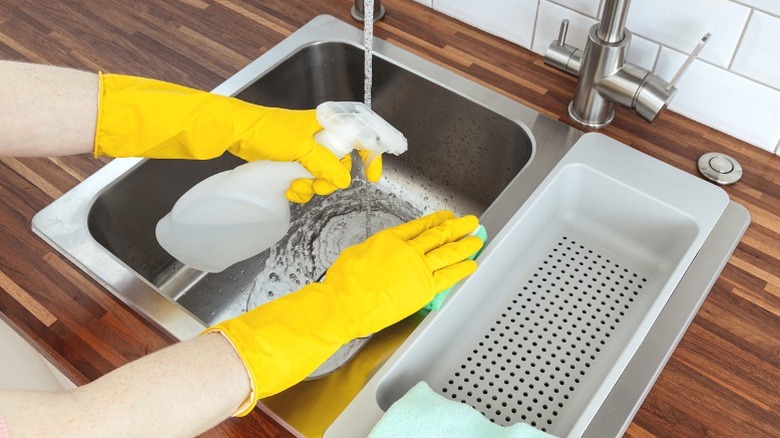
To use vinegar in your kitchen sink, simply grab a spray bottle and fill it with a 1:1 solution of water and white vinegar. Spray it thoroughly inside your kitchen sink, and let it sit for around 10 minutes. Then, scrub your sink with a sponge before giving it a good rinse with hot water. Repeat the process until your sink looks brand new again. You can also spray your kitchen faucet with the vinegar-water solution and wipe it down to remove hard water stains. Spraying your drain plugs and garbage disposal covers in diluted vinegar could help clean any emergent mold, mineral buildup, or odors from them, too. Just be sure to rinse any lingering vinegar spray afterward if you're using it on a stainless steel sink, as prolonged exposure may eventually cause some pitting and surface dulling.
If you have countertops that are sensitive to vinegar but want to clean your metal or ceramic sink with the stuff, take some precautions. Don't apply the spray directly, as some vinegar might land on your counters. Instead, spray the solution into a cleaning rag or sponge, and carefully wipe down your sink with it, making sure not to spread any vinegar onto your countertops.
Use vinegar whenever your kitchen sink needs a deep clean. Or, give it a few sprays as soon as you start to notice food buildup and odors. Just be sure to avoid spraying your sink if you've used drain cleaner recently, as it's one of many ordinary cleaning products you should never mix with vinegar.