

How To Keep Birds Off Your Porch Lights & Rails Without Spikes Or Decoys
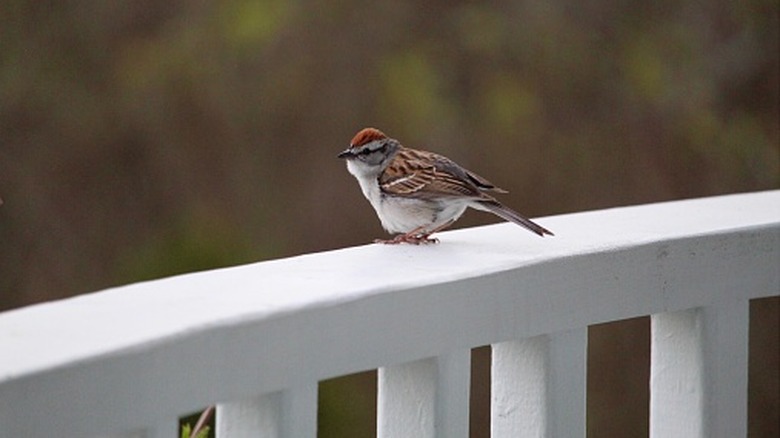
If you're a bird lover, you probably get excited when you put a bird feeder in your garden and spot a new species hanging around. Not only are birds fun to watch, but these feathered friends also provide a wide range of benefits on your property. They help with pest control around your home by eating a variety of insects and other pests. They also pollinate flowers and spread seeds, helping your garden grow and thrive. As helpful as they are, birds can also be annoying when they nest on your porch lights and land on patio railings. Decoys and spikes are one way to deter them from getting close to your home, but bird netting or nets is another way to help them keep their distance.
When birds build their nests on porch lights, it poses a serious fire hazard. Nests can also cover security lights that help keep your home safe and light your way in the dark. The problem is that birds like building on top of lights because the heat from the bulbs keeps their eggs warm. If they perch on your rails, they leave behind waste. Not only does this make a big mess, but it can also cause corrosion and rust on metal rails and eat the paint and varnish on wood.
Bird netting is made from a wide variety of materials, including metal, plastic, and nylon. It's typically sold in sheets or rolls that can be cut or layered to fit. When you install netting, it creates a simple mesh barrier that stops birds from building nests on your porch and settling in areas of your home and garden.
How to use bird netting and nets to keep birds off your porch
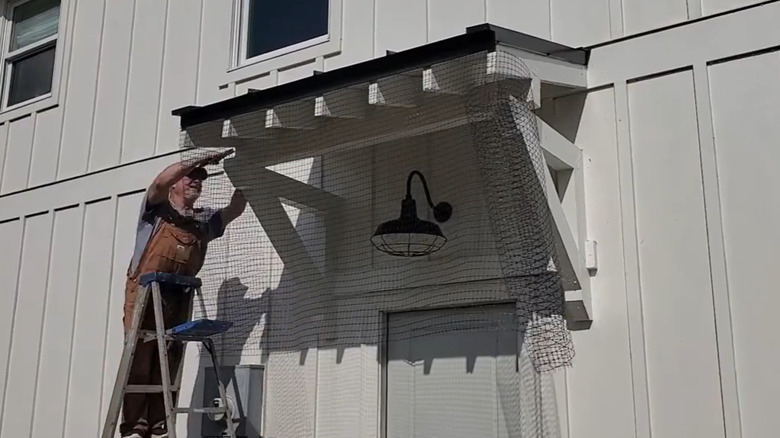
Before installing netting, inspect the area and gather the correct materials. To cover porch lights, you'll want to choose a nonflammable net made from stainless steel or wire. Nylon is a popular choice over railings and vegetation because it's lightweight and easy to install.
Measure your fixtures and cut the metal mesh to fit. Secure it tightly around the base using heat-resistant clips. For railings, to stop birds from perching on the railing, enclose it in netting extending from the top of the porch to below the railing. If you are looking to stop birds from going through the railing, drape the netting over the banister and secure it on the bottom with zip ties, staples, or adhesive hooks. Make sure the netting is pulled taut so birds can't slip through the gaps or edges.
Always check for recent activity before installing bird netting. There are over a thousand birds protected under the Migratory Bird Treaty Act and the Endangered Species Act, like the European Robin and the Black-Backed Oriole. You can't destroy these birds' nests, tap the birds, or destroy them, or you could face up to $250,000 in fines.
If you find nests on your porch and you're unsure how to tell them apart, check with the local wildlife authorities to see when and if you can remove them. In most cases, you'll need to wait until these birds migrate to warmer climates in cooler months. For this reason, it's a good idea to install netting in late fall or early winter or before birds return in the spring, to ensure your porch is bird-proof before they come back.