

Skip WD-40: 10 Better Ways To Keep Grass From Sticking To Your Lawn Mower
We may receive a commission on purchases made from links.
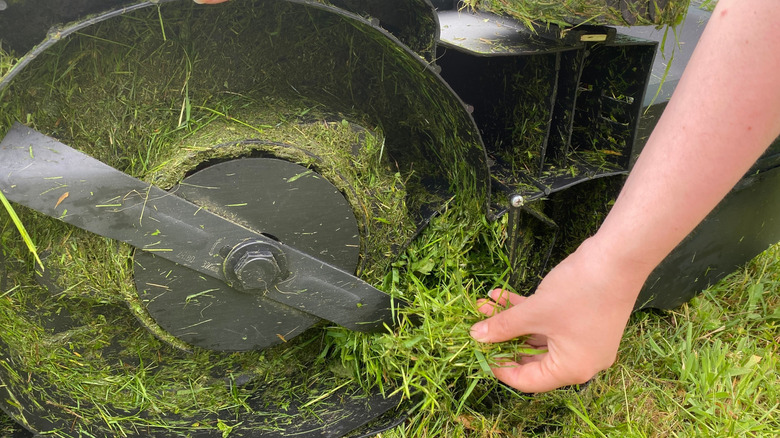
Mowing the lawn feels great until you find sticky, stubborn grass clippings stuck to your lawn mower. They not only look unsightly but also cause the lawn mower to rust quickly, thereby reducing its lifespan. Sure, you could use WD-40 to keep grass from sticking to your lawn mower, but this lubricant tends to attract dust, and it is also flammable. There are far better ways out there to keep grass off your lawn mower. Take, for instance, mowing when grass is dry or using a mower-specific non-stick coating. Other than that, you can also use something as simple as non-stick cooking spray to keep grass from clogging your lawn mower deck.
It is also important to understand why grass sticks to the lawn mower in the first place. The main culprit is water. Grass is about 80 to 85 percent water, and once grass is clipped, that water comes out and makes everything sticky, causing the grass clippings to cling to the mower. The problem gets even worse if your mower has worn paint or rust. Their rough surfaces give wet clippings something to grab onto. So, if you are constantly facing an issue of grass clippings sticking to your lawn mower, check its condition, too.
Mow only when the grass is dry
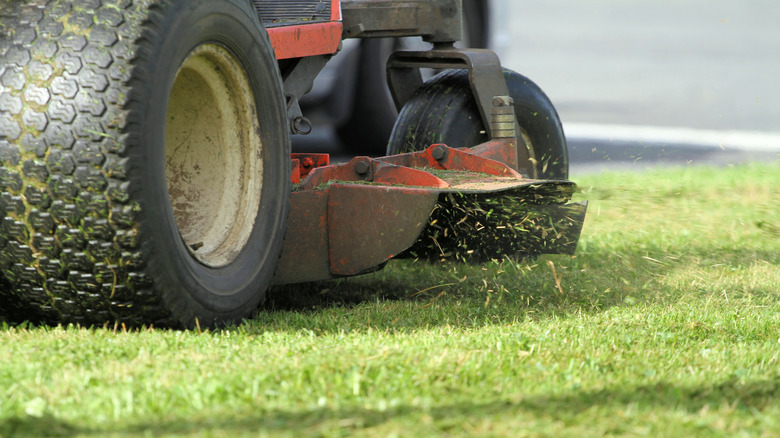
Since moisture is a big reason why grass sticks to a lawn mower, you should mow when the grass is dry. This will not only help avoid wet clippings from sticking to each other and the lawn mower, but also prevent their buildup underneath the mower deck and around the blades. This is why you should also avoid mowing the grass early in the morning when the grass is wet with dew or immediately after it has rained. Instead, you should wait for the grass to dry and then mow your lawn.
Mow more frequently and follow the one-third rule
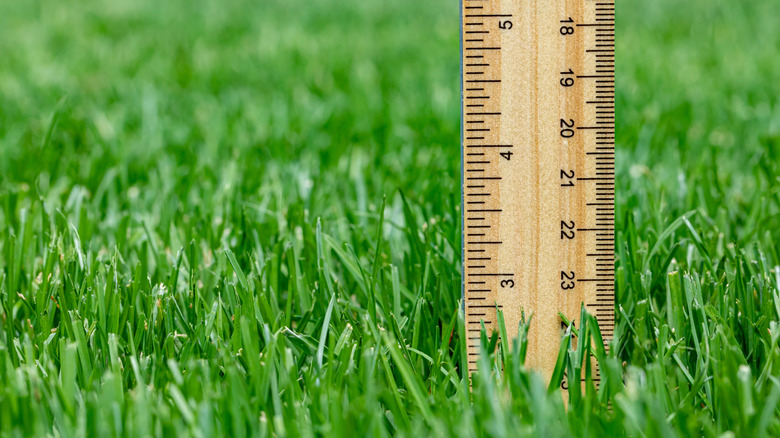
Another simple way to keep grass from sticking to your lawn mower is to mow grass more often. That is because longer and heavier grass clippings are more likely to collect under the lawn mower or stick to it. So, don't let your grass get too tall before deciding to cut it. Just make sure not to remove more than one-third of the grass height at a time. It is one of those common lawn mowing mistakes to avoid at all costs if you want a lush green yard.
Mo-Deck non-stick spray can also help keep grass off the mower
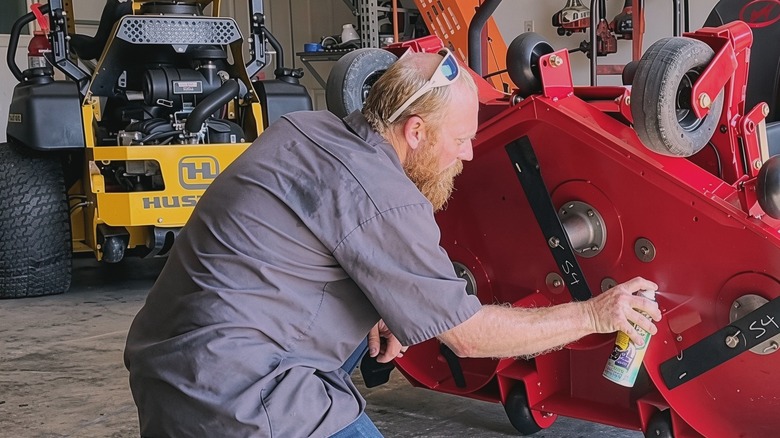
If you want a more purpose-built way to keep grass from sticking, a mower-specific product such as Mo-Deck Non-Stick Spray is worth considering. It uses a polymer coating to make the mower deck and blades slicker. This can make it harder for clippings to cling and pack onto the surface. Just make sure that you start with a clean, dry mower rather than spraying over old grass buildup if you want the best results. Also, apply a thin, even coat to the deck and blades in a well-ventilated area.
Cooking spray can also keep grass off the lawn mower
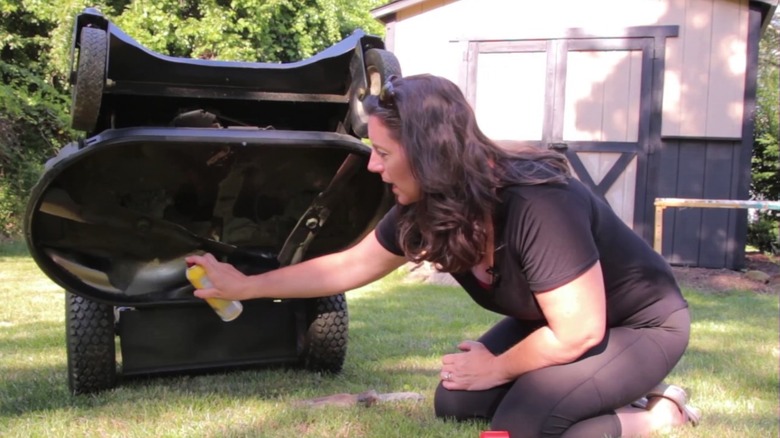
If, however, you do not want to spend money on purpose-built products and want something cheaper instead, an ordinary cooking spray can also help keep grass off mower. For instance, you can use plain canola and vegetable oil sprays. These will leave a slick coating on the deck and blade, making it harder for clippings to cling to the surface. Just make sure the underside of the mower is clean and dry before applying it. Also, remember that the cooking spray does not last as long as a mower-specific coating.
Graphite dry lubricant also stops grass from sticking
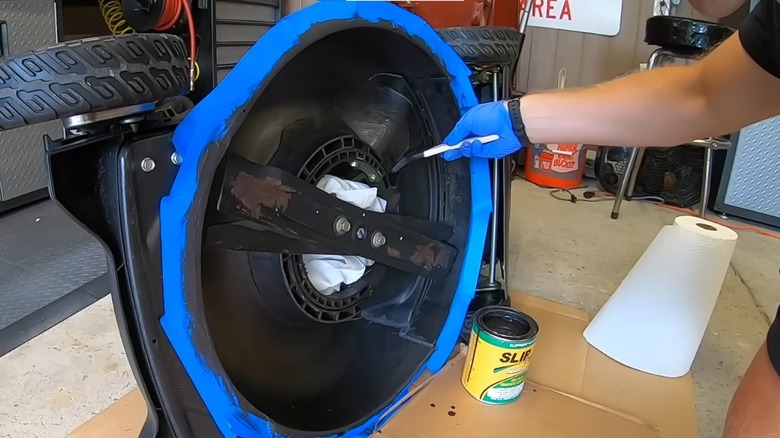
For a longer-lasting option, you can coat your mower deck with a graphite dry lubricant such as Slip Plate. Unlike oily sprays, graphite dries into a slick film that does not stay wet. This also makes it less likely to attract dirt and grime. Before applying, thoroughly clean your deck of any oil residue or debris. Also, make sure that you protect the belt and other areas you do not want coated, then apply a generous, even layer and let the coating cure fully before mowing.
Keep your lawn mower blades sharp
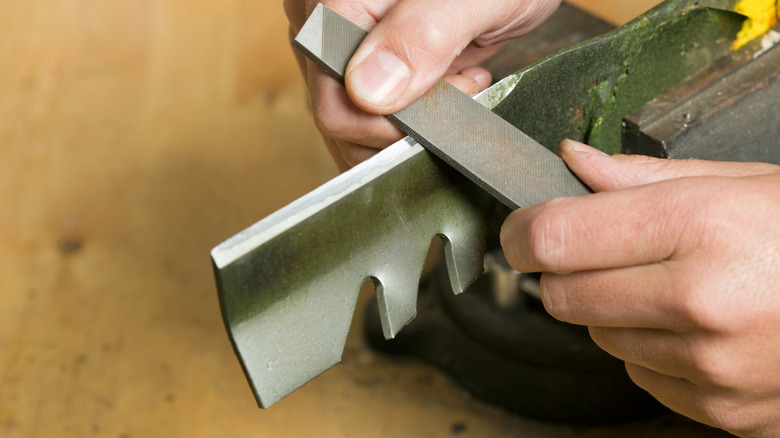
Dull blades can also cause grass clippings to stick to the mower. That is because sharp blades slice through grass cleanly, whereas dull blades tend to tear and shred it instead, and that rougher cut can produce stringy, moist clippings that are more likely to bunch together and cling to the mower deck. Dull blades can also struggle more with thick grass. This can also cause the grass clippings to collect underneath the mower. So, make sure to check your mower blades regularly and sharpen your lawn mower blades whenever they feel dull.
Run your mower at full throttle
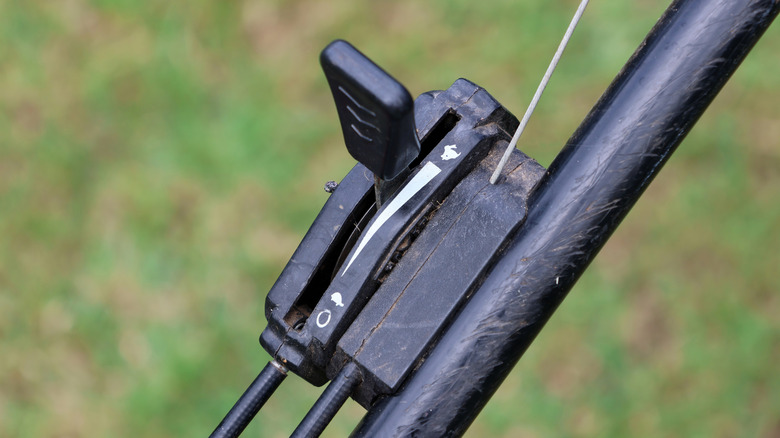
Running your lawn mower at full throttle is another neat way of keeping grass clippings from sticking to it, and clumping it. At full throttle, the blades spin faster, which creates stronger airflow. This helps move cut grass out of the mower more quickly. On the other hand, if you run the lawn mower at a lower throttle, the blades might not generate enough airflow to lift and remove the grass clippings, and they will keep piling up. Just remember that throttle speed and ground speed are not the same thing.
Slow down your ground speed in thick or wet grass
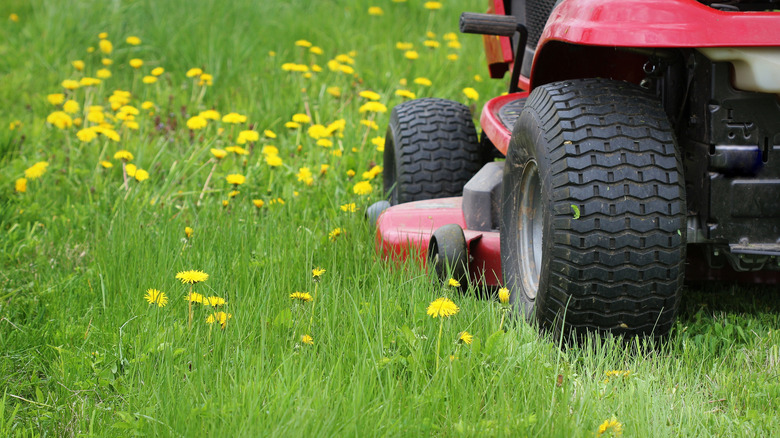
Another neat way of preventing grass from sticking to your lawn mower is to slow down your ground speed, especially when you are over thick or wet grass. That is because moving too quickly forces the mower to cut and discharge more grass than it can handle at once. This can lead to buildup and clogging. So, make sure you are not overspeeding your lawn mower when cutting the grass, as this will give the blades more time to cut the grass and push the clippings out of the deck.
Take narrower passes when mowing your lawn
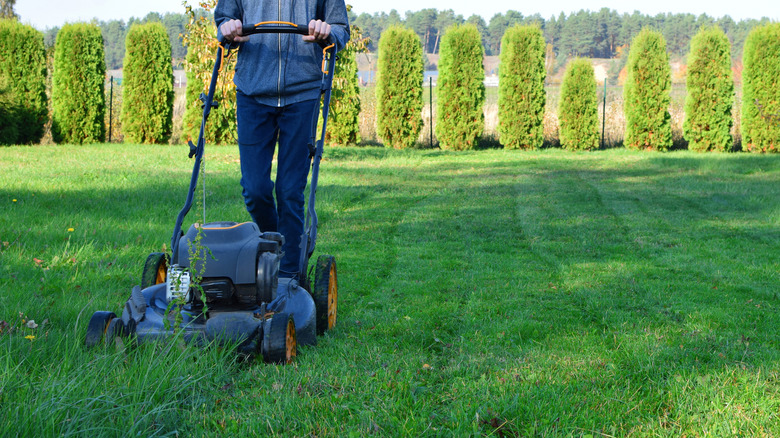
Moving too quickly when you're mowing may feed a lot of grass into the mower at once, which will not allow the blades and airflow enough room to move the clippings out properly. This, however, can be avoided by making narrower mowing passes. While it may seem like more work, the payoff is better for your lawn mower — and your lawn. Also, keep in mind that you should not mow your lawn in a repeating pattern all the time. It is harmful to the grass.
Raise the mower deck height
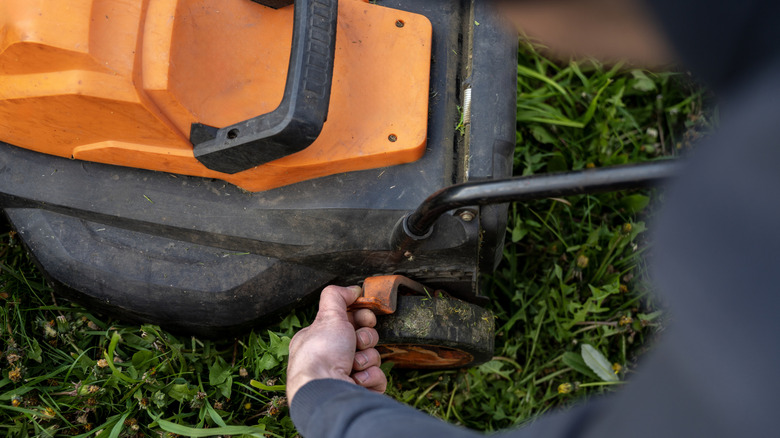
Raising the mower deck can help reduce grass buildup. This is especially useful when the grass is tall. Don't try to cut the grass too short in a single pass, as it will push the mower to handle a much larger amount of material at once. This again makes clogging and sticking more likely. A higher deck setting, on the other hand, removes less of the grass blade in one go. This means there is less material moving through the mower at one time, and it will escape easily, making sticking less likely.