

How To Identify A Brown Recluse Egg Sac In Your Home Or Yard
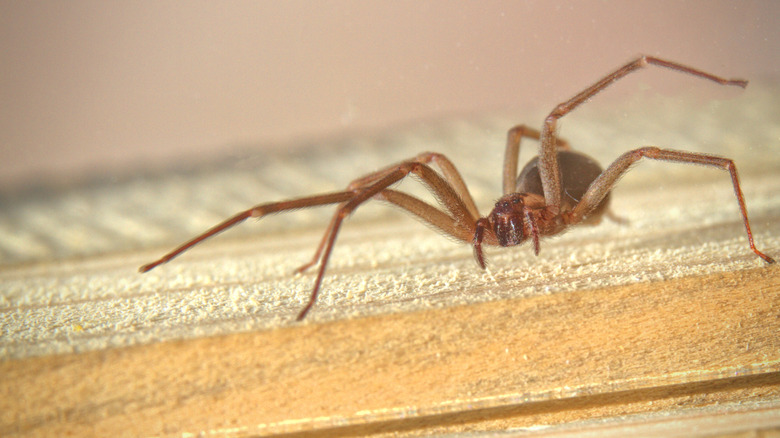
Dealing with occasional spiders around your home and yard is normal, but you also want to take measures to prevent wider infestations indoors. The situation is perhaps more critical with venomous spiders, such as brown recluses. While the brown recluse spider will only bite humans and pets when threatened, infestations in and around your home can theoretically increase such accidental encounters. To that end, it may not be enough to eradicate brown recluse spiders by identifying the adults alone. Identifying their egg sacs can also be key in determining which type of potential spider problem you might have. You may be able to tell a questionable egg sac belongs to a brown recluse based on its physical features, as well as the time of year and location you've stumbled across it.
Unlike wolf spiders and other spider species that may be more widespread across the country, brown recluses are primarily found in the southcentral and midwestern regions of the United States. A brown recluse egg sac is a round, off-white entity that looks like silk, and is only ¼ of an inch in diameter. While small in size, brown recluses can deposit between 40 and 50 eggs in each sac, per the Oklahoma State University Extension. Also, while brown recluses don't spin webs to catch prey like orb-weaver spider webs can, they are still capable of constructing webs to protect their egg sacs. Brown recluse spider webs are small and white, and generally cover the egg sac only. It's also a much different practice from wolf spiders, who carry their egg sacs on their bodies.
Where (and when) you're most likely to find brown recluse egg sacs
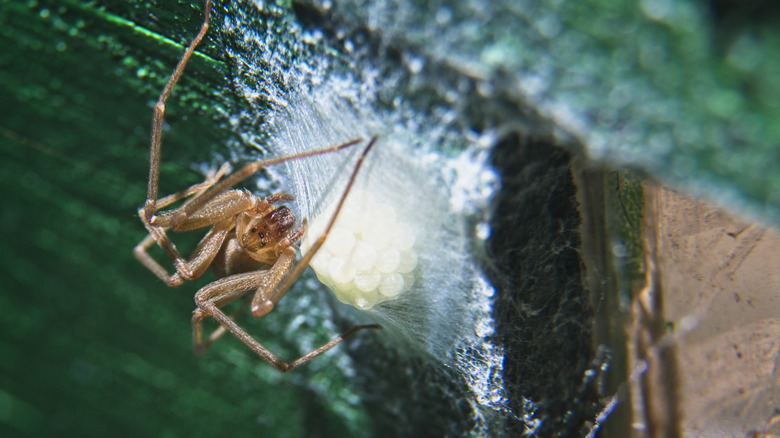
You're most likely to find brown recluse spider egg sacs in dark and secluded spaces. They're typically found in the adult spider's hiding spots, such as attics, basements, closets, and other areas people do not enter very often. These spiders also tend to favor old boxes and piles of clothing or debris. Outdoors, brown recluse spiders may hide out and place their egg sacs in piles of wood, rocks, or leaves. With this in mind, it's always a good idea to wear heavy duty gloves when moving any debris in your yard or home to protect yourself against accidental spider bites.
While brown recluse spider mating can occur anywhere from late winter to mid-autumn, most lay their eggs during the summer. You may even spot shed skins from spiderlings near hatched egg sacs. According to the Mississippi State University Extension, it can take between 9 and 14 months for these spiders to reach adulthood once they've hatched from their eggs. While all brown recluses have notable features, such as six eyes and fiddle-shaped markings on their backs, adults are also darker brown than their younger counterparts.
Since these types of spiders are known to cause heavy infestations inside buildings, you'll want to keep an eye out for both adults and possible egg sacs year-round. A suspected egg sac can be carefully vacuumed and disposed of outdoors. Once egg sacs are removed, you can prevent future infestations by vacuuming and removing clutter from around your home on a regular basis. You should consider contacting a pest control expert if you find brown recluses in your home or yard, and you suspect a wider infestation.