

Brown Recluse Spider Webs Look Different: Here's How To Identify One In Your Home Or Yard
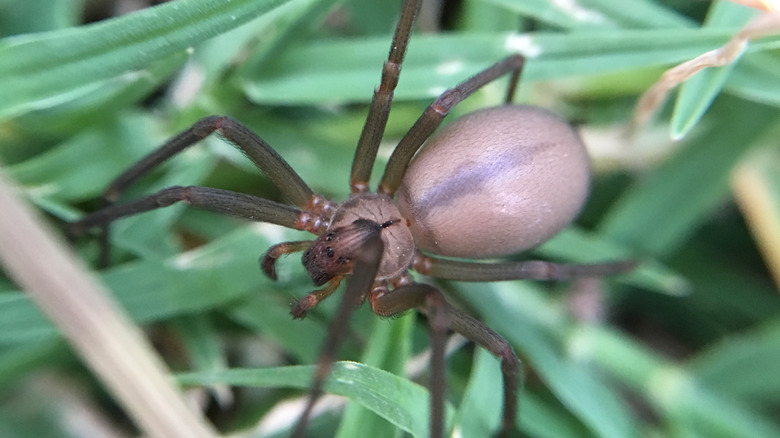
Most of us picture spider webs almost as works of art with their symmetrical lines and intricate, detailed weaving, but you might not recognize those of a brown recluse. The eye-catching, ornate webs you see in open areas will not belong to these shy spiders. Brown recluse spiders (Loxosceles reclusa) build messier structures with no clear shape or design. Their silky threads don't have a pattern, but are laid out in every direction. When you see a cobweb-like structure that's tucked away, it could be an indication that you might find a brown recluse spider in your home or yard. As these spiders first spin their strands, they are extra sticky and a very white color. Eventually, dust accumulates on the threads, giving the web a more grayish tone and dulling the stickiness.
The reason for this difference in appearance is due to the way that brown recluse spiders use their webs compared to other species. The flashy spider webs you're used to seeing over your porch bannister or in your living room are made for catching prey. Brown recluse spiders hunt for their food. Instead of using their web as a trap for other insects, these spiders use them for nesting, hiding, and rest. This is why the webs are sometimes referred to as retreats. While brown recluse spiders are not aggressive and tend to avoid humans, they will bite if disturbed. Since more serious reactions to their venom require medical attention, it's crucial to take a cautious approach whenever you identify a web around your property.
Identifying brown recluse webs and where you'll find them
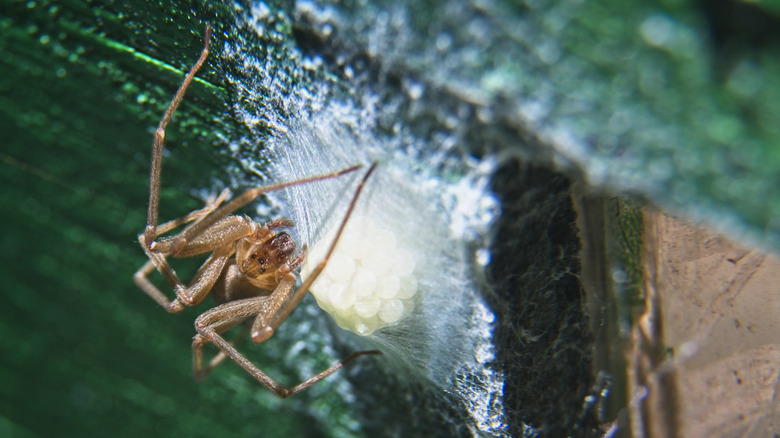
The location of a brown recluse web will also determine how it looks. Indoors, these venomous arachnids prefer to construct flatter webs. When they live outside, their webs may offer a bit more protection. If you find brown recluse spiders in your yard, outdoor webs often feature a tube-like structure with denser webbing in crevices. This provides a place for the recluses to hide and also offers protection during cooler weather. Since these spiders build their webs as they walk around, it can sometimes almost look like a blanket shape. Their egg sacs are constructed of the webbing and will often be built onto the structure.
Unlike a lot of other spiders, the brown recluse would rather make its web in a hidden, undisturbed area with low light rather than an exposed spot. These webs are generally found close to the ground in spots like corners, basements, attics, crawlspaces, or neglected closets. They will also hide in human belongings, such as shoes, clothes, boxes, or between your furniture and the wall. Outside, areas like sheds, exterior siding, garages, rock piles, or stacks of wood make perfect hiding and nesting spots.
What to do if you find a brown recluse spider web
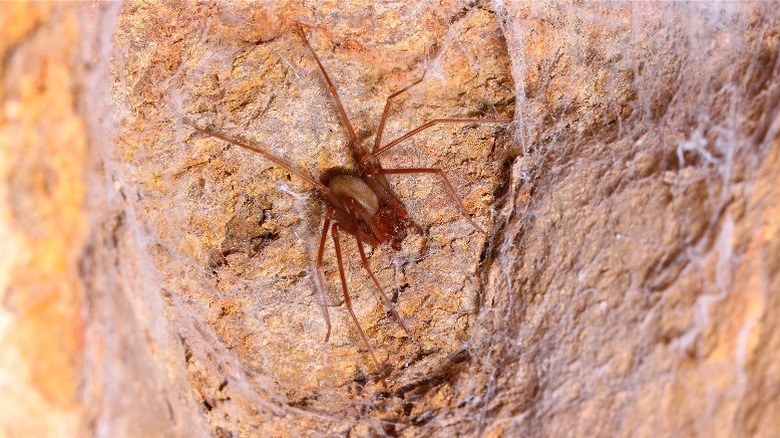
While seeing a spider or its web outside is one thing, finding them in your home can be terrifying. Luckily, there's a super-simple way to keep brown recluse spiders out of your home and deal with their webs. Regularly vacuuming and cleaning your home eliminates those dusty, untouched areas that brown recluses love. If you see one of these spider webs (or even the spider itself), grab your trusty vacuum. Simply suck up the nest as if it was a cobweb, taking the spider along with it. Make sure to empty the vacuum outside or throw the bag away in your outdoor trash. This is a good method for occasional sightings, but if you have an infestation, you'll need a professional pest control expert.
Outdoors, you can discourage brown recluses by filling any cracks or gaps around your home and removing wood, rock, or debris piles where the spiders might spin their nests. When doing yard work or cleaning up outside, wear gloves in case you accidentally disturb the spiders. Keep kids away from structures or spots where you've identified brown recluse webs and other neglected parts of your yard and garden.