

What It Means When Bench Grinder Sparks Fly Upwards
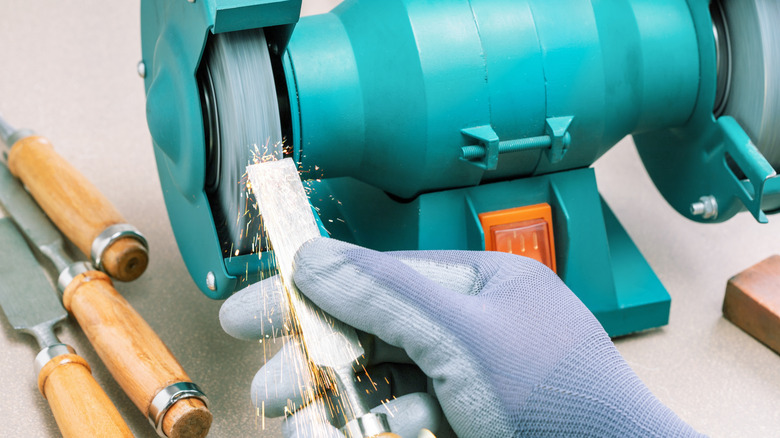
If you use bladed tools on the regular and want to keep them sharp, you're going to need a bench grinder. Different from an angle grinder, which is a hand tool that can be used for cutting, grinding, or easily sharpening lawn mower blades, a bench grinder is a heavy power tool connected to your workbench. It consists of a motor turning two wheels made out of abrasive grains. Any time the metal comes into contact with the bench grinder wheel, sparks are produced. But what does it mean if those sparks start flying upwards?
Sparks are created when small metal particles ignite in high heat, such as when welding or using a bench grinder. When a blade is dull, the sparks generated will be directed downwards behind the wheel guard and towards the floor. As the edge of the tool sharpens, however, the sparks change direction and begin to shift upwards.
The reason this occurs is because the blade has changed. Sharpening with a bench grinder involves taking away sections of the metal and thereby making the blade thinner. As this happens, the top edge of the blade forces the sparks to go upwards because they can no longer be pushed downwards due to the thinner edge and less metal being in contact with the grinding wheel. When you see this happen, it means it's time to take the blade away from the wheel and check for sharpness.
Keep safe while sharpening
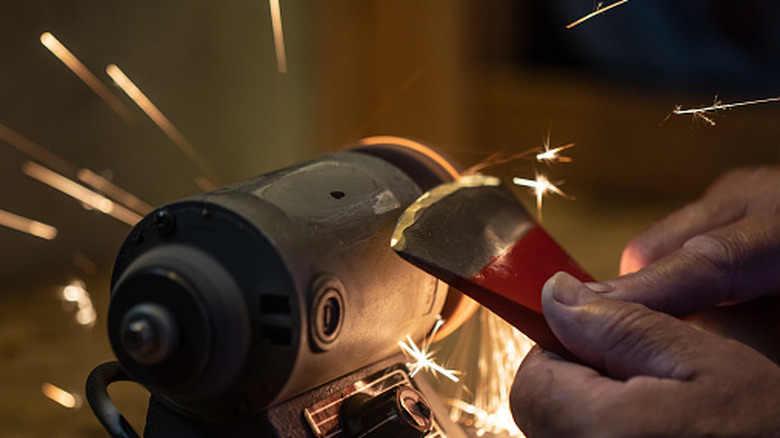
Sharpening tools with a bench grinder, whether it's the chisels from your essential carpentry tool kit or your favorite drill bit set, you need to be careful when you see those sparks fly upwards. Since the creation of sparks comes from the contact between the spinning wheel and the metal blade, the energy generated is going to create a lot of heat. When those sparks start to fly, you need to be careful — not just for your safety, but for the sake of the tool you're sharpening.
It's vital to wear basic safety equipment, like gloves and eye protection, when using a bench grinder. You'll also want to make sure your grinder is not set up near anything flammable, such as wood shavings or any kind of fuel. The heat generated by the wheel itself also makes it very hot, so be sure not to touch it after using it.
As upwards-flying sparks can tell you that the tool is sharpened, you need to make sure you take the tool off the grinder at the right time. The thinner metal can very easily overheat, which damages the internal structure of the metal. You can remedy this by keeping a bucket of water nearby and occasionally dipping the blade in it to keep it from overheating. Once you have an even, sharp edge, your tool is ready to use.