

Cellar Spider Webs Look Different: How To Identify One In Your Home
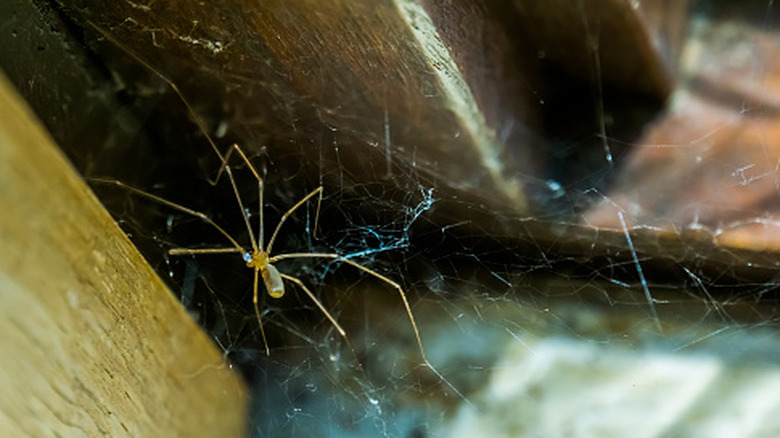
If you're playing I spy with mysterious spider webs in your home, it might be time to play detective and determine just what you're dealing with. Knowing how to identify the spider webs around your home and yard can tip you off on what to do about the spiders. Out of all the spider species in the world, one of the most common types of spiders you'll find inside your home is the cellar spider.
While many people call cellar spiders daddy longlegs, the term is actually a common name for several different types of critters, including cellar spiders, harvestmen, and even crane flies, a type of insect. Harvestmen are part of the arachnid family, but they don't spin webs or contain venom and tend to live outside. So if you see a web and a long-legged spider, it's more likely to be a cellar spider. But to confirm that the eight-legged creature in your home is a cellar spider, it's important to know other identifiers besides their webs, as not all spiders spin webs, and not all long-legged spiders are cellar spiders.
Ways to identify a cellar spider
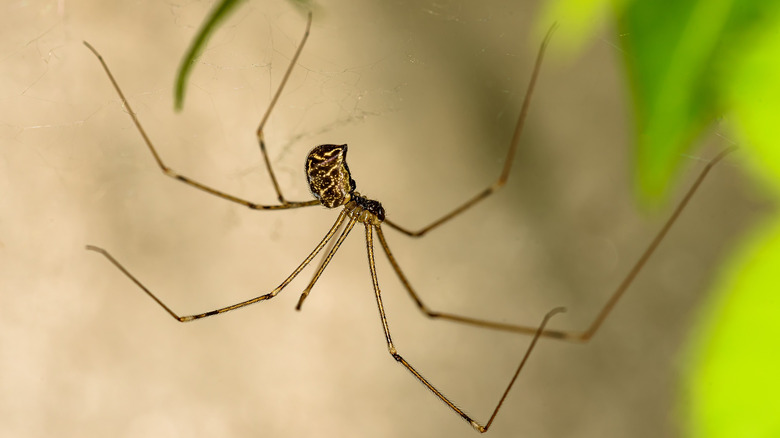
One of the most obvious ways to identify a cellar spider is by its location. These spiders seek out moist, dark habitats, earning them their name. From basements to cellars to barns to that spare guest bathroom, if you see a long-legged spider and a messy web, chances are it's a cellar spider. Common physical features include a tiny, pale yellow, light brown, or gray body ranging from 2 millimeters (mm) to 8 mm long and thin, long legs ranging from 9.5 mm to 50 mm, depending on the species of cellar spider.
Speaking of messy webs, cellar spiders are very different from the one in "Charlotte's Web," whose intricate spinning made a beautiful sight to behold. These spiders form irregularly-shaped webs, often found in the corners of ceilings, windows, and other high places. And, instead of spinning new webs when it's time to replace them, cellar spiders take the easy route and simply form a new web over the old one. This can lead to a noticeable tangle of webs in the crevices of your home.
Once you've identified cellar spiders on your property, removing them is as simple as using a vacuum cleaner, as their venom is not harmful to humans. The best way to prevent spiders from returning is by sealing cracks they can crawl in through, storing firewood away from the home, installing a dehumidifier in parts of your home prone to moisture, and using warm-colored light bulbs that don't attract insects for them to eat.