

Forget Vinyl Floors: A Tougher, Longer-Lasting Alternative That Looks Stunning
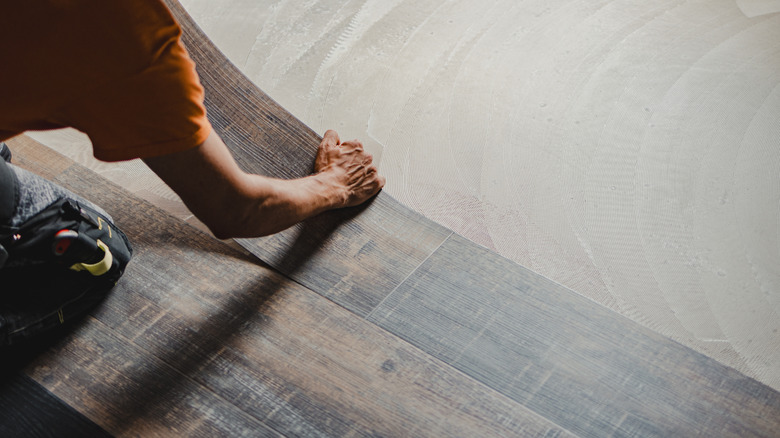
While most homeowners covet authentic hardwood flooring for the charm and warmth it can imbue, an increasing number of those who are remodeling have been opting for the close lookalike of luxury vinyl plank (LVP). This is because it's more affordable, hardwearing, and even waterproof. If those latter two reasons are what hooked you when considering it for your future remodel, you also need to explore this other alternative: wood-look porcelain tile. Like LVP, it looks realistic, can withstand water and moisture, and can take a beating — only it's even more durable and looks stunning.
Wood-look porcelain tile is exactly what it sounds like — a natural clay-based porcelain, which means it's harder and denser than ceramic. As such, you'd install it the same way you would ceramic tile using grout. These porcelain planks come in sizes ranging from 4- to 12-inches wide by 24- to 60-inches long and mimic a wide variety of species, from standard oak and walnut to more exotic zebrawood. Material cost (including grout) is comparable to LVP at $3 to $12 per square foot. But labor is pricier, ranging from $5 to $25 per square foot. You'll see that big-box hardware chains carry a smaller selection of wood-look tiles while your local tile showrooms will offer plenty more.
Why wood-look porcelain is superior
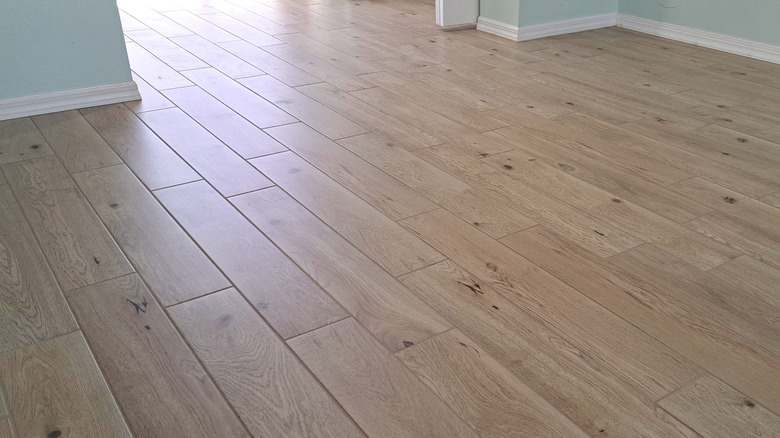
In addition to being an aesthetically pleasing alternative to LVP, wood-look porcelain tile is more durable. LVP can develop visible scratches from more occurrences, such as sliding furniture across it or a rambunctious pet with untrimmed nails. Wood-look porcelain is extremely difficult to scratch. LVP can fade whereas the porcelain won't. And, when both are properly maintained, LVP has a lifespan of only 10 to 25 years depending on quality while porcelain can last 30 to 50-plus years.
That's not to say that wood-look porcelain has no cons. It may be tougher than LVP, but it can get cracked if a heavy object falls onto it. LVP, on the other hand, has a flexible composition that usually absorbs such impacts; it might develop a dent, but it rarely cracks. LVP installation is easier and quicker, especially if it's installed as a floating floor versus glue-down, given that it's a click-lock product that can be cut with a utility knife. Wood-look porcelain installs like tile with grout, proper sealing, and special cutting tools (and cleaning grout can feel laborious).
All things considered, though, wood-look porcelain is more attractive and may be the better choice for certain areas where you'd otherwise use LVP. Both can handle bathroom moisture and water, but porcelain tile has thermal conductivity, making it ideal for heated floors — a luxury but also practical, as it can help evaporate standing water faster. If you have intense foot traffic, porcelain might also be better suited to mudrooms and foyers than LVP. If you need more convincing, see what HGTV's David Bromstad had to say about this durable flooring option.