

Say Goodbye To Epoxy: A Tougher Garage Floor Option That's Easier To Clean
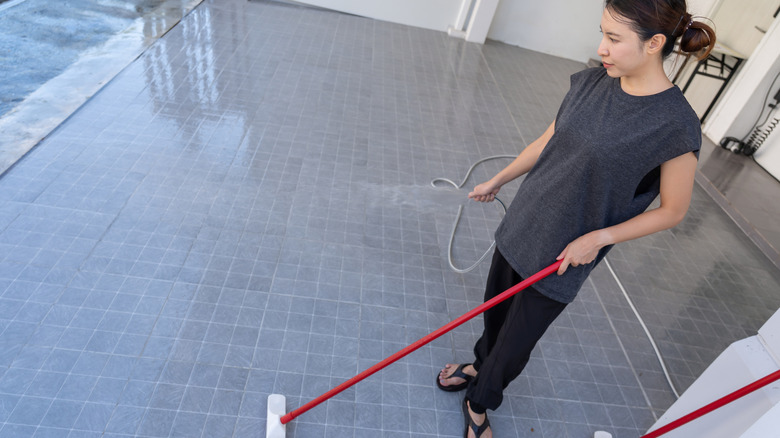
Epoxy coatings for garage floors have been trendy for years, but there's a tougher alternative to the shiny floor that takes your garage to the next level: polyaspartic flooring. It's fast, durable, and it offers the shine of epoxy without the extra cleaning supplies. Once cured, polyaspartic flooring can be cleaned using just soap and water.
Protecting your garage floor in all seasons is high on the list of reasons for an epoxy coating, but polyaspartic flooring provides the benefits of epoxy without the hassles. For instance, polyaspartic flooring offers a faster drying time than epoxy, curing in 30 to 60 minutes, compared to epoxy's month-long complete curing time. An entire floor can be completed in a day, and be ready for customization without the wait. Polyaspartic flooring is also much less prone to abrading and scrapes than epoxy. Then there's the look: Adding a coat of epoxy on your garage floor definitely gives it a shine, but polyaspartic flooring has the charm of being able to design it to match your style, because colors and ingredients like quartz flakes can be added into the urethane. Pick your coat and color chips, and polyaspartic can be mixed to match. Easier installation means a cohesive look in half the time it would take to redo your floor with epoxy.
Polyaspartic floors are also relatively low maintenance. Many stains on these floors are easy to remove with simple soap and water, perfect for garages. A quick hosing off and brushing may be all that's needed for a clean garage floor. Unlike other garage floorings which may require a concrete floor cleaner to remove harsh stains, there's nothing extra needed for this durable surface.
Tougher for floors, but there are a few downsides
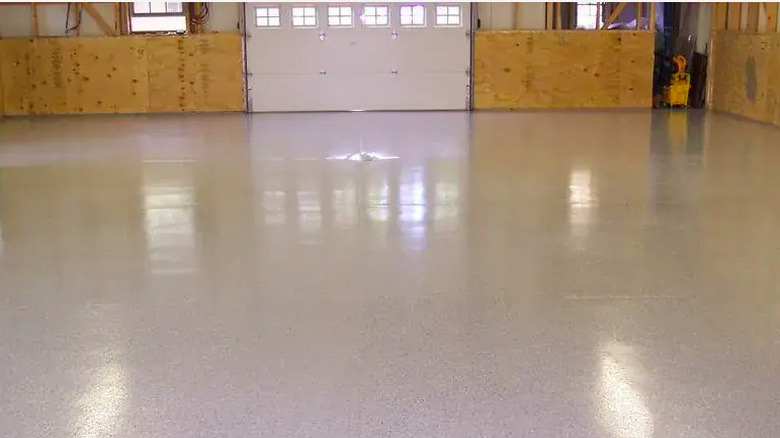
The fast dry time and durability make this easier, tougher material a good choice in garage flooring, but there are some considerations. The downside to polyaspartic flooring is that it is not eco-friendly. Because of isocyanates, hardening chemicals used in the flooring formula, polyaspartic flooring can cause a number of harmful conditions during installation. Irritation, trouble breathing, and chest tightness are three of the main concerns. Those who suffer from asthma or other breathing conditions are at a higher risk. That said, the flooring option emits fewer VOCs (volatile organic compounds) than epoxy. If you decide to go with a polyaspartic floor and have existing medical conditions that coincide with OSHA safety concerns, consider using a professional for installation.
There are also concerns for the extended life of the garage floor, and how long isocyanates chemicals linger in the soil and foundation around it. If eco-friendly is more your style, try another flooring for your garage and research the best garage flooring materials for a foundation that lasts. It's also more difficult to apply properly than epoxy, which makes professional installation cost significantly more.
There have also been complaints around the odor of polyaspartic flooring. Multiple users pop up on a garage flooring forum to complain about a lingering smell post-installation. Most say it goes away eventually, and offer suggestions of fans or better ventilation (another argument against DIYing this treatment). And a warning to mechanics: While this floor is easy to clean, battery acid is the one material it does not tolerate.