

Forget Quartz And Marble Countertops: The Tougher, Attractive Alternative You'll Love
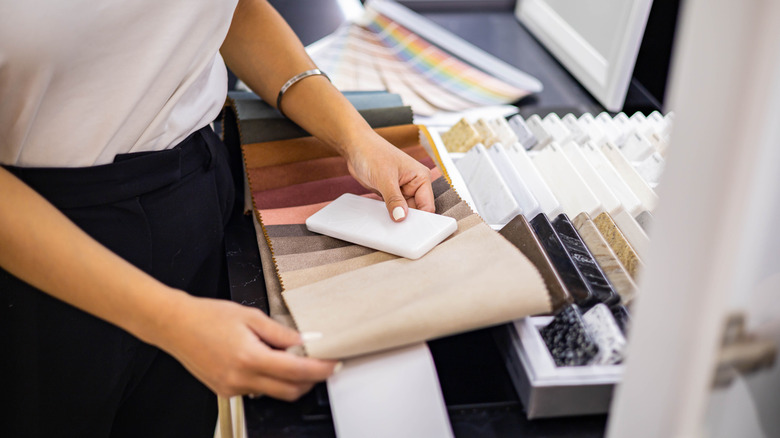
Installing new countertops costs thousands of dollars, so you want to make sure that investment is worth it. Quartz, marble, and granite countertops are classics, but they're not the only options. One countertop material you might not have heard of or know much about is sintered stone. And it could give other popular countertop options some serious competition.
Sintered stone is a composite countertop material made from a variety of stone dusts and minerals, like mineral oxides, feldspar, silica, quartz, and clay. Those materials undergo a heating and compression process, starting with tens of thousands of tons of pressure, followed by temperatures of over 2,000 degrees Fahrenheit. It's a bit like the natural process that many stones go through, and it creates a consistent, continuous material that's fused together on a molecular level. The result is a stunning, highly durable countertop with more texturing than quartz, making it look less manufactured and more natural. And that could make it worthy of a spot on the list of timeless kitchen countertop options.
Countertops made of sintered stone have the advantage of being engineered for optimal performance while still maintaining a natural look. They're non-porous, heat-resistant, and particularly hard. But there are some drawbacks, including the cost, limited availability, and repair difficulties.
Sintered stone is a durable, low-maintenance countertop option
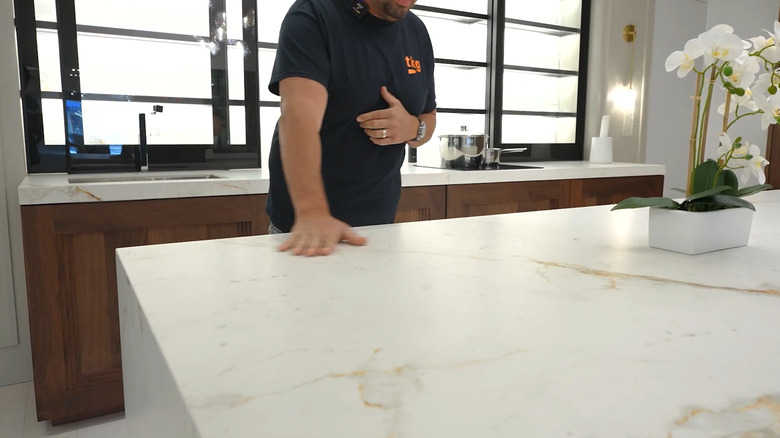
When you pick kitchen countertop materials, it's helpful to look at the pros and cons of the options you're considering. Overall, choosing sintered stone gives you a kitchen work surface that's hygienic and durable with very little maintenance required. In fact, it's lower maintenance than marble, which needs to be sealed regularly (sintered stone doesn't). It's a food-safe material. And since it's non-porous, bacteria, stains, and moisture won't settle into the surface. Sintered stone also wins for heat-resistance, particularly over quartz, but it also resists heat better than marble.
Despite being manufactured for durability and consistency, sintered stone has some weaknesses that could affect your decision. You might notice that sintered stone is a bit more difficult to find than quartz and marble. That means when you do find it, you likely won't have as many choices and you'll pay more than other countertop options. Despite being a hard, tough material, sintered stone is prone to chipping and cracking along the edges. This can be minimized by using rounded corners and providing adequate support.
If you choose sintered stone, always go with a reputable fabricator to avoid issues with the installation and support. Make sure you have the budget for a high-quality sintered stone and edge finishing that will resist cracks. Quartz could be better for your budget, but you can also find sintered stone in different price ranges, which could help make it more affordable.