

The Groundcover To Plant Now For Pretty Yellow Fall Color
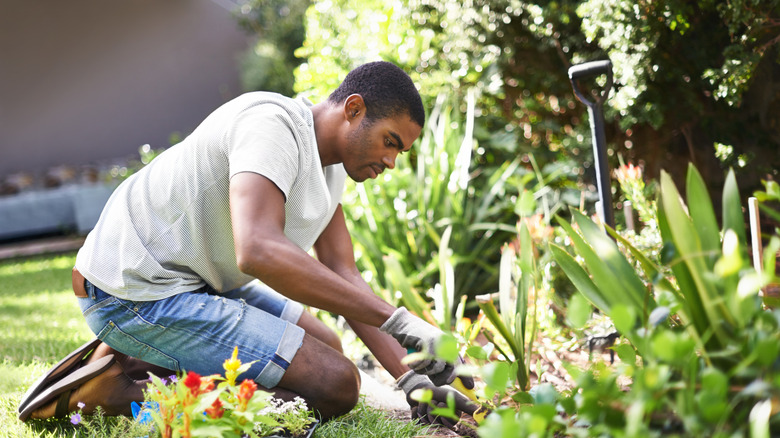
Want to enjoy beautiful yellow flowers in your yard all summer and autumn? Then you might consider planting some birdsfoot trefoil plugs in August. This low-growing ground cover can produce yellow, orange, or red flowers that are shaped like birds' feet (hence the name). In some areas, birdsfoot trefoil is even grown as animal feed, providing an alternative to alfalfa. Depending on where you live, you might spot it in pastures where cows and goats graze. If you grow it in your yard, you may find that visiting deer enjoy snacking on it, too.
While the best time to plant this ground cover by seed is early spring, already-blooming plants can immediately add color to your beds. Their blooms can continue through early fall. Finding birdsfoot trefoil seeds is easy, but young plants can be more difficult to source; look to specialty nurseries to find some. Pollinators also love birdsfoot trefoil, so expect to host many bees in your yard while your trefoil is in bloom.
Keep in mind that birdsfoot trefoil requires direct sunlight to thrive. It is hardy in USDA planting zones 4 through 9, and it's also drought-tolerant. When first planted, it will need daily watering to get established. Once fully grown, however, it doesn't need much water.
Where and why to plant birdsfoot trefoil
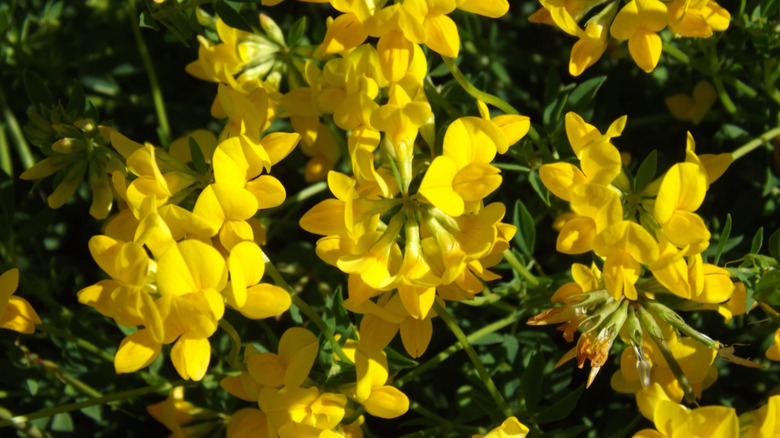
Birdsfoot trefoil is hardy, making it a suitable ground cover. It tolerates being stepped on, and is fairly soft to the touch. Birdsfoot trefoil is most commonly used to prevent erosion, because it is dense and forms a thick ground cover. It's also useful for increasing the nitrogen levels in your soil.
While it is a beautiful plant, it's also good at out-competing other plants for resources, so it's best suited for soil that lacks nutrients — spots where other plants might struggle to grow. If you have a place in your yard where you're trying to prevent erosion, birdsfoot trefoil can be a good solution here, too. Once established, it grows fast and is good for covering bare soil, though be aware that it can quickly spread out of control.
Depending on where it's grown, birdsfoot trefoil can be considered invasive. It's listed as an invasive species in Oregon, Michigan, Wisconsin, Kentucky, and West Virginia. However, many regions within other states also discourage planting it. Experts caution gardeners to keep birdsfoot trefoil away from areas nearby native prairies. It can also block native plants from receiving nutrients, making it a risk to native gardens. You can always contact your local extension office before planting to ensure your area is suited for birdsfoot trefoil. If you live in a state in which it's considered invasive, you can try a number of fast-growing ground covers that will attract pollinators.