

Your Birdbath Can Do A Lot More Than Attract Birds
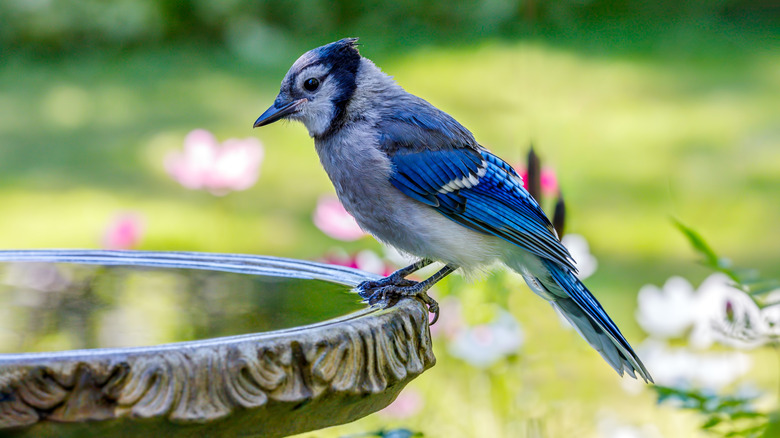
You may think about your birdbath only when you're enjoying a visit from your feathered friends or when it's dry and needs to be refilled. However, your birdbath can do a lot more than attract birds. In terms of outdoor water features, birdbaths are cheaper and easier to maintain than bubbling fountains or koi ponds. By repurposing them as unique planters, wildlife feeders, or solar light stands, a birdbath can still make a splash in your yard without adding any water.
Along with traditional pedestal-style options, passionate birdwatchers may also want to breathe new life into hanging or deck-mounted birdbaths. Since you can easily transform household items into birdbaths that birds will flock to, crafty types can also make the most of other one-of-a-kind designs. Despite their wide variation in style, material, and color, the best birdbaths share a common bowl shape that's shallow enough for birds to stand while drinking or bathing. That trait makes them surprisingly versatile, whether you're filling them with plants, treats, or solar-powered lights.
At the same time, you must keep the limited depth in mind, as it influences what you can reasonably expect your birdbath to hold. There are other important factors, too. Shallow-rooted plants will fare much better than deep-rooted varieties. High-quality birdseed or nuts can become a bird buffet. And decorative fillers or solar lights must be sized to tuck neatly inside. Keeping these limitations in mind will ensure your upcycled birdbath becomes both an attractive and practical addition to your yard.
It's easy to repurpose a birdbath as a colorful planter or solar light fixture
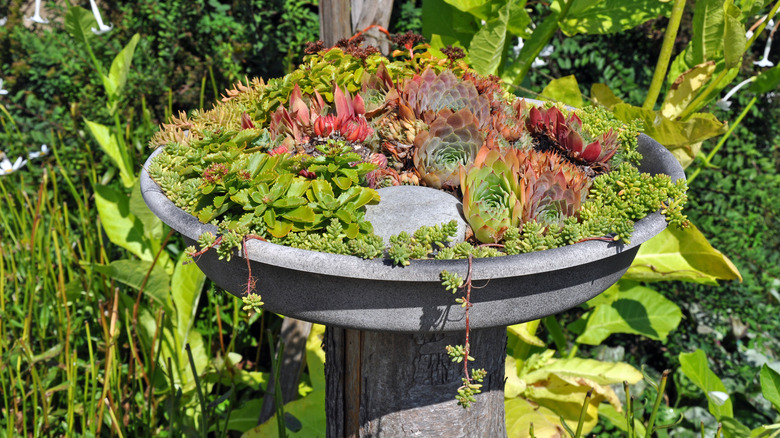
Whether your birdbath has sprung a leak or you're simply ready for a new look, there's no reason it needs to end up in a landfill. Although most of these repurposing ideas are relatively quick, taking a few extra minutes to do some prep work is a smart idea. Along with cleaning your birdbath with vinegar or baking soda to remove algae or leaf mould, consider patching any cracks with waterproof silicone.
If you plan to use your birdbath as a decorative yard feature filled with plants or flowers, you'll also need to plan for drainage. Drilling a few small holes is easy if your birdbath is made of plastic or resin, but using a base layer of small rocks or broken pots may be a better option for a stone or concrete version. Opt for shallow-rooted plants like colorful succulents or trailing petunias, and choose a fast-draining soil mixed with sand and perlite to avoid rotting.
Another way to enhance your yard with a birdbath is by turning it into a solar light fixture. This approach works equally well with large pedestal structures in the middle of your lawn, small hanging versions hanging from specimen trees, or mounted birdbaths clamped to your deck railing. The key is ensuring your solar light birdbath receives enough direct sunlight during the day to stay charged. While you can simply place a solar light in the center of your birdbath, surrounding it with inexpensive floral gems adds sparkle during the day and a colorful glow at night.
How to attract more wildlife to your backyard birdbath
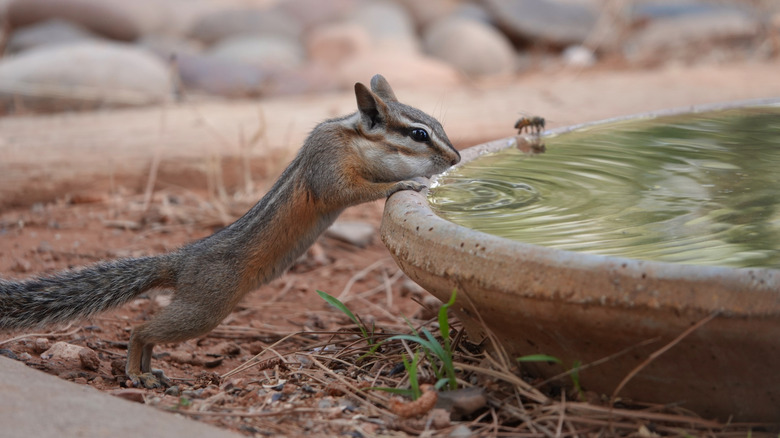
While colorful birds may be the most frequent fliers, there's plenty of joy to be found by spotting other types of wildlife using a birdbath. While deep pools of water can be dangerous for flying insects like bees and butterflies, adding small rocks or perching sticks to the basin of a pedestal birdbath can help them hydrate safely. Squirrels and chipmunks are also likely to enjoy your backyard watering spot, whether it's elevated or a ground-level option that mimics natural pools. You may even spot a few salamanders or frogs stopping by for a quick sip (or dip!)
But water isn't the only thing you can offer. Hanging or mounted birdbaths can be easily repurposed as feeders. Black-oil sunflower or other seeds are obvious choices, but you can also attract birds to your backyard with oats, peanuts, or millet. Tray-style birdbaths are ideal if you want to offer other snacks like sliced, dried, or rotting fruit, insects or mealworms, or chunks of suet during the colder months. Along with attracting woodpeckers, jays, and other birds, providing a wide variety of foods can entice a range of wildlife, from beneficial pollinators to nocturnal mammals.
Whether you offer a refreshing drink or hearty snacks in your birdbath, there's one important step to remember. Always place birdbaths in areas where visitors can keep an eye out for predators. While birds may be able to fly away at the first sign of trouble, a nearby bush or cover can help out crawling critters that need a place to hide in between bites.