

Quartz Vs. Granite: What's The Difference?
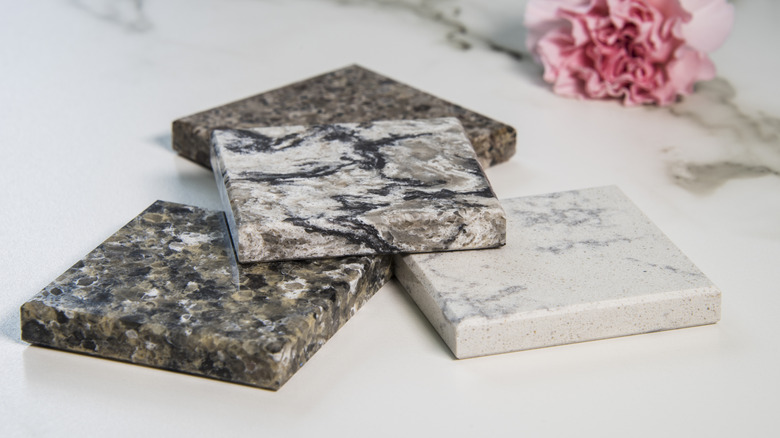
Homeowners have a lot to consider when planning a home renovation project that involves choosing stone. When comparing materials, buyers want to know which option between quartz and granite is going to cost less. While price is important, it doesn't encompass the entire picture of the difference between these materials. Quartz and granite are both popular choices for a wide variety of home surfaces, including countertops, vanities, backsplashes, tabletops, accent walls, and even flooring. The differences lie in how the two are produced, and how a homeowner can use each material's strengths toward their needs.
Quartz is a natural mineral made of silicone dioxide that appears in the form of clear crystals. In order to become attractive countertops or backsplashes, the crystals are crushed and combined with a binder and pigment to create slabs that have a wide range of colors and patterns. This adaptability is one of the reasons why quartz has been listed as a favorite of HGTV personalities like the Property Brothers.
Granite is also a natural stone product that is produced from quarrying. Quartz is actually a primary mineral in granite composition, but the rock is also made up of feldspar. This creates an extremely hard surface that has its own unique patterns and colors, meaning no two granite slabs will be the same.
Quartz is customizable, but granite can be used outdoors
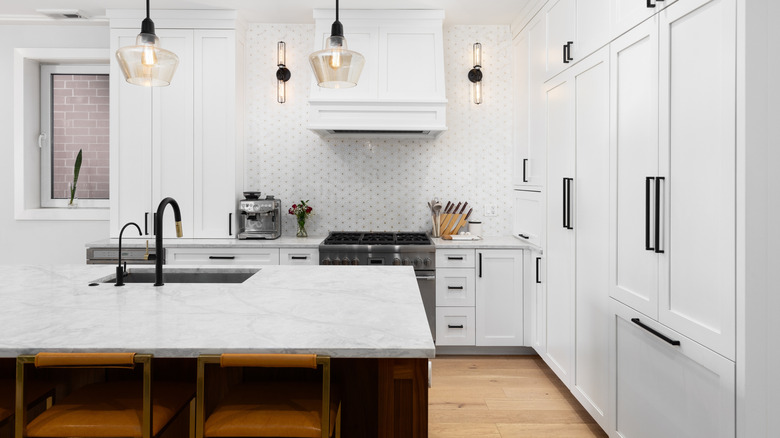
As far as interior use is concerned, quartz wins out over granite. Because quartz is made with pigments and resin binders, it can be customized with colors that can work with any kind of kitchen style. Quartz can also be designed to mimic the look of other materials, such as marble and granite. The benefit of this is that you can get the looks of these materials without having to worry about scratching or staining the surface thanks to the resins in the quartz.
Unfortunately, those resins are exactly why quartz is not recommended for use on any kind of outdoor kitchen or eating areas. Over time, the UV rays from the sun will break down the resin binders, which will lead to fading color, yellowing, and even structural cracks in the resin. This makes granite a better option for outdoor usage, owing to the fact that it is solid rock which is naturally more resistant to weather changes.
Granite is so durable because it is not nearly as porous as other natural countertop materials, so it won't absorb liquid as quickly. Because it is a natural stone, granite does not fade easily in sunlight. Granite can also handle the heat of a grill or hot plate, while the resin in a quarts countertop would warp and crack. So, a combination of quartz inside and granite outside could be the ideal situation for your home.