

Granite Vs. Quartz Countertops: Which Costs Less?

Picking the right kitchen countertop material is one of the most important decisions you can make for your home. Countertops are a substantial investment, so you want to choose a material that will stand up to kitchen wear-and-tear, while also fitting within your budget. Two common choices are granite and quartz. To break down which costs less, as well as the pros and cons of the materials, Hunker gained an exclusive interview with Stuart Pumpelly, team leader at the Washington, D.C. firm Four Brothers Design + Build.
"On a per-square-foot basis, entry-level granite is usually the cheaper option. Basic granite can come in well under quartz, while a rare or exotic imported slab can cost more than any quartz on the market," Pumpelly explains. He also notes that because granite is a natural material, its prices fluctuate from slab to slab. Quartz, being an engineered product, is going to have a more consistent price. However, Pumpelly says quartz often comes with "manufacturing and brand markup(s) that keep the average price competitive with, or sometimes above, mid-range granite."
In terms of which material homeowners trend towards, Pumpelly tells us, "We are not seeing many clients select basic granite slabs. If they select granite, they tend to go on the more exotic side. Otherwise, quartz is still the go-to choice among most homeowners." So, for most homeowners on a budget, quartz is going to be the best countertop material for your kitchen (even the Property Brothers say so).
Though priced similarly, quartz may save you money over time
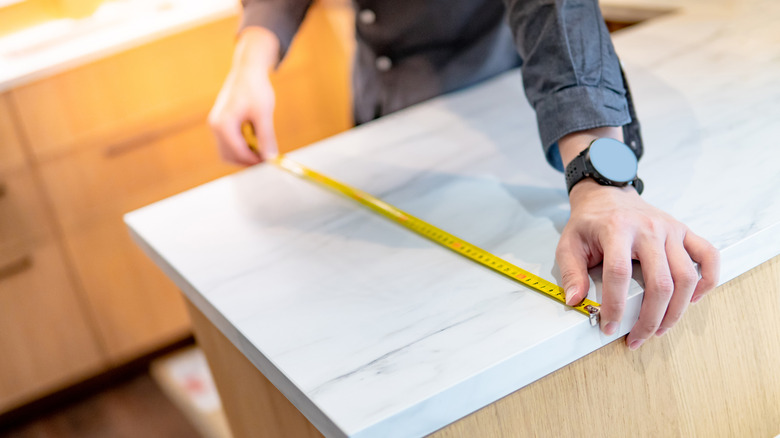
The materials themselves can be relatively similar in price, but what about the costs associated with installation? Though there is a price difference between quartz and granite counter installation, it has less to do with the difficulty of the installation and more to do with slab choice and design details. "For granite, cost drivers are slab yield and waste, seam placement on larger runs, and whether the pattern needs to be book-matched across seams," materials expert Stuart Pumpelly says in his exclusive interview with Hunker. "For quartz, edge profiles and thickness, waterfall edges, mitered edges, and oversized islands all add fabrication labor."
Despite the fact that material choice and installation are all going to be relatively similar, Pumpelly explains that, in the long run, quartz is going to give you more bang for your buck. "Quartz tends to save a little more money over time. It's non-porous, so it never needs sealing and resists staining without any maintenance routine. Granite is porous and needs to be resealed periodically (usually every one to two years), or it can stain and harbor bacteria. Sealing isn't expensive, but it isn't required for quartz."
Granite also comes with some design caveats, as the formerly trendy countertops can make your kitchen look outdated. Therefore, as far as budget and style are concerned, quartz appears to be the overall winner, since it will likely end up saving you the most money long term and look good while doing so.