

The Biggest Mistakes People Make When Sharpening Lawn Mower Blades
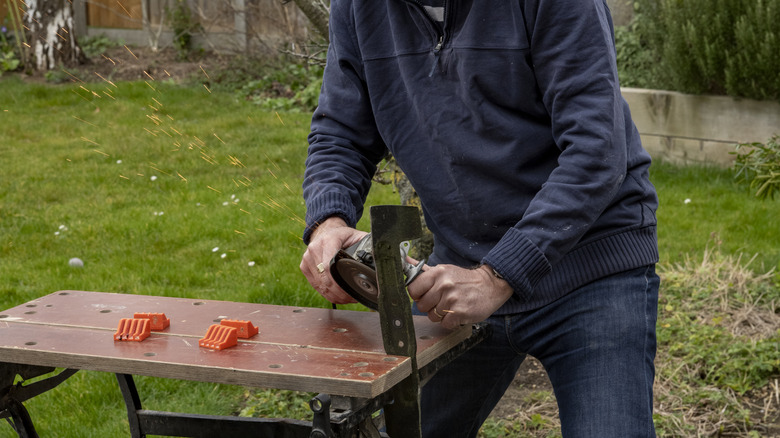
It might not be your favorite chore, but you still bring out your mower to tame your overgrown lawn and maintain your home's curb appeal. However, all your well-laid plans will go to waste if the device barely trims the grass, takes longer to do the job, or vibrates uncontrollably or makes odd sounds. In certain circumstances, it might even give them an uneven haircut. Whichever issue(s) you're facing, know that it's indicative of blunt blades. So, to protect the health of your lawn and device, try the easiest way to sharpen your lawn mower blades. But while sharpening the blades, tread carefully as you don't want to commit a few common mistakes, such as sharpening them until they're razor-like.
You want to avoid this because a blade that sharp will cut the grass unevenly. Besides, it'll wear out sooner as it gets modified. So, it'll be more prone to chipping and breaking if it comes in contact with rocks, pebbles, or even harsh stems. This can pose a risk if the sharp bits get concealed in your grass. Moreover, the blade will get blunt quicker and require re-sharpening after a few passes. Eventually, it'll require a replacement faster than you'd thought.
Another common mistake is not sharpening your mower blades one to two times per season — basically, after 20 to 25 hours of use. Of course, you don't need to sharpen your lawn mower blades as often if you've got a small lawn. You also don't want to overlook safety implements, such as a thick pair of well-fitted gloves and protective goggles.
Other common mistakes to avoid while sharpening your lawn mower blades
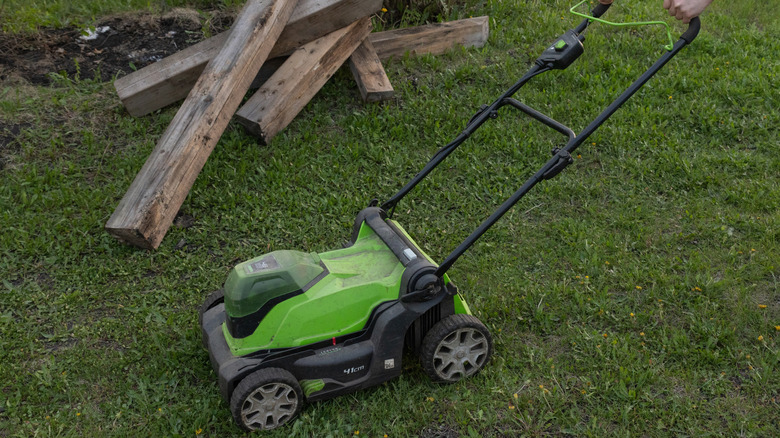
Blades are the soul of any lawn mower. So, honing it using the right techniques enhances the life span of the blade as well as the mower. As such, you'd want to avoid mistakes like trying to sharpen them without removing them first. If you do this, your blade may not get filed evenly (and remain unbalanced) since you'd struggle to maintain the correct angle. So, always remove the blades (a socket wrench will work) from the mower before filing them. And before you move toward your mower deck, ensure that the power is off (or the battery pack removed or the gas drained), so it doesn't start accidentally.
Moreover, ensure you're honing the blade at its original angle (usually between 30 and 45 degrees). Also, while whetting with a file, sharpen one side first before moving onto the other. However, if this is too much to remember, skip the metal file altogether and try a smarter way to sharpen your lawn mower blades. But avoid overheating the blade, or it may become too thin and break easily. Another costly mistake is not checking if you've sharpened each side equally before reinstalling. Use a blade balancer or a nail and screwdriver to see it balances well. In case it inclines on a particular side, that side is probably heavier and needs to be sharpened again. Otherwise, it'll lead to uneven grass. Moreover, your mower will vibrate more as the blades won't be able to rotate evenly. This will pose a serious threat to its spindle, bearings, and engine.
Mistakes even pros might make while sharpening their lawn mower blades
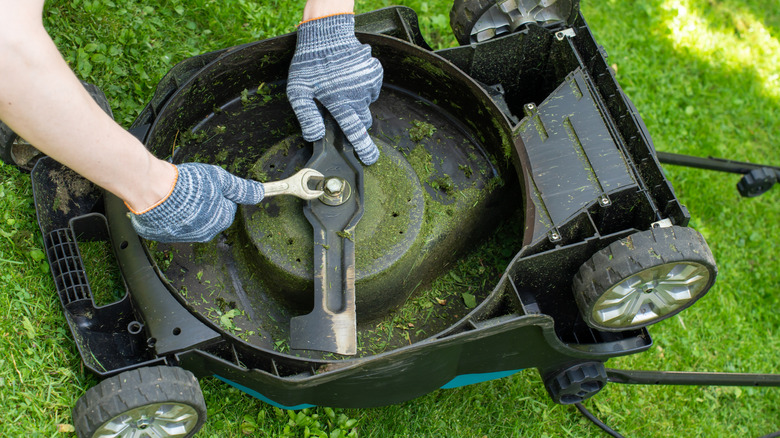
You have sharpened the blade at the bevel angle and balanced it on a blade balancer. Yet, there are lesser known sharpening mistakes that even pros have learned to avoid in time. If you notice that your lawn mower is making vibrations or trimming grass asymmetrically, it could be indicative of one of the most overlooked issues: placing the blade upside down post installation. This is problematic since the lift of the blade should face up in the mower deck, or else it'll wreak havoc on your mower. You can avoid this mistake by marking the blade before uninstalling it. But if you've already taken it off, ensure that the sail of the blade is facing upwards and the sharpened bevel downwards during reinstallation.
Moreover, don't forget to remove the accumulated debris and the green residue from your blades before honing them. It's because the build up reduces mower efficiency. Plus, your device may start vibrating when you use it. Further, check whether the bolt is torqued adequately. It shouldn't be too high or too low. If the torque is too low, it may come loose, damaging your lawn as well as your mower. And if it's too high, then it may damage the threading and put pressure on other mower parts.