

Step Aside, Hardwood Floors: Here's A Tougher, Cheaper Alternative That Looks Great
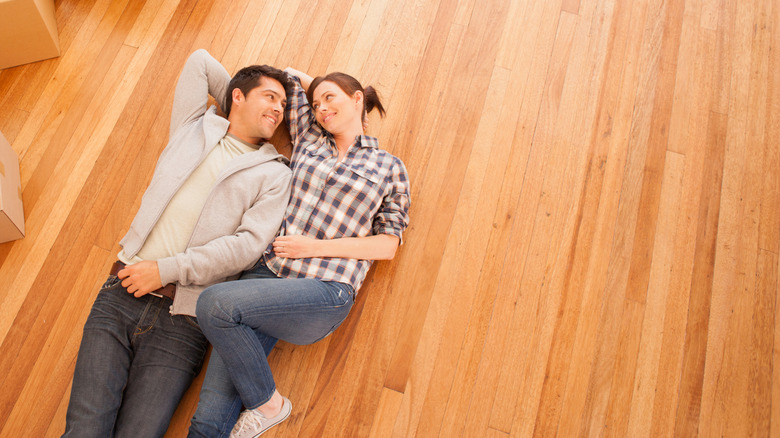
There is no shortage of reasons to love hardwood floors. Their natural grain and color offer timeless appeal that imbues any house with charm and character. However, they aren't exactly what you would call cheap to install and are vulnerable to scratches, dents, warping, and moisture penetration. As such, you might want to tell hardwood to step aside in favor of tougher and cheaper luxury vinyl flooring, specifically luxury vinyl plank (LVP).
What you need to know about LVP is that it is a manufactured product as opposed to a natural one. LVP utilizes synthetic layers and high-end printing to create planks that mimic the grain, texture, and color of hardwood floors. These layers are secured to a rigid backing and can be installed with a click-locking method that is faster than trying to nail in hardwood. LVP is designed to resist common wear-and-tear from shoes, pet claws or pet accidents, and other surface scuffs. This durability is one of the reasons why LVP is predicted to be the hardwood flooring alternative that rules kitchens.
LVP's resistance to moisture also gives it a real edge over hardwood. If hardwood is damaged by water, it will warp or bow, requiring a prompt response to draw out moisture. These hardwood defects can occur with even a small amount of moisture. If water gets under LVP, you can carefully take up the click-lock planks – starting from the wall closest to the affected area — dry the subfloor, and reinstall. Subsequently, LVP makes an excellent candidate for high-moisture environments like bathrooms, while still providing a hardwood aesthetic.
Luxury vinyl plank will save you money without sacrificing on style
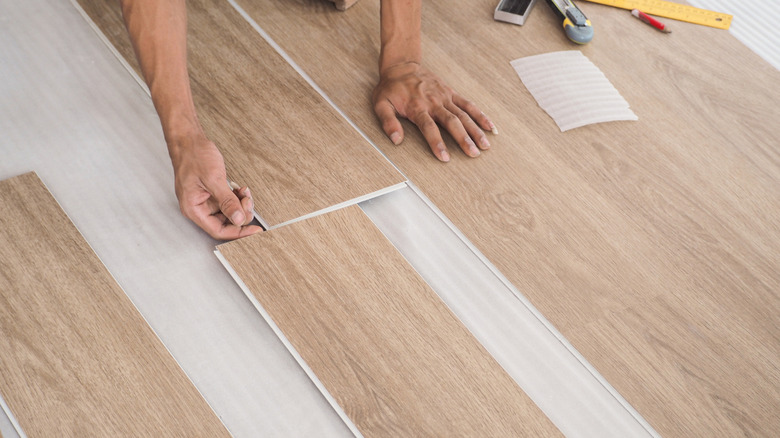
Another plus of using luxury vinyl planks (LVP) over hardwood is that the former is going to be a lot cheaper. According to data from Angi, hardwood floor installation averages between $2,700 and $7,100, while LVP is typically between $1,100 and $4,200.
When it was first introduced, LVP got something of a bad reputation for being cheap in the sense that, while it was affordable, it just looked fake. Today, the technology has improved to such an extent that, despite still not matching the depth and character of hardwood, LVP could fool you at first glance. LVP can be made to resemble all wood species from hickory and oak, to walnut and chestnut. And aside from flooring, LVP is also an excellent option for accent walls or backsplashes.
The main downside to LVP is that it does not last as long as hardwood flooring, having only an average lifespan of 10 to 25 years before needing to be replaced. Hardwood, on the other hand, can be sanded and resealed, giving it a much longer lifespan of 30 to 100 years, or even longer. As such, a blend of the two might be the best option for your home, with hardwoods in the gathering areas and LVP in the kitchen and bathrooms, or even as a floating floor over the concrete in your breezeway.