

White Painter's Tape Vs. Blue: What's The Difference?
We may receive a commission on purchases made from links.
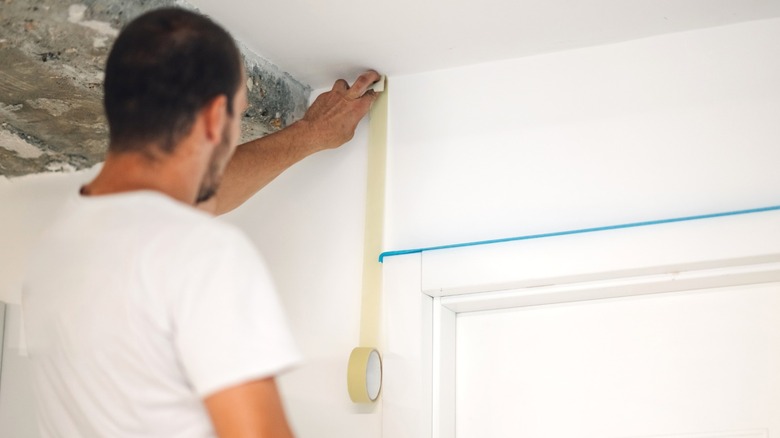
After sorting through color swatches and testing out paint samples, you're finally ready to dust off your brushes and begin transforming your space. When it comes to collecting the proper tools, items like paint trays, drop cloths, and rollers are a given, but one accessory is not as interchangeable as some DIYers might believe. From strength and surface application to usage and beyond, white and blue painter's tapes cater to different needs. Blue painter's tape is the classic go-to for the reliable surface attachment yet easy removal you need when painting, while white painter's tape may be more or less adhesive, depending on whether you choose painter's tape or more general masking tape. It's crucial to determine which is most appropriate for your project before lining your walls for precision and to keep certain spots color-free.
Whether you're toying with living room paint trends, bedroom hues, or furniture finishes, you'll need to keep a few things in mind when selecting a painter's tape. For one, you must assess the environment, as factors like humidity, sunlight, and temperature will determine which tape backing and adhesive will be the most cost-effective. The purpose of the project is equally as significant, as some tapes work better for intensive DIYs that require a lot of tape application and removal, while others are ideal for labeling and general masking. Lastly, you'll need to consider the type of surface you're dealing with and how quickly you'll need things cleaned up.
When to use blue or white painter's tape
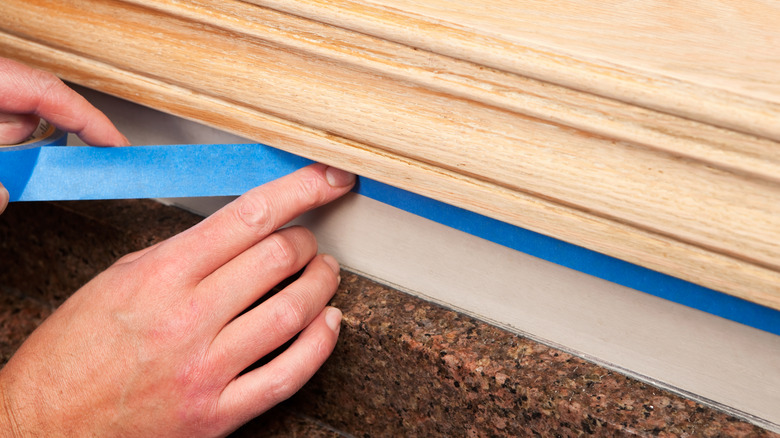
Blue painter's tape is ideal for lining and separating surfaces like walls, trims, and ceilings when painting a room. It achieves crisp lines and won't bleed upon removal, though it is best saved for smooth surfaces like glass, metal, and wood. If you're working on an outdoor project, you'll likely want to reach for the blue tape, as certain brands are water resistant and others provide strong protection against UV rays, like ScotchBlue Original Multi-Surface Painters Tape. Before you unveil the final results of your handiwork, you'll need to remove the tape, ideally when the paint is just dry to the touch (though quality painter's tape can stick to surfaces for about two weeks). Of course, when in doubt, check the label for removal instructions. Fortunately, blue tape adhesive is strong enough for a proper hold but still makes cleanup fairly easy and won't leave behind much residue.
Typically, white painter's tape has low adhesion and is less versatile compared to its blue counterpart, but it offers a smart painting hack when working on delicate surfaces (like freshly painted walls or wallpaper) or trim and baseboards that need a little TLC. White tapes like the TRIMACO Easy Mask KleenEdge can also last up to 14 days in place without issue. Then, there is less-expensive general masking tape in a white/beige shade that works on materials like vinyl, metal, plastic, and linoleum. It's useful for painting, labeling, temporarily bonding items, and even sealing lightweight packaging, but it will potentially leave behind residue and even allow bleeding. Unlike blue painter's tape, it may only last in place for a few hours before becoming difficult to remove and potentially damaging to the underlying surface.