

Quartz Vs. Quartzite: What's The Difference?
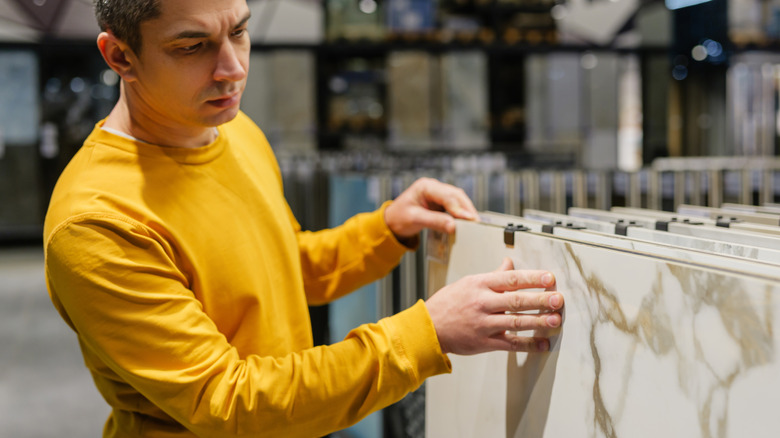
If you've been looking through the timeless kitchen countertop options that make it easier to sell your home, you've undoubtedly come across quartz and quartzite. And, since they sound so similar, you might think they're the same material, with quartz being the "hip" term for quartzite (it's easy to get confused; we can relate to your plight). To dispel such confusion and get to the core of their differences, we got in touch with Kerrie Kelly, the creative director of Kerrie Kelly Studio, a design strategist, and the Chair of the National Kitchen & Bath Association (NKBA) Board of Directors. Shedding light on the matter in an exclusive interview with Hunker, she says, "The biggest difference is that quartz is an engineered surface, while quartzite is a natural stone."
As she informs us, "Quartz combines natural minerals with resins and pigments to create a highly consistent, durable surface, whereas quartzite is quarried directly from the earth, giving each slab unique movement, veining, and color variation." In other words, think of quartzite as a close cousin of marble. This means it's naturally high-maintenance and won't survive a life of neglect. It's also more expensive and requires professional installation. On the other hand, quartz fits perfectly into the role of a hybrid since it's made of natural and manmade materials. As such, it's a low-maintenance option that won't cause a lot of headaches. However, you'll have to sacrifice your dream of having a unique countertop. Kelly concurs and tells us, "Both are beautiful materials, but they offer very different design experiences and maintenance expectations." The right choice for you will depend on your lifestyle and preferences.
What are the pros and cons of quartzite?
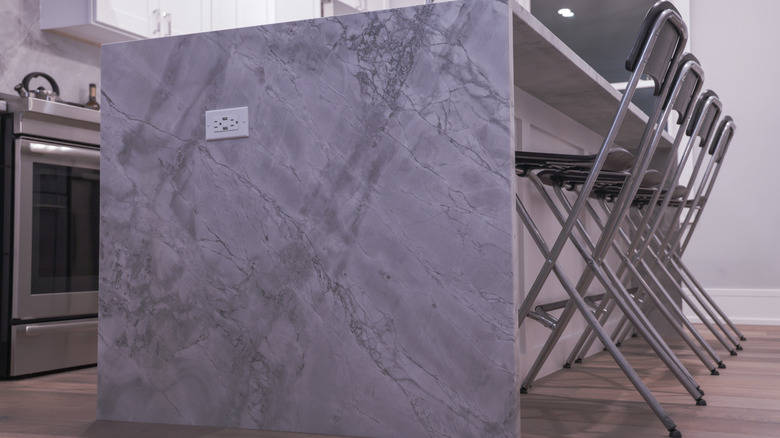
Highlighting the pros and cons of quartzite, Kerrie Kelly tells Hunker exclusively, "Quartzite's greatest advantage is its natural beauty. Each slab has unique veining and character, often resembling marble while offering greater hardness." In fact, it's harder than both granite and marble. This means it can perform well in high-traffic areas, like your kitchen, and last long. Plus, it's more resistant to scratches and dents, making this countertop material a new favorite. Additionally, it can withstand heat well, so you won't have to worry about laying down a trivet every time you pluck a hot pot or pan off the stove.
Despite these pros, quartzite has its fair share of cons. Detailing them, Kelly reveals, "The tradeoff is maintenance. Like many natural stones, quartzite should be sealed periodically and may require more attention over time to preserve its appearance." Otherwise, liquids can easily seep through the porous surface and negatively affect the appearance of your counters. So, be prepared to seal them nearly every year in areas where it's used roughly. You can maintain a gap of two or three years in low-traffic areas. "Because every slab is unique, selecting and matching material also requires more planning," states our expert.
Wondering if you should install this material in your home? "I recommend quartzite when a client is drawn to the authenticity and individuality of natural stone and is comfortable with the maintenance that comes with it," says Kelly. "Every slab is one of a kind, making quartzite a wonderful option for statement islands or luxury applications where natural variation is part of the appeal."
What are the pros and cons of quartz?
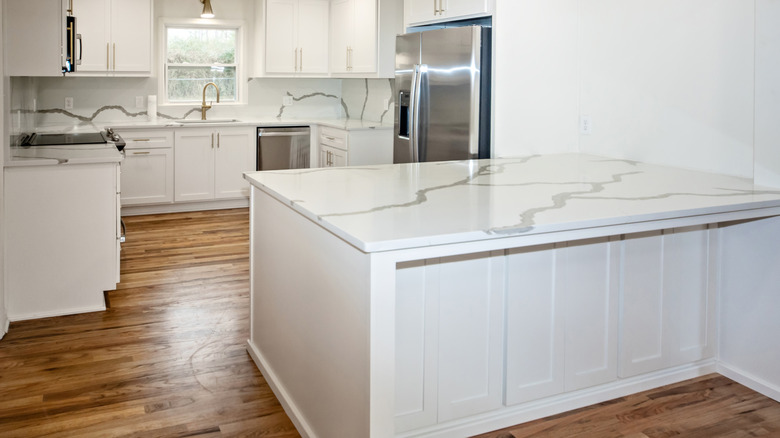
Moving on to quartz, Kerrie Kelly informs Hunker in an exclusive chat, "Quartz remains one of my favorite countertop materials because it delivers an exceptional balance of beauty, durability, and ease of care. It's nonporous, highly resistant to everyday staining, and doesn't require sealing." Given these pros, it's no wonder the Property Brothers consider it the best countertop material for kitchens. "The consistency of engineered quartz also gives designers greater flexibility when coordinating multiple slabs or creating large-scale installations," adds our expert. So, unlike quartzite, you won't have to wait months or hunt innumerable stores to find the right fit.
However, its easy availability can be considered a con for some folks. "The primary consideration is that quartz is an engineered product rather than a natural stone, so clients looking for completely unique geological variation may prefer quartzite instead," says Kelly. Plus, they don't have the lifespan of their counterpart. To put this into perspective, they can last between 20 and 60 years, whereas quartzite has a life of 50 to 100 years, provided you care for it. Quartz can't handle a lot of heat, too, and its resin component might melt at 300 degrees Fahrenheit. So, you'll have to be careful when placing hot pans or tools on them. Nevertheless, it wins in the cost department.
"I recommend quartz for homeowners who want exceptional durability, minimal maintenance, and predictable performance in busy kitchens, bathrooms, or family spaces," says our expert. "Premium quartz surfaces from leading manufacturers offer excellent resistance to stains and don't require sealing, making them an ideal choice for clients who want beautiful design without ongoing upkeep."