

Not Fiestaware: The Overlooked Kitchenware Brand To Look For At Thrift Stores
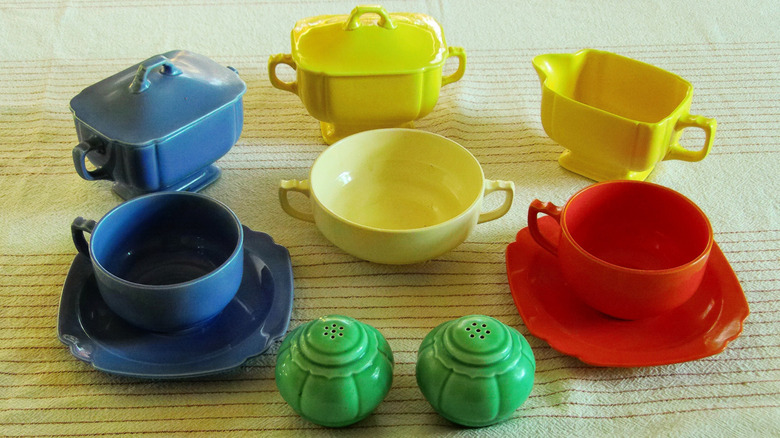
Few types of dinnerware, or any product, have the brand recognition power of Fiestaware. Its bright primary colors, engendering its ground-breaking mix-and-match color concept, have made it one of America's iconic successes. Even so, few would identify Fiestaware's sturdy construction and basic designs as elegant or upscale. There is a Fiestaware collectable "cousin" that takes its color scheme and adds a bit of pizzazz: Homer Laughlin's Riviera tableware. Riviera plates, cups, and serving vessels present a much thinner construction along with unmistakable Art Deco designs. Scalloped corners, elegant curves, but all with those iconic Fiestaware colors (plus a few more).
I started collecting Riviera a couple of decades ago; I was instantly drawn to the pieces because Art Deco styling has long been exceptionally pleasing to me. I found my first few plates at a garage sale afterward, and as Holmes would say, "the hunt was afoot."
Homer Laughlin pottery was established in 1871, in East Liverpool, Ohio. Homer and his brother Shakespeare (the classics were apparently in high regard in that family) were important players in establishing a burgeoning and innovative American ceramics industry. The company introduced Fiestaware in 1936, Riviera followed in 1938, and other styles were developed in future years. Fiestaware is still manufactured today, but Riviera was discontinued in 1948, elevating its collectable status today.
Riviera as an affordable collectable
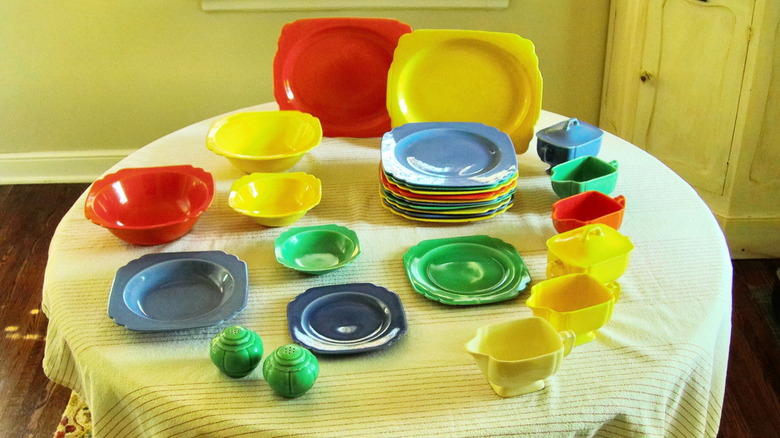
While some very rare Fiestaware collectables (and other antique dishware brands) have been reported to fetch thousands of dollars, you won't find that in Riviera pieces. You can buy (or sell) plates for prices between $20 and $50. But like all collectables, prices vary with how rare the pieces are (those with the red glaze are generally more valuable). Some, say covered serving dishes, had short production runs. An ivory-colored covered casserole dish is worth around $80 on Etsy. But the reason Riviera is such a great collectable opportunity is that you can often find pieces at thrift stores or even antique stores at very low prices. Riviera simply is not as well known as Fiestaware, so bargains are out there to be found.
Both Riviera and Fiestaware (but not Pyrex) shared a radioactive secret. The red glaze as well as the Ivory glaze were both produced using uranium (not a joke). Because the half-life of uranium-238 is 4.5 billion years, the dishes are as radioactive today as they were in 1938. It is not recommended to use red or ivory-dyed pieces regularly or with acid-based foods. Will I sell some eventually since they're one of the valuable collectables you should never overlook? Perhaps...but they aren't making any more of them!