

Californians Loved It In The '30s — Now It's The Antique Dishware Brand Everyone Wants To Find
We may receive a commission on purchases made from links.
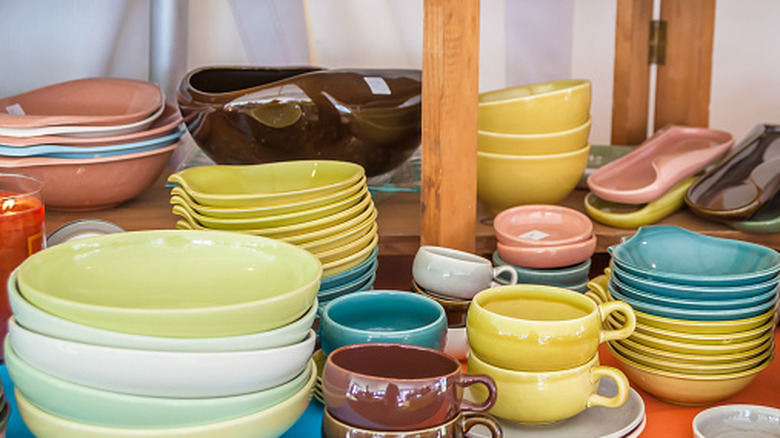
When you think of brightly colored, festive pottery, what brand comes to mind? Most likely Fiestaware, a kitchenware brand to seek out at thrift stores. While Fiestaware may be the more well-known colorful pottery brand, it isn't the only company to produce bold and beautiful dishware. In fact, Californians in the 1930s would be more likely to seek out pretty pottery from a more local source — Bauer pottery.
Although the brand is as California as it could be with its bold hues, the company was actually born in the heart of the Bluegrass State in Paducah, Kentucky. Andreas Bauer, aka J.A. Bauer, started Paducah Pottery in 1885, creating basic pieces like crocks and jugs. In 1910, sick of the chilly Kentucky winters, he moved out to Los Angeles, California, taking his company with him, and renaming it J.A. Bauer Pottery Company.
Once out on the West Coast, the company's offerings took on a distinctive Californian flair. However, it wasn't until Bauer sold the company and potters Louis Ipsen and Matt Carlton stepped in that the brand began producing the vibrantly colored pieces that collectors demand today. In the 1920s and '30s, the company began adding a distinct ring pattern to its boldly colored kitchen and homewares. While the brand did begin to expand beyond the West Coast, it was eventually eclipsed by the popularity of Fiestaware. Bauer Pottery was revived in the late 20th century, and its one of a few kitchenware brands that are worth seeking out at thrift stores today.
How to identify vintage Bauer pottery
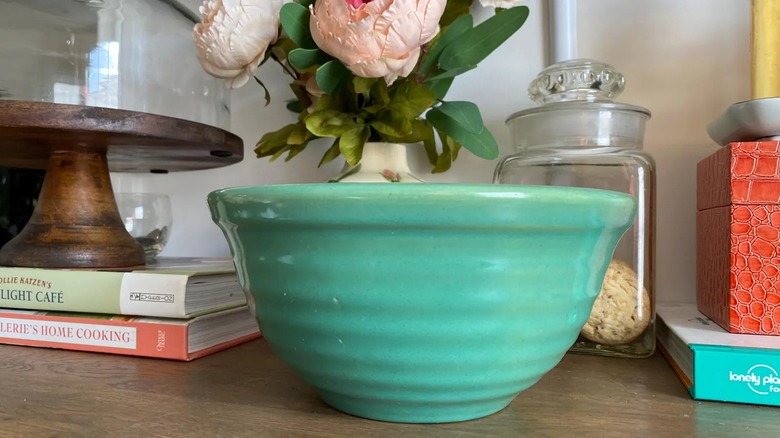
There are a few features to look for when tracking down authentic, vintage Bauer "California Colored Pottery" in a thrift store. One is the overall design of the piece. Starting in the 1930s, potter Louis Ipsen created the "California ring" pattern, which gives each piece a wavy, ridged texture, similar to, yet distinct from, the ridged pattern seen on Fiestaware pieces.
Another key thing to look at is the backstamp, which will help you tell older pieces from reproductions. Bauer pottery reproductions have a backstamp that reads "Bauer Pottery Los Angeles" with "2000" in the center. Vintage or antique pieces may have the size of the piece engraved on the bottom, such as "12," or the location where it was made, such as "USA." Other pieces may read "Bauer Los Angeles," with "Made in the USA" in the center.
While the oldest Bauer pottery pieces are earthenware, those from the 1930s and on feature bold glazes. The earliest colors available include jade green, delphinium blue, and Chinese yellow, with black, cobalt blue, orange-red, and burgundy joining the lineup later on in the 1930s. In the 1940s, colors such as rust, chartreuse, and olive green became available. For collectors, pieces in black, burgundy, and ivory are in demand. While you may have luck tracking down Bauer pottery at a local thrift store, especially if you're on the West Coast, there are plenty of other places to find antique dishware that aren't thrift stores, including Etsy, eBay, and vintage markets.