

The Lawn Mowing Habit That Could Get You In Big Trouble
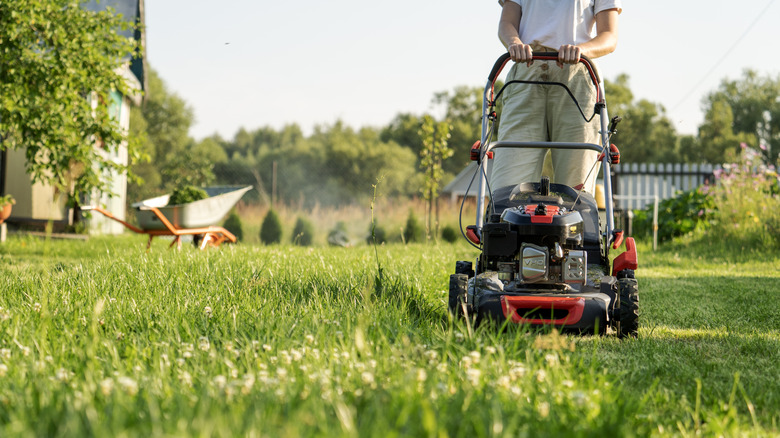
Don't cut your grass lower than 3 inches. Don't mow when the grass is wet. Don't let your blades get too dull. Mowing sure comes with a lot of rules for a task that not too many people enjoy doing anyway. And now you have to worry about breaking the law if you do it wrong? That's right. One lawn habit could get you in legal trouble if you're doing it wrong. The offense? Letting your lawn clippings land in the street.
Generally, the most common mowing mistakes to avoid concern the health of your grass, but you also can't ignore the regulations around how you manage your lawn. Of course, the rules vary significantly from place to place. Some restrictions apply to a whole state, and other times, it's the city, county, or other local jurisdiction that tells you what you can and can't do. To avoid potential issues surrounding your municipal littering laws, it's safest to assume that you're not allowed to blow or direct your cut grass onto the roadway.
It might not seem like a big deal, but letting your grass clippings go into the street could potentially subject you to steep fines and, more importantly, create problems for drivers and the city (beyond it just looking sloppy). The grass may make the roadways slippery and interfere with how vehicles' tires contact the road. That's particularly a problem for motorcycles. Lawn clippings can also end up in the storm drains, where buildup will risk blocking the flow of water and causing backups or flooding.
How to avoid putting lawn clippings in the street
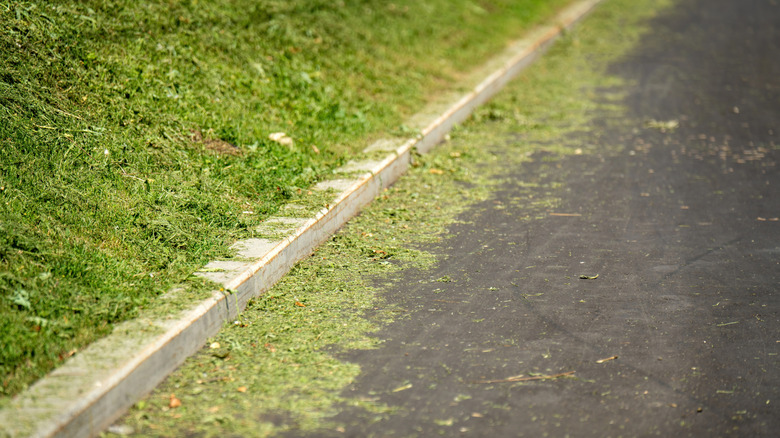
If you want to know whether or not grass clippings in the street is illegal where you live, you can check with your city or county government. But it really doesn't matter, since being a good neighbor means you shouldn't do it anyway, especially now that you know what kind of hazards it could cause. It may even end up harming you and your home if the storm sewers become an issue.
One way to keep your grass clippings from leaving the yard is to use a bagging attachment on your mower. You can dispose of the clippings in a controlled way. However, when you mow without a lawn mower bag, the left-behind clippings deliver nutrients to your grass and prevent runoff. So, bagging might not be the preferred option for every situation. Instead, pay attention to which side the chute is on, and push or drive the mower so it directs grass clippings away from the street when you're mowing the edges.
Some grass clippings may still end up in the streets or on the sidewalks when you mow your lawn. Just make sure you remove them quickly to avoid causing issues for other people or legal trouble for yourself. Don't just push them into the storm drains — blow them back into your lawn or sweep them up. It's also a good idea to clean up the clippings from sidewalks, as people who walk or ride bikes in front of your house could slip if the cement is grassy.