

Keep Your Yard Lush During The Summer Heat With An Easy Lawn Mowing Tip

For those of us who love a lush green lawn, these extremely hot summer days cause some concern. Keeping your grass thick and green in the intense summer heat is doable, but there are some tips you can use to protect your yard and some mowing mistakes to avoid at all costs. The primary tip being about where to set the height of your mower to get the best results.
For most of the year, you want to keep your grass at a just-right height. For cool season grasses, like Kentucky Bluegrass and Tall Fescue, set your mower to about 2 to 4 inches. Warm season grasses like Bermuda and St. Augustine can be cut a bit shorter, from 1 to 3.75 inches. However, when the temps go up in the summer, you want to give your grass a bit of extra help. Taller grass can protect itself better from extreme heat and wind. So for the peak of summer, set your mower about an inch higher than normal.
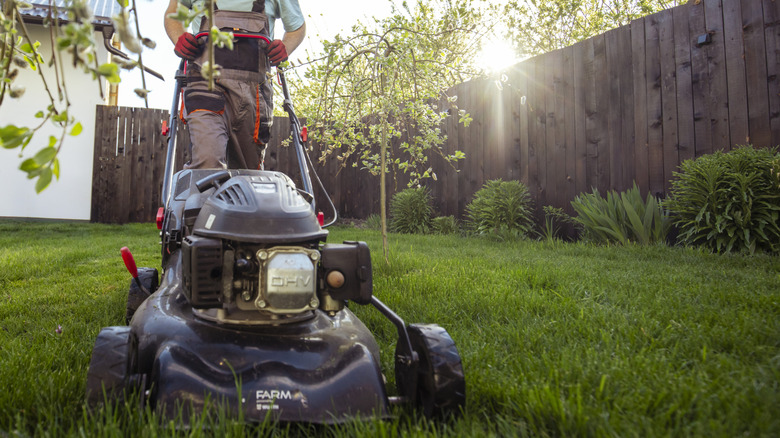
With that as the central tenant of your hot weather lawn care, there are a few other basic steps you can take to fight the heat. When you mow, always have a sharp lawn mower blade. A dull blade basically tears through the blades of grass, rather than slicing through them. It leaves a rough edge and stresses the grass. Also, only cut about 1/3 of the grass blades off at a time. So, if you plan to leave your grass 3 inches tall, wait until it's at least 4 inches long to mow. And leave the grass clippings on the lawn. They will help retain moisture and eventually enrich the soil as they decompose.
Additional heat-fighting techniques
You'll also need to water your lawn effectively during a heat wave. Normally, your lawn needs about an inch of water per week (whether from rain or from watering). During high heat periods, it will need double the hydration. To make sure you water deeply enough to get to the roots, thoroughly irrigate twice per week, rather than a little each day. Watering early in the morning is the healthiest time of the day. This allows the water some time to soak into the ground before the worst of the heat evaporates it.
A couple of other things will help that you may not have thought about. Soil compaction will make it harder for water to soak into the soil and get to the roots of your grass. Aerating your lawn will provide passageways for the water to get deep into the soil. Changing the direction that you mow in each time is another good habit. If you follow the same pattern each time you mow, the wheels of your mower may compact the soil.