

3 Things Your Tomato Plants Need In July To Keep Producing All Summer
We may receive a commission on purchases made from links.
What's more satisfying than biting into a juicy, homegrown tomato in the summertime? The produce will be ready for peak picking in August, and you're probably already dreaming of ways to put the literal fruits of your labor to good use. (Tomato, mozzarella, and basil, anyone?) However, there's crucial gardening maintenance to tend to before then, especially if you are anticipating flavorful results for your salad and pasta dishes. The main areas of focus for tomatoes in July are watering, fertilizing, and pruning.
Any gardener learning how to grow tomatoes is ready to rock and roll once the summertime strikes. The fruit requires temperatures that hover between 65-85 degrees Fahrenheit, a strong root system that you achieve by deep planting earlier in the year — and regular upkeep and nutrition. Though tomatoes thrive during the warm-weather months, temperatures that go over 90 degrees Fahrenheit will be cause for concern. Should you experience a heat wave in your area, be sure to have a covering like the Sukh garden shade cloth on standby for the scorchers.
How to water and feed tomatoes properly in July
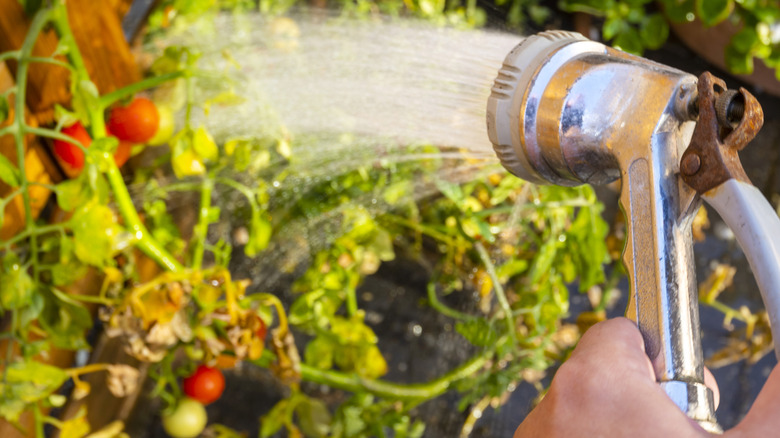
You're not the only one who needs hydration in the summertime. Consistent, deep watering is necessary in July to prevent tomatoes from cracking and splitting if the soil gets too dry. Although locations and zones will have different care requirements, Homes & Gardens states that tomatoes usually need about one to two inches of water weekly and benefit from a regular schedule. Consider purchasing a helper like the LemonRoad watering ring for assistance with consistency. Additionally, make sure you're wetting the soil and not the greenery, as that could potentially lead to fungal issues. Keep in mind, tomatoes in pots or containers are going to require more maintenance since they'll dry out quicker than those planted in the ground.
Equally as important as a steady watering schedule is consistent access to nutrition. The best tomato fertilizing tips recommend that gardeners provide potassium — which is key for the fruit and flavor — and phosphorus-rich fertilizer and tomato feed once you notice them flowering. You don't need to worry about nitrogen-rich fertilizer, as it focuses more on the green foliage than the fruit, which surely isn't where gardeners' heads are at this point in time in the season.
How to prune tomatoes properly in July
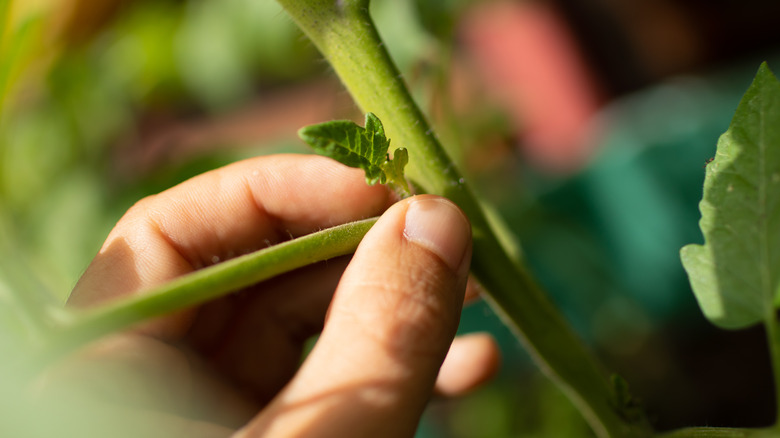
Come July, you're dreaming about a tasty tomato slice on your BBQ burger. To get there with your homegrown produce, you'll need to make sure you're paying attention to the tomato suckers that appear weekly between the stem and the branch. They're small attention-seekers who want to steal the taste away from the fruits, and with all the recipes you have laid out, you simply cannot have that, so remove them with your fingers — determinate tomatoes won't need as much pruning as indeterminate tomatoes. If stems overcrowd the rest of the tomato plants, it might be susceptible to fungus since the airflow is restricted, so keep a close eye for when you'll need to start plucking.
Another word of advice during this growth stage in July: Be aware of support. You'll want to make sure your stems aren't drooping or losing flowers, so if you don't have something like bamboo or jute stakes keeping them upright already, now is the time to invest. With careful and consistent upkeep, you'll be ready to enjoy those delicious tomatoes in no time.