

Fertilizer Secrets For Better Tomatoes: An Expert Shares Their Tips
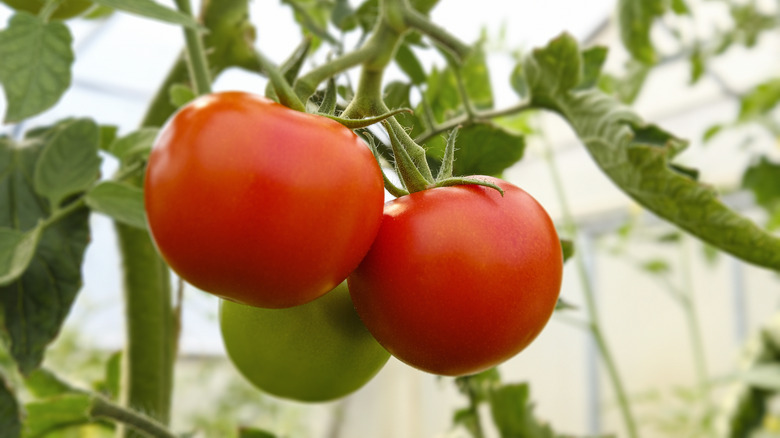
There's a lot of talk out there about how to grow tomatoes – maybe too much talk. Gardeners have so much to learn about this, and it's easy to waste time chasing the current wisdom about fertilizers, soil additives and amendments, watering schedules, support structures, pruning strategies, and all the rest. Sometimes, it's good to step back and focus on the key facts of life as a tomato: they like to eat; they prosper in acidic soil; and, if a big harvest is your goal (it is), they'll need a little help along the way.
Hunker spoke exclusively with content creator and garden coach The Young Nonno about the principles of tomato fertilizing, as well as a few other tips to help you enjoy a great tomato season. He told us that fertilizing tomatoes is not just about nutrients, but about when to deliver them. "In order to grow healthy plants with an overflow of fruit, tomatoes need regular fertilizing throughout the season," he says. "But they need different nutrients at different points of their growing cycle, so the type of fertilizer to use, and when, changes."
Fertilizer has its greatest impact on all tomato varieties early in the year, but it's critically important to switch up your nutrients as the plants shift gears. "If the nutrient balance doesn't change as the plant moves into the flowering and fruiting stages, then it won't get the right nutrients for optimal output," The Young Nonno tells us. "Continuing with fertilizers high in nitrogen will grow a lush, green, leafy plant instead of one full of fruit."
Fertilizing tomatoes on a schedule
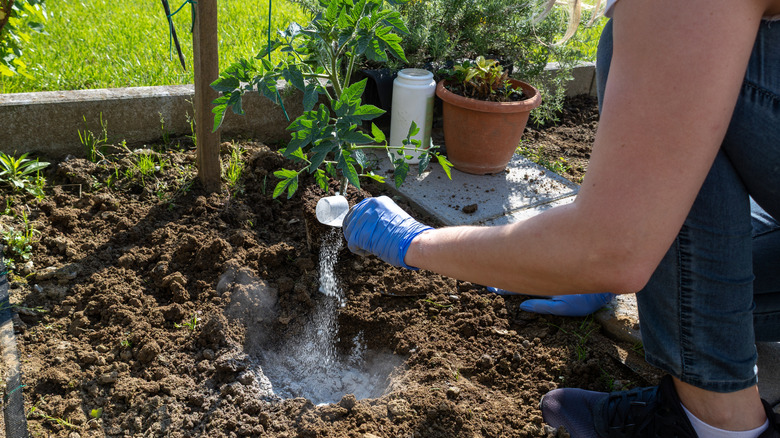
Giving tomatoes the nutrients they need when they need it is easy enough to understand — but you won't find it in a one-size-fits-all bottle. More to the point, you won't find a fertilizer for all seasons. "As seedlings or transplants," The Young Nonno tells Hunker in our exclusive interview, "nitrogen is the most important nutrient so that the plants grow fast and large — poultry manure and blood meal are great soil additives at this stage."
Next up in the holy trinity of macronutrients is phosphorus. "Phosphorus is the nutrient needed for root and early flower development, so bone meal becomes the next fertilizer," The Young Nonno says. That's followed by potassium. "Once fruit forms, potassium becomes the integral nutrient for better tasting tomatoes," he explains, "so a balanced organic water-soluble fertilizer is best."
From transplant to your first ripe tomatoes, these plants will hungrily soak up nutrients, so plan to fertilize them every two weeks. "Once tomatoes begin to be harvested, water-soluble fertilizing can be reduced to once per month until the end of the season," The Young Nonno tells us.
Other key strategies for growing tomatoes
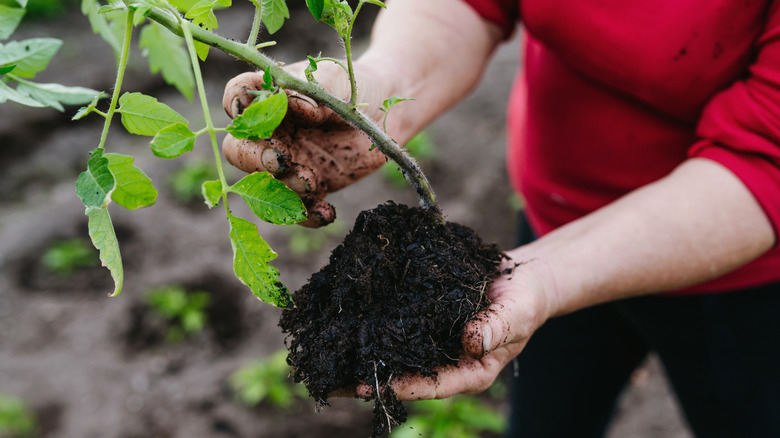
Of course, if growing tomatoes was simply a case of finding a good fertilizer, it would be a cinch — but it's not. Speaking exclusively to Hunker, The Young Nonno explains that overall soil health is even more important than fertilizing. And this is where it's important to understand that fertilizer isn't always something you buy in a bag or a bottle, but something that's naturally provided by rich, healthy soil. "Amending your garden soil with compost and manure not only replenishes nutrients," he says, "but improves soil structure and growing conditions. Doing that means less reliance on extra fertilizer."
Of course, the other details that tomato growers obsess over are important too. According to The Young Nonno, good support and pruning are second only to soil health in importance to your plants — though there's not a universal approach to either. "Pruning is essential for airflow and for impacting the amount and size of fruits that are produced," he tells us, "but the right approach depends on the tomato variety and method of growing them." Whether you're growing determinate or indeterminate tomatoes, cherry or beefsteak, in a garden or a high tunnel, you'll want to tune into both issues to help your crop thrive.