

Not Just For Lawns: There's An Overlooked Way To Use Aerators In Your Backyard
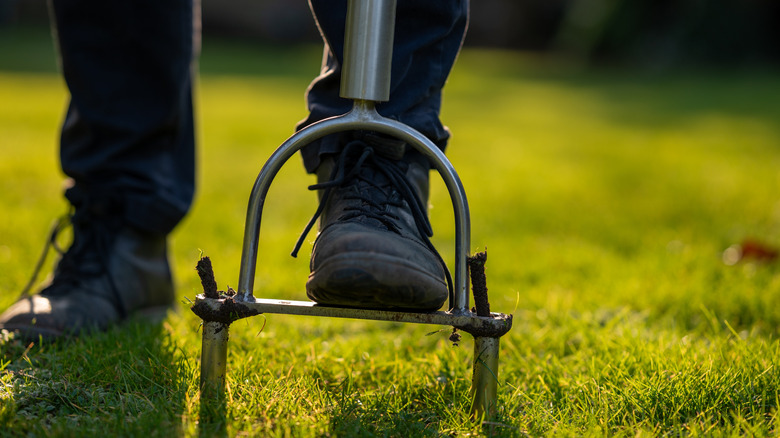
If you've experienced patchiness or compaction in your lawn, you might have heard of aeration as a solution. Lawn aeration is the process of breaking up compaction through the use of aerating tools, which can range from pricey motorized core aerators to simple DIY aerators you can make from tools you already own. These tools poke holes to loosen the soil and allow more moisture and air to reach the grass roots and encourage healthier growth. It's a great way to help revive a struggling lawn, but did you know there is another way to use aerators in your backyard?
Tree roots need aeration just as much as grass does. A tree's health tends to be based on the parts of the plant that can be seen, particularly its branches and foliage. As such, the health of the roots can often be overlooked until it's too late. Tree roots need oxygen and moisture in order to absorb essential soil nutrients needed to feed the tree. If it is not receiving those elements because the soil is too compacted, the health of the tree will suffer.
Some signs that the trees in your yard need root aeration are inconsistent growth, early leaf drop, yellowing foliage, and dying branches. However, before you start poking holes into the ground around your tree, you need to know which aeration methods will work without damaging the roots.
How to aerate tree roots without damaging them
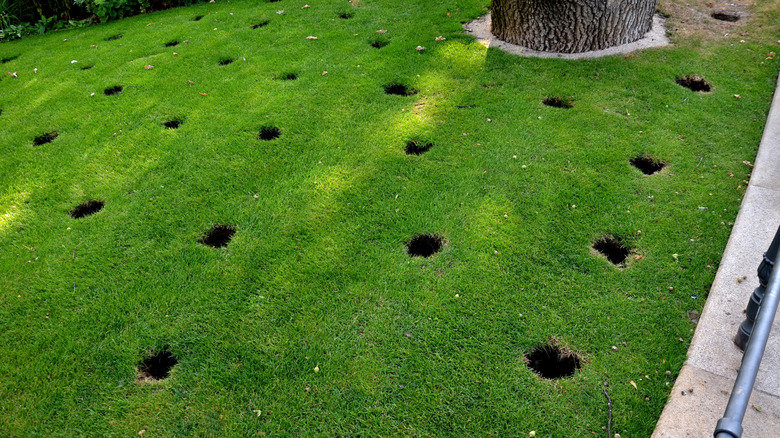
One of the most common methods of aeration is what's called core aeration. This removes small plugs of soil, typically 2 to 4 inches deep, which creates holes for the nutrients, air, and moisture to reach roots near the surface. For reaching trees' deeper roots, there's also the vertical mulching method, in which a deep root aerator, drill, or other specialized tool is used to auger holes in the ground that can then be filled with sand or compost. These holes can be as much as 18 inches deep, depending on tree size.
Core aeration and vertical mulching will work for trees, but care needs to be taken not to damage the roots. If you core aerate too close to a tree trunk, you risk damaging the surface roots. While there are ways to cut roots without killing a tree, damaging surface roots can introduce disease. Therefore, core aeration should be done along the outer circumference of the tree's drip line, where the roots are deeper and the machine won't damage them. Vertical mulching can be done a little closer to the trunk (but still 3 to 10 feet away, depending on tree size) as it is far easier to control and causes less soil disruption.
If you really want to avoid any error on your part, call a tree care professional. They will have more tree-specific tools like an air spade, which uses pressurized air to disturb the soil but won't damage the tree roots. A pro will also be able to tell if a tree is beyond saving and if any of the trees in your yard are legally protected species.