

Help Reduce Ticks In Your Yard By Avoiding This Common Landscaping Plant
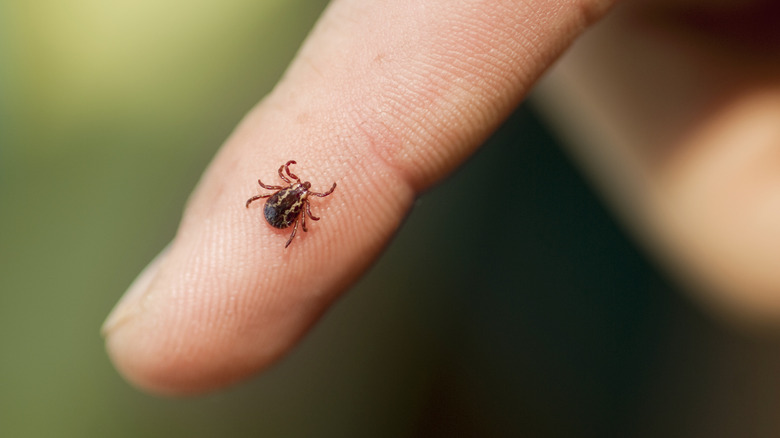
Ticks are tiny, but the damage they can cause is massive. Around a dozen different types of illness can be traced back to a tick bite. The most well-known tickborne illness is Lyme disease, which affects nearly half a million people in the U.S. each year. The best way to protect yourself and your loved ones from tick bites is to keep the little pests as far away from your home as possible.
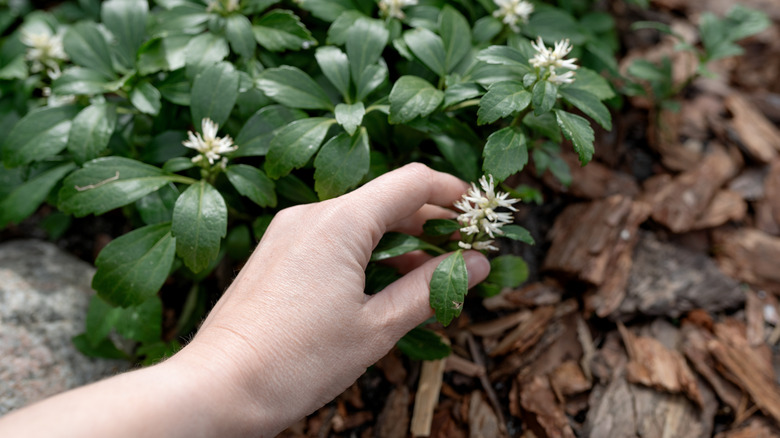
What you plant in your yard can either attract or repel ticks from your property. Certain groundcovers, like ivy, are magnets for ticks in your yard – so is pachysandra (Pachysandra terminalis), a shade-loving perennial in zones 4 through 9. Ticks love pachysandra, as it provides a nice and shaded humid spot for them. Pachysandra is more than just a tick haven. It's not native to the U.S. and is often considered an invasive species. The plant spreads by rhizomes, and it can quickly take over your yard.
Those rhizomes also make it difficult to get rid of pachysandra, as you need to dig up each one to ensure the plant doesn't come back. Using an herbicide may be the most effective way to eliminate pachysandra, especially from a larger area. However, herbicides bring with them their own set of hazards and risks. If you decide to use an herbicide to remove pachysandra, follow the instructions on the label, and take proper safety precautions. Once you've successfully gotten rid of the pachysandra, consider replacing it with groundcovers or other plants that deter ticks.
What to plant instead of pachysandra
While your best bet for creating a tick-proof yard is skipping the ground cover entirely, there may be areas you want to fill with vegetation. Ideally, any groundcovers you plant will be as far away from your home as possible and not close to play areas or walkways. Since ticks prefer the shade, focus on growing groundcovers that do best in full sun. It's also worthwhile to choose plants that deter animal hosts, such as deer. To prevent groundcover from taking over your yard, avoid plants such as mint, which can spread uncontrollably.
Creeping thyme (Thymus praecox) can be an ideal pick as a tick-resistant groundcover. It grows quickly, is deer-resistant, and has an appealing aroma. In the summer, it produces flowers that attract butterflies and other pollinators to your yard. Creeping thyme is drought tolerant and loves the sun, two conditions that ticks despise. Similarly, lavender (Lavandula) is a drought-tolerant, sun-loving, and pollinator-friendly plant whose fragrance may help keep ticks away.
In addition to choosing plants that may deter ticks, consider adding a barrier between any groundcovers and the rest of your yard. Use wood chips or gravel to create a 3-foot wide barricade between the area with groundcovers and your lawn. Keep your plants well pruned and remove any dead stems, flowers, or leaves to keep the area as inhospitable to ticks as possible.