

Asphalt Vs. Paver Driveways: Which Costs Less?
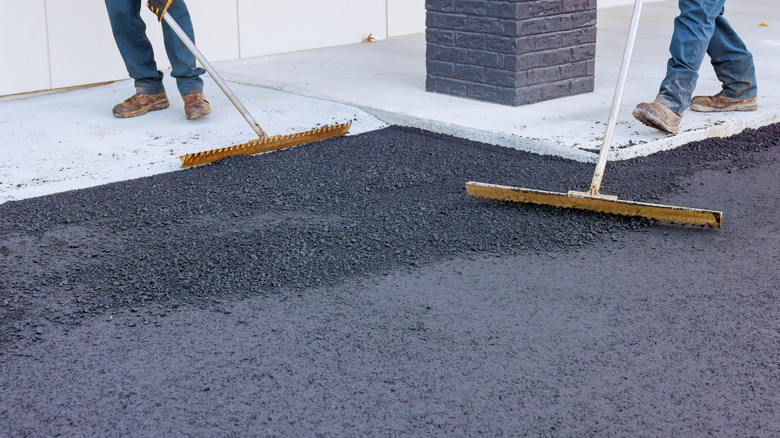
Asphalt makes for an attractive and flexible driveway surface, but pavers are equally stylish, and they're potentially a more eco-friendly driveway material. While asphalt is certainly the most affordable upfront, pavers make for a long-lasting solution that could end up saving you money over time.
To test the cost of each, we'll be using a sample driveway of 600 square feet to use as a base. We'll start with asphalt. A material made by mixing aggregates and sand together with a black, sticky, petroleum byproduct called bitumen, new asphalt paving costs between $7 to $13 per square foot, based on pricing data from Angi. For our sample driveway, that gives us a price range of $4,200 and $7,800.
Delineating the price between asphalt and pavers is not as straightforward as determining that asphalt costs less than concrete, another popular paving material. According to data from Angi, pavers range in price from $10 to $35 per square foot, with highly decorative styles being the most expensive. This gives us a price range of $6,000 to $21,000 for our sample driveway. However, Angi places the average cost around $12,000. So, yes, pavers are definitely not the cheapest way to pave a driveway – but they might just get you more bang for your buck in the long term.
Pavers cost more than asphalt, but they last longer and are cheaper to repair
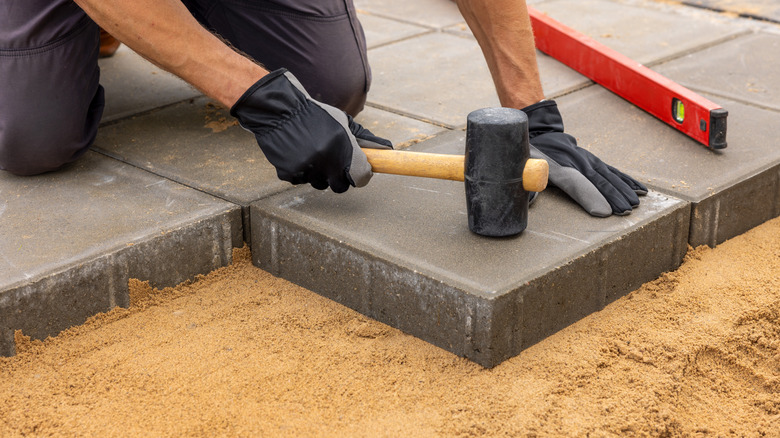
One of the main reasons that pavers cost more than asphalt has to do with installation. Asphalt rolls onto a surface hot and is ready to be driven on after a few days of curing. Pavers, on the other hand, are individual units that could take several days to lay, depending on the size of the driveway and how complicated the design pattern is. This means pavers tend to have a higher hourly rate for installation than asphalt.
In terms of longevity, asphalt has an average lifespan of between 15 to 20 years. Meanwhile, a natural stone paver driveway can theoretically last forever. While other composite or permeable pavers might have shorter lifespans — around 20 to 50 years with proper maintenance — natural stone pavers would be the way to go if you value longevity, or want to pass your property down to future generations.
Then there's maintenance. Asphalt needs to be sealed every three to five years at a cost of $3 to $7 per square foot, per Angi. Meanwhile, Angi also states that paver maintenance, which includes cleaning, sand filling, and occasional releveling of sinking pavers, only costs $1 to $3 per square foot, meaning you'll pay $1,800 at most for our sample driveway. You can even fix a sinking paver yourself with a quick and easy trick using a screw driver and some self-leveling sand.