

Forget Asphalt Driveways: A Tougher, More Attractive Alternative
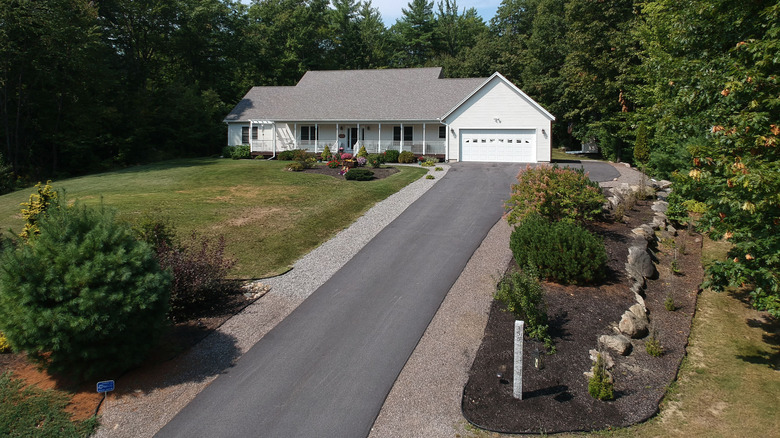
Driveways are essentially functional — they do a difficult, important task — but they are also no small part of the curb appeal of your home. So is it asking too much for them to also be attractive? Traditional asphalt or bare bones concrete driveways are not ugly, but they don't add much to the overall aesthetics of your home. That is not the case when it comes to exposed aggregate concrete driveways. Not only is exposed aggregate concrete tougher than asphalt, it is the eye-catching alternative that just may be what you are looking for. Say goodbye to a boring driveway.
Asphalt is a mix of bitumen (a crude oil byproduct) and aggregates, laid down hot and smoothed out. But what is the difference between a standard concrete driveway and a concrete driveway with exposed aggregate? They are essentially poured the same way, and then comes a twist. Concrete, in its basic form, is a combination of cement and aggregate — uniformly selected small stones — mixed together. With a standard concrete driveway, there rises a thin layer of creamy cement that hardens into a smooth, uniform surface. With an exposed aggregate driveway, at a specific point as the concrete hardens, that top layer is removed (by brushing, power washing, or using certain chemicals) exposing just the top of the rocks that make up the aggregate. Done well, it exposes a uniform, dimpled texture with various colored rocks providing a durable, eye-catching surface.
Pros and cons of an exposed aggregate driveways
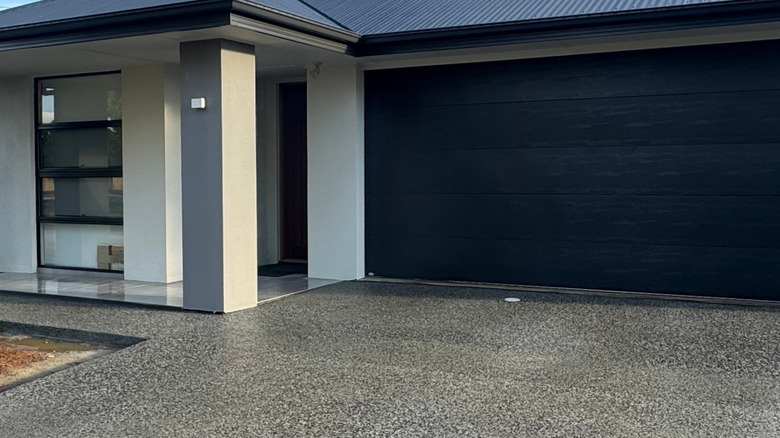
One of the big plusses with an exposed aggregate driveway is its appearance: It's one of the best stylish alternatives for your driveway. It is far more interesting than your run-of-the-mill asphalt or concrete driveways. Additionally, the customizable color of the rock which makes up the aggregate adds depth, interest, and texture to the surface. Exposed aggregate also offer many of the benefits of a standard concrete driveway. They are very durable, lasting 30 years or more when properly installed and maintained. Concrete does not get soft the way asphalt does under extreme heat and its lighter color reflects rather than absorbs solar energy. It is also low maintenance, only requiring re-sealing every five years or so.
There are some downsides to concrete driveways as well. Exposed aggregate driveways can be as much as twice as expensive to install compared with asphalt or standard concrete driveways (asphalt being the least expensive), thanks to the extra labor involved. While certainly durable, it is slightly less so than a standard concrete driveway. Removing that top layer of cement weakens the pad slightly and makes it more vulnerable to environmental wear and tear. For that reason, the maintenance costs are slightly higher than a standard concrete surface. However, some manufacturers claim that exposed aggregate can actually outlast traditional poured concrete, as the exposed pebbles don't wear the way surface concrete paste can. Curiously, despite the texture provided by the exposed aggregate, this type of surface can be a bit more slippery than a standard concrete or asphalt surface when wet or icy.