

The Summer Lawn Mowing Mistake That's Damaging Your Trees
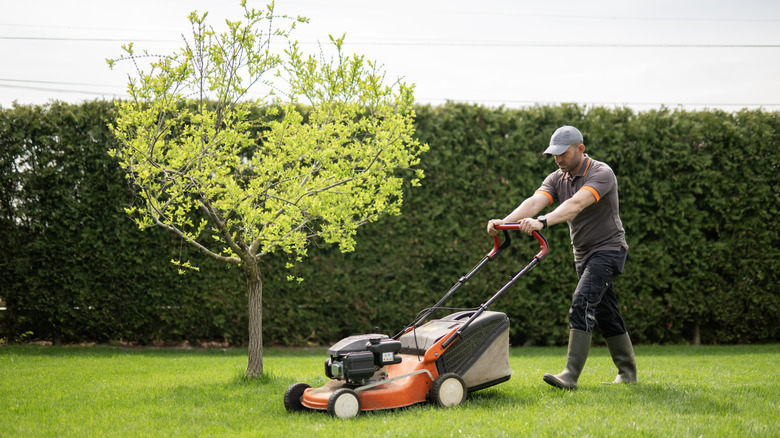
In the battle of tree versus mower, the tree might seem like the clear winner. After all, established trees are tall and strong, enduring heavy wind, rain, and ice storms (depending on where you live). A mower isn't going to take down a whole tree (sometimes it struggles to even take down the grass if you let it grow a little too long). And, sure, you might get a little too close sometimes and knock off a little bark, but is it really that big of a deal? It could be. That damage can cause lawn mower blight, which is an injury from the mower (or your weed trimmer) to the tree's bark.
The bark is there for a very important reason: it protects all the inner layers of the tree. And even a little damage can cause cell death in the deeper levels. The extent of the damage determines what happens to the tree, but it could result in disrupted sap flow, infections, and even death. Repeated mower blight could keep the tree from taking up the water and nutrients it needs to thrive. You might notice a decrease in the canopy or discoloration in the leaves as signs of a problem.
To prevent this situation, add one more item to your list of lawn mowing tips that will make you a mowing expert: mulching around trees. The mulch allows you to maintain a neat, tidy yard without getting your lawn mower or weed trimmer too close to the trunk. It also helps you shave a little time off your mowing routine since you have less grass to clip.
Prevent mower blight with a mulch ring
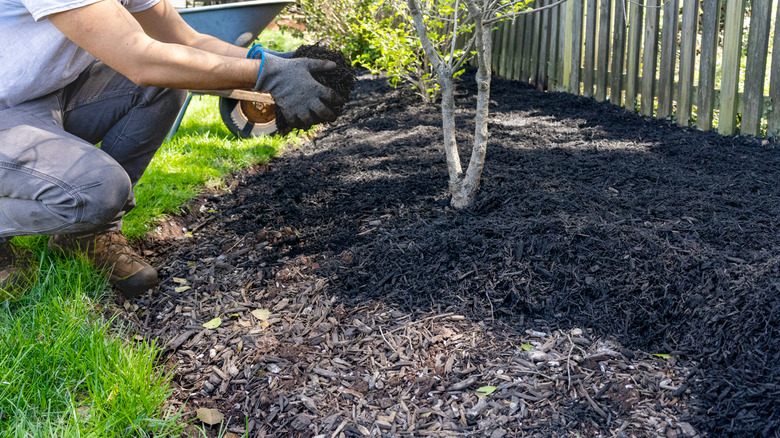
The risk of mower blight is higher in spring and fall. But you're likely mowing a lot in the summer, so repeated hits in the same spots could still rip off the bark and expose the under layers to damage. Laying down the mulch as soon as possible prevents mower blight, no matter what season you're in currently.
It's important to mulch your tree the right way so you don't cause new issues. For example, when you use too much mulch, it can deprive the roots of oxygen and kill inner bark layers. Limit the mulch to 3 to 4 inches deep to provide the benefits (moisture retention, soil temperature control, better soil structure, and decreased weed and grass growth) without harming it. Create a wide mulch ring — at least 3 feet in all directions. Ideally, you want to extend the mulch to the dripline, but you can stick to 3 and 12 feet if the dripline isn't possible. That distance helps protect your tree from becoming a hit-and-run victim of your lawn mower. Don't pile the mulch up against the tree trunk.
If you don't want to use traditional mulch, there's a smart alternative to stop weeds: mulch mats. They're usually smaller, so they're better for newly planted trees with narrow trunks. No matter what option you use, check the mulch surround often and apply more as needed to keep your trees healthy and protected.