

Not Coffee Grounds Or Teabags: This Kitchen Scrap Makes A Budget-Friendly Wood Stain
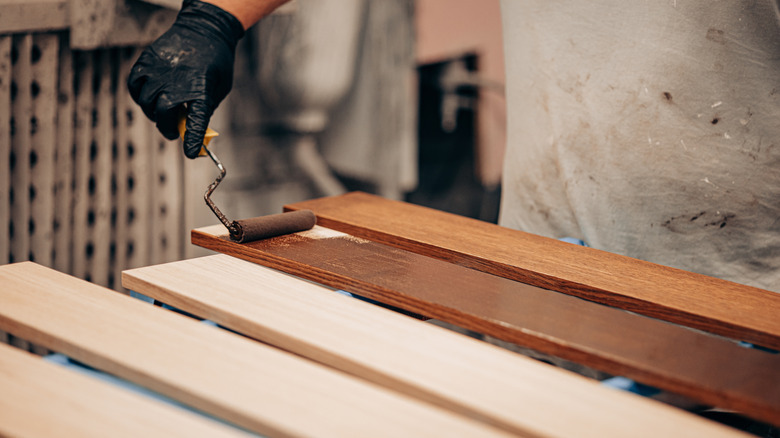
If you've got coffee grounds laying around, did you know that you can reuse them as a genius DIY wood stain to give your next project a rich color? Even tea can be used to bring character and color to wood. However, they aren't the only kitchen scraps you can use to create a natural, budget-friendly wood stain: You can use onion skins, too.
Wood stains are coatings that absorb into the wood, changing the color and protecting it from moisture while also highlighting the beauty of the natural grain. Stains can be based on multiple platforms, including oils, water, solvents, or gels. When it comes to onion skins, this will be a water-based stain. Onion skins are a common kitchen byproduct used to make dyes for wool and other fabrics. This same dye can be used on wood products. Skins from yellow onions tend to give gold or orange colors, while red onions yield brown, pink, and even green.
The benefit of using onions skins for wood stain is that it is also budget friendly. A gallon of commercial wood stain can cost upwards of $40 to $80, if not more, while you can often find a pound of onions for just a few dollars. By this math, you can buy upwards of 10 or 20 pounds of onions with the money you'd spend on a single gallon of stain. Plus, onion skins are a recycled product that you can be composted for use as organic fertilizer for your garden.
How to make affordable DIY wood stain using onion skins
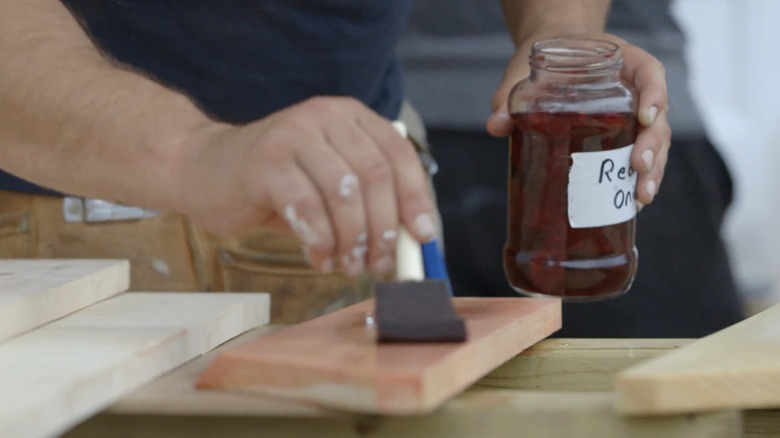
The easiest way to make onion wood stain is to simply soak the onion skins in warm water until the water changes color. The amount of water and onion skins you use will depend on how deep of a color you want. If you use more water, you'll have a more diluted stain. If you use less water, the higher concentration of skins may make for a fuller shade.
Another method is to put the onion skins in a pot and simmer them on low heat for an hour, then allow them to sit overnight. You can also soak the onions in vinegar, which is similar to the nails-and-vinegar wood stain hack that gives you an attractive dark or blueish color. However you make the onion stain, be sure to strain the mixture to remove any skins.
Any wood that is going to be stained will first need to be sanded. This will open up the pores in the wood grain to accept the color. Using a sponge brush or standard paint brush, apply the onion stain onto the wood. As with other water-based stains, it will likely need at least two coats before you get the color you want. Luckily, water-based stains dry quickly, so this won't take long.