

The Natural Fertilizer Your Garden Needs Is Already In The Kitchen
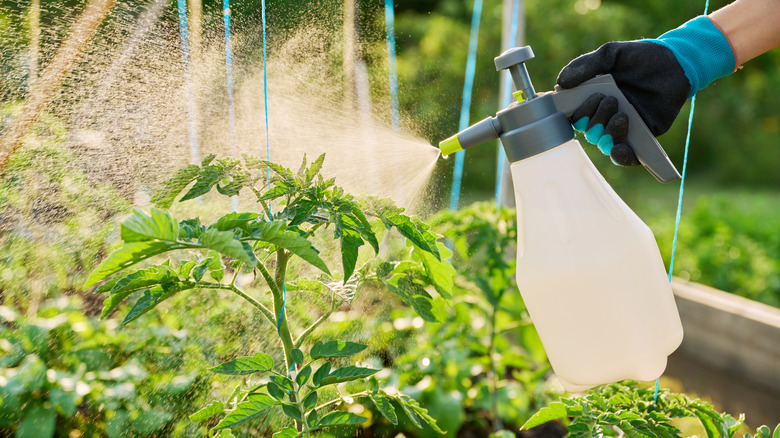
You may already be a pro at home composting your kitchen scraps, and you likely know that the soil created from the breakdown of discarded stems and peels is great for your garden. Next time you're about to toss your onion skins into your compost, however, consider making them into a powerful and nutritious liquid fertilizer for your plants. The skin of the humble onion is packed with nitrogen, magnesium, phosphorus, and other nutrients that plants need to grow strong, and the dry peels also contain a healthy amount of quercetin, which enhances plant growth. Onion peels also have antibacterial and antiviral properties that can help plants resist disease.
Social media is full of gardener testimonials about the positive effects that "onion tea" or "onion juice" had on their plants — from being a helpful fertilizer for growing tomatoes and cucumbers to bringing house plants back to life. One Facebook commenter said that his dying hibiscus began flowering again after adding onion peel liquid fertilizer once a week for a month. These benefits aren't just anecdotal, either. A study published by the American Society for Horticultural Science found that onion scrap-based fertilizers improved root growth on bok choy, lettuce and radish. Another study, published in the International Journal of Science & Engineering Development Research, demonstrated the growth and disease-resistance benefits of onion peel water on several types of flowering plants.
How to make and use onion peel liquid fertilizer
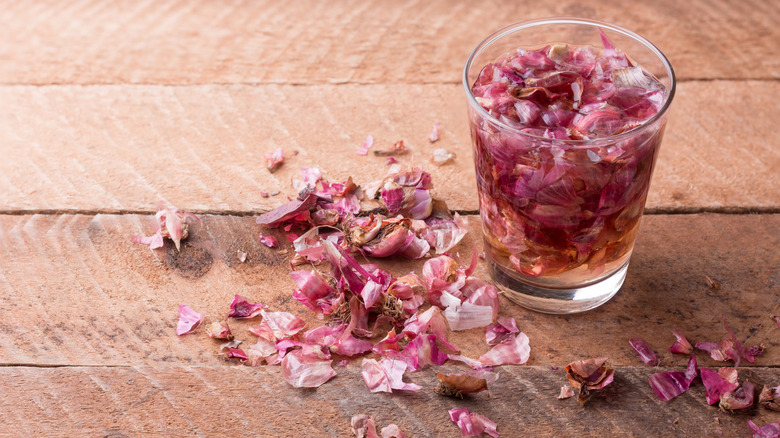
Red or white onion peels can be used for this handy DIY fertilizer trick. You'll first need to gather enough peels to fill a jar or pitcher, keeping them dry in the meantime so they don't grow mold. Then, simply soak them in water for at least a day, after which you can pull the peels out of the water; feel free to compost or dispose of them. Reserve the used water as a liquid fertilizer you can spray on leaves and apply around the base of your plant. First, though, you will want to make sure the onion juice you've created is well diluted, or it might burn your plants. A good ratio of water to concentrated onion peel juice is at least 5 to 1. If you're in a pinch, take your cue from YouTuber My Amazing Homestead, who suggests making a small batch of this fertilizer by placing onion peels in a French press and adding hot water, then letting it soak for two hours before adding a liter of water to dilute.
However you choose to make it, you can apply your onion fertilizer to most plants about once per week. As with any fertilizer for your vegetable or flower garden, apply your onion water in the morning or evening, when the weather is cool, so the leaves can absorb the nutrients without burning. Also, ensure the soil is already damp to avoid shocking your plant's roots.