

87 Vs. 93: Does Higher Octane Gas Help Or Hurt Your Lawn Mower?
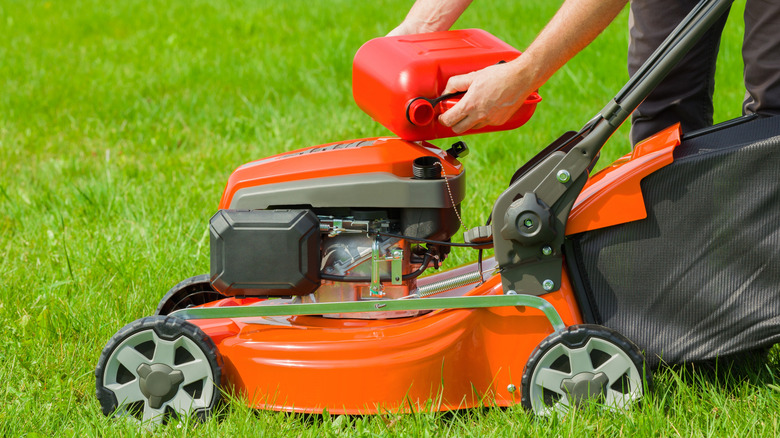
What's the difference between a sports car and the lawn mower sitting in your garage? Of course there are many differences, but we'll give you a hint on a key point: One works with either 87 or 93 octane fuel, and one performs best with 93. If you said that the sports car is the one that will work best with high octane fuel, you'd be correct. Your lawn mower, on the other hand, will work if fueled with either low or high octane fuel. However, neither 87 or 93 octane hurt or help your lawn mower get the job done any better.
But what exactly is the difference between 87 and 93 fuel? Well, it all has to do with octane ratings. Simply put, higher octane fuel is more stable than lower octane fuel. This means that 93 fuel will withstand higher internal compression before ignition, making the engine run more smoothly. In the car world, this translates to better engine power and efficiency for high-performance engines. For standard 4-stroke lawn mower engine, and even the less-common 2-stroke engines, which both run on lower compression rates, octane level makes no difference.
While regular 87 is the minimum fuel requirement for most lawn mowers, this doesn't mean you can't use 93 if you feel so inclined. However, unlike in a car, the 93 isn't going to improve the performance, comfort, or fuel efficiency of your lawn mower. It's also not going to store any better either because, even though it's technically more stable, 93 octane usually still contains ethanol, which degrades as it's stored.
Use either 87 or 93 in your lawn mower, but be sure to store it right
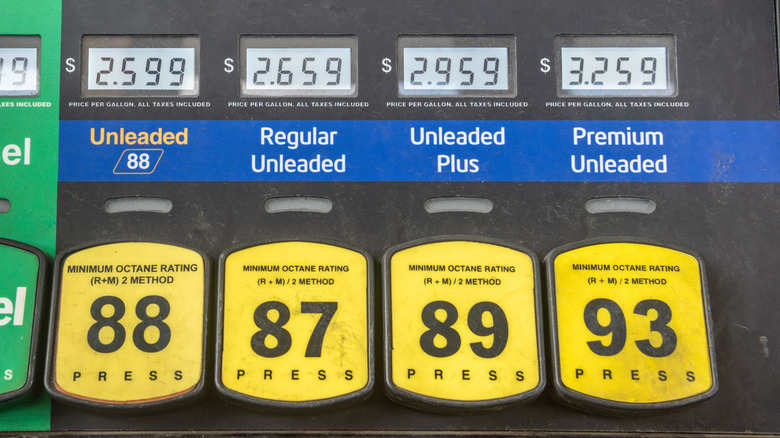
Ethanol percentage is more important than octane numbers when it comes to putting fuel in your lawn mower. Both 87 and 93 octane are generally offered as E10 fuels, meaning there is a ratio of 10% ethanol to 90% gasoline. So, while the 93 premium will have higher octane levels, it has the same amount of ethanol as 87, again showcasing the fact that the higher octane fuel doesn't bring additional benefits to your mower.
One of the big reasons you never want to use last season's gas to start your lawn mower is because the longer the ethanol in fuel sits, the more moisture it pulls in from the atmosphere. This can accelerate rust in the fuel tank and corrode rubber or plastic fuel lines. While there is evidence that gas with ethanol can eventually cause small engines to deteriorate, E10 fuels are the highest percentage small mower engines are designed for. Even then, it's best to add a fuel stabilizer to reduce the oxidization. Any higher ethanol percentage (like E15 gas) increases that risk of engine deterioration. In fact, it's preferable to use fuel that has no ethanol at all. The easiest way to find a station selling ethanol-free gas is to hop into neighborhood social media groups or check a site like pure-gas.org for local retailers. It's worth noting that ethanol-free fuel can run 20 cents to $1 more per gallon than the more common E10 option.
Even with ordinary gas, price is a consideration. As of this writing, AAA reports that 87 octane fuel averages $3.97 per gallon, while 93 octane is at $4.86. To our mind, if it costs more and there is no real upside, there's no point to using premium gasoline in your lawn mower.