

Ditch Landscape Fabric: There's A Natural Alternative That's Also Cheap
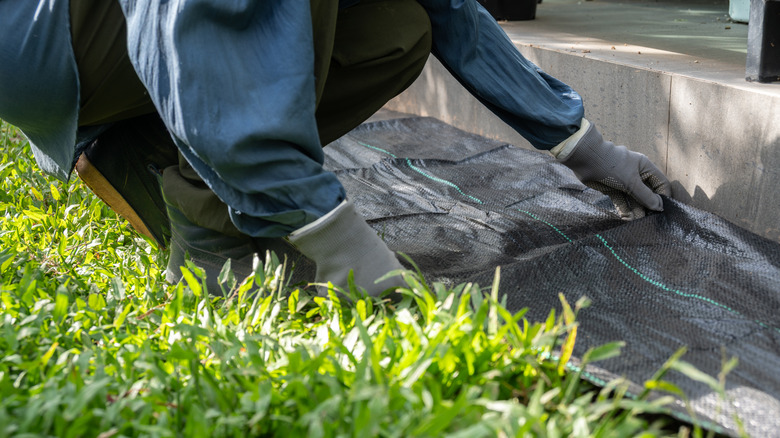
When it comes to establishing or reinvigorating your landscaping, one go-to weed-suppressing product is landscape fabric. The purpose of landscape fabric is to create a barrier that weeds cannot penetrate. Ranging in price from $0.20 to $0.75 a square foot, it is an affordable option. However, there is a natural alternative that's not only more environmentally friendly than landscape fabric, but also just as cheap.
Bark mulch is typically a byproduct of sawmills that remove bark from trees to create lumber. That bark is then shredded and sold back to consumers for landscaping purposes. You can buy bark mulch in bulk or in bags at home improvement stores, though you might want to think twice before buying it from Home Depot, as bagged mulch can be more expensive.
In bulk, bark mulch is measured in cubic yards and can cost roughly $30 to $100 per cubic yard, depending on the kind you get. If you lay a cubic yard of mulch at a depth of 2 inches, you're covering an area of 162 square feet. At the higher end of the price range, landscape fabric will cost $121.50 to cover that same area. So, while both products are roughly comparable on price, there are environmental reasons to ditch landscape fabric in favor of bark mulch.
Use bark mulch to supress weeds and feed your garden
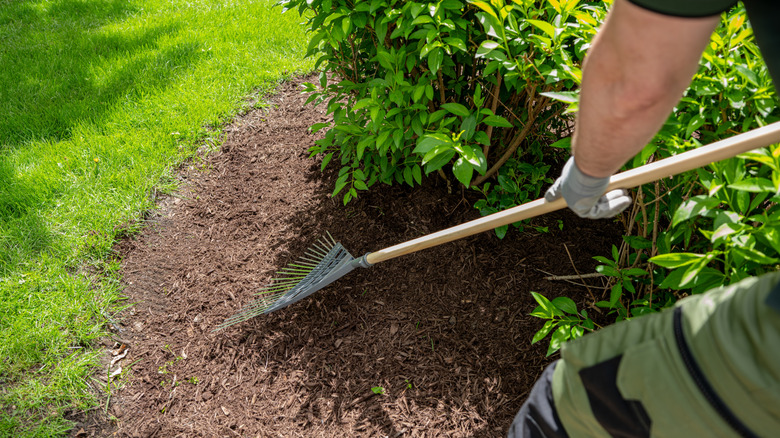
Of the many pros and cons of using landscape fabric, one of the biggest cons is the environmental problems it can pose. Landscape fabric is made from synthetic materials such as polyester or polypropylene, which break down over time, leaching harmful microplastics into the soil. It can also disrupt soil aeration, affect water permeation, and kill helpful soil microorganisms.
By contrast, bark mulch offers a more eco-friendly solution. Derived from hardwoods like hickory or softwoods such as pine and spruce, bark mulch not only provides a more natural look but also offers numerous benefits for soil. Because it blocks sunlight to prevent germination, bark mulch is an excellent ground cover for suppressing weeds and preventing them from overtaking your landscape beds. More than that, bark mulch is permeable enough to allow water to reach the soil easily and helps soil retain moisture during dry spells.
Like landscape fabric, bark mulch will break down over time. However, unlike landscape fabric, broken-down bark releases nutrients back into the soil. That enrichment encourages beneficial microorganisms, leading to healthier soil and stronger root development for your plants. You can refresh your mulch every 1 to 2 years, making it an easy, highly sustainable mulch choice for your next project.