

Skip Standard Gravel: The Landscaping Alternative That Brings Woodland Charm To Your Yard
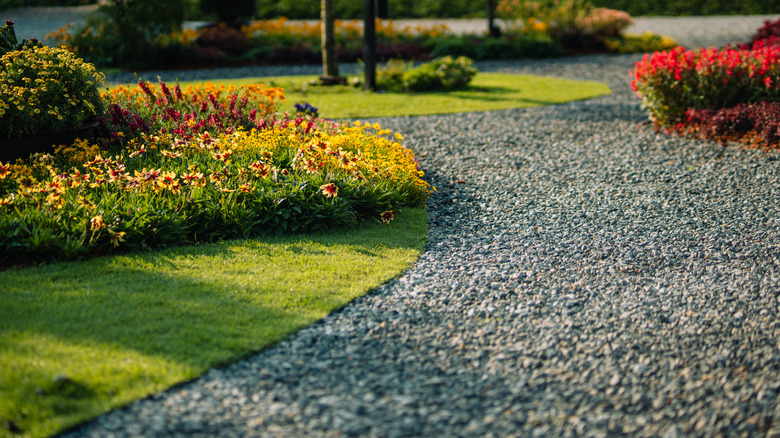
If you're looking to turn a weedy, worn-down area into a beautiful piece of landscaping, using gravel is a great way to get a clean, sophisticated look. But if you're looking to bring woodland charm to your yard, that isn't the way to go. Instead, choose common haircap moss (Polytrichum commune) for a natural and low-maintenance alternative.
Also known as common hair moss or Great Goldilocks, this plant grows naturally in a wide range of habitats from forests and wetlands to urban backyards and arctic tundras. While it prefers moist conditions, haircap moss can tolerate drier areas and higher winds. It is hardy in USDA Zones 2 through 15. Haircap moss is an evergreen perennial, growing relatively loose clumps of rigid stalks that resemble a forest. These branches grow taller than most mosses, often extending between 1 ¾ inches to a foot in height.
A close cousin of haircap moss known as juniper haircap (Polytichum junipernum) is a good alternative because it is even more tolerant of drier environments. It grows slightly shorter than common haircap, typically 4 inches tall, and has slightly more distinct branches that have a star shape to their foliage. Both types of plants reproduce with spores instead of seeds grow in wide swaths, making them a perfect ground cover that will give your yard that woodland look.
How to use haircap moss as landscaping ground cover
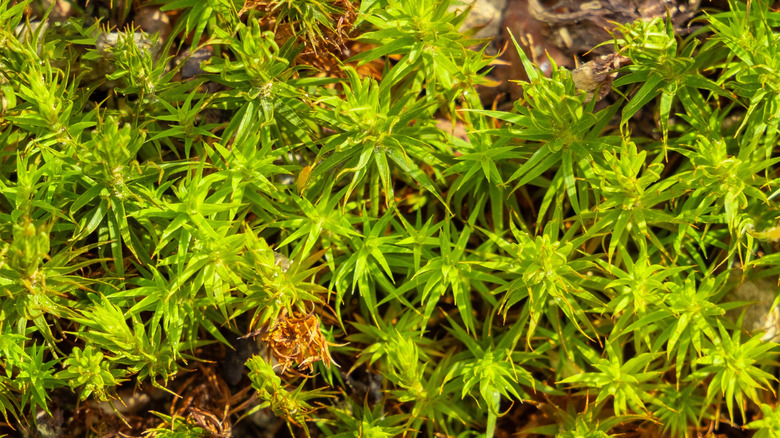
One of their great things about growing common haircap moss as ground cover for your landscaping is that it can grow in poor or rich soil conditions, though it prefers some acidity. Common haircap is also going to be a great candidate for soil that retains dampness, which various other plants may not be able to withstand.
Another plus is that common haircap grows amazingly well in shady conditions. Its native environments of dense forests and tundras are also places with low light. This plant can grow perfectly fine in full to partial sun as well. So, if you've been looking for an easy-to-grow ground cover that will fill the shady areas of your yard, this is it. Haircap moss will work well in rock gardens, beneath trees, and even as additions to bonsai gardens.
When it comes to actually planting and growing your own moss, the process is amazingly simple. Clear the area you choose of any grass, rocks, or leaf debris so the moss can have direct contact with the soil. You can score and disturb the soil a little bit to make rooting easier. For the first few weeks, make sure the moss is getting consistent watering for growth. Once established, you really only need to keep it free of debris so it won't discolor , and only water if conditions have been exceptionally dry.