

The Easiest DIY To Turn A Weedy, Worn-Down Side Yard Into A Clean, Beautiful Space
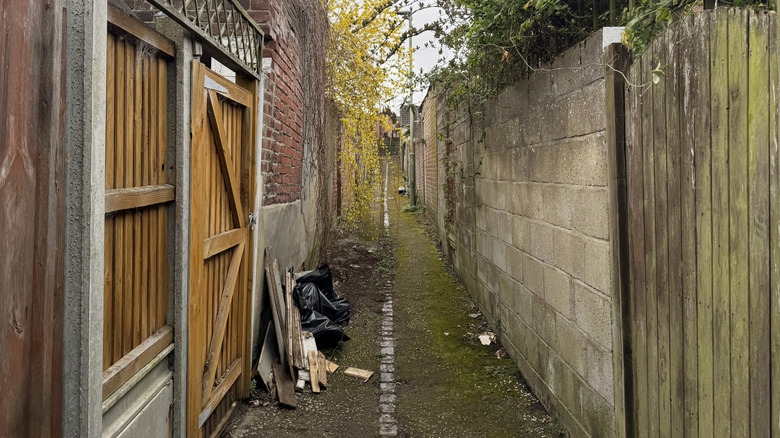
Side yards are tricky. They're often shady, making it hard to establish landscaping. They can also be narrow, leaving little room for much beyond a garbage can or air conditioning unit. Even if yours has a poured concrete path or a few stepping stones, it may not take long before weeds start taking over. There are a lot of side yard landscaping ideas that can turn even the most worn-down area into a clean, beautiful space. If you're on a budget and looking for an easy DIY, a little landscape fabric and some pea gravel can make all the difference.
The first step in any landscape design DIY is to assess your space. If your side yard has become the spot where you stash random remodeling leftovers, your broken pavers and planters, or other debris, finally getting rid of them will make a difference almost immediately. You'll then want to look carefully at the ground to see whether it's level or has places where water is likely to pool. Dig up any weeds before grading any sloped areas away from your foundation.
Once your prep work is completed, measure the area carefully before investing in materials. Head to your local home improvement store for heavy-duty landscape fabric and bagged pea gravel. The amount you need will depend on the area you need to cover, but you can expect to pay under $1 per foot for the fabric and between $4 to $7 per bag for the gravel. If your side yard is really long or wide and you anticipate needing a lot of pea gravel, you'll save money (and your back!) purchasing it by the ton and having it delivered.
Use landscape fabric and pea gravel to create a weed-free side yard
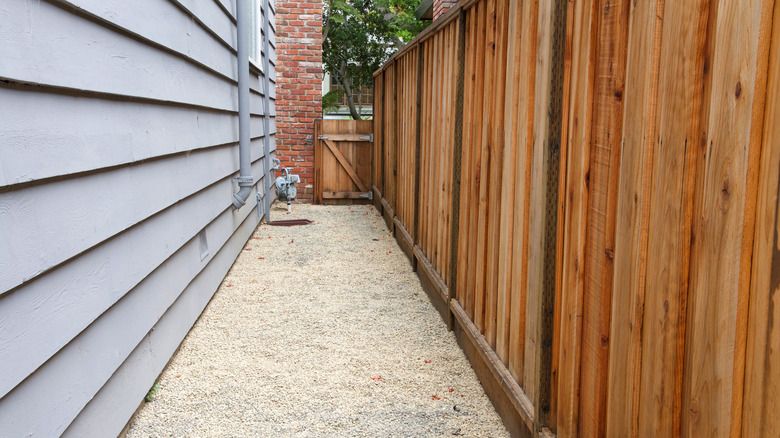
This easy side yard DIY can completely transform your space, but the look will only last if you spend adequate time laying your landscaping fabric. Without it, weeds will come back in no time. To prevent them, completely cover your side yard with landscape fabric, being sure to secure it with plenty of pins in the corners and throughout the fabric every square foot or so.
@diyplaybook Two years ago, I tackled this side of our home removing the weeds, cinderblocks, and garbage between our house and our neighbor's. The pea gravel looks so much better. It was an inexpensive project that greatly improved the space (my favorite kind of DIY!) It still looks great today! You can find the step-by-step tutorial for this project (and all supplies used) on the blog. #peagravel #chicagogangway
If you want to add plants or pavers, do it before you start pouring your pea gravel into place. Use a utility knife or propane torch to create holes for plants. Building a modern concrete paver walkway is easy, too. Just make sure each paver is safely level, and locate your path far enough away from plants to avoid tripping hazards. If your side yard is contained between two home foundations or solid fencing, you'll have a well-defined area already, but install landscape edging anywhere you want to create a boundary.
The last step is adding your pea gravel. For a small area, you can simply pour it straight from the bag. A wheelbarrow may come in handy if you've gotten a larger quantity delivered so you can cover a bigger area. Either way, use a rake to smooth the gravel out over the landscape fabric. Although you could stop there, adding a finishing application of rock glue, like the Dominator XL Adhesive Gravel Glue from Lowe's, can help to keep your new side yard surface from getting kicked around or washed out during bad weather.