

Should You Stay Or Leave While Your Housekeeper Works? Here's What They Really Want
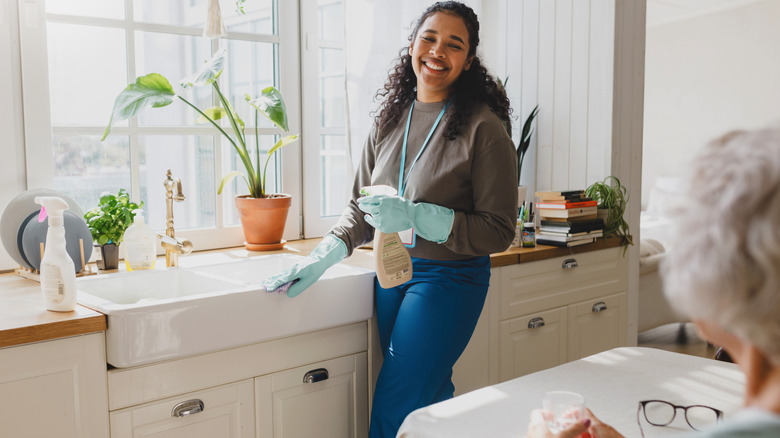
Is your couch the color of cat hair? Does your back start aching at the mere thought of scrubbing those hard water stains in the tub? Hiring a housekeeper may feel like a luxury, but with mounting evidence showing that mess causes stress, it can also be a wise investment. Along with figuring out how much you'll pay for a house cleaning service in 2026, you may also find yourself wondering about house cleaner etiquette. Do you need to pre-game before your cleaners arrive? Is it okay to tell them exactly how you want the bed made? And then there's the big one. Should you stay or leave while your housekeeper works? To find out what house cleaners really want, Hunker spoke with Ashley Matuska Kidder, Founder/CEO of Dashing Maids.
Whether you bring in help for the occasional deep clean or you have a regular housekeeper, Kidder offered several tips to make each experience a positive one. "While our team is A-ok with whatever makes the client most comfortable, leaving the home or at the very least, finding a space you can be in that is NOT the same room we are working in is preferred," she said during her exclusive interview, adding, "Our cleaning techs can be far more efficient and thorough when they have a room/space to themselves to work their magic." Along with asking friends or family for referrals, working with a reputable company can give you peace of mind if you decide to step away. "Ensuring your cleaners are insured and undergo a background check can eliminate most of the concern," Kipper explained.
Communicate with your cleaner if you decide to stay

Of course, sometimes you simply need to stay in the house while a housekeeper is there. In those cases, communication is key. "Coordinate a game plan with your cleaner beforehand," Ashley Matuska Kidder recommended during her exclusive interview with Hunker. She added that if you work from home, be sure to let your cleaner know ahead of time to avoid noisy vacuuming in the background of an important meeting. Other solutions include using a designated room or area while your cleaners work on the rest of your house, or switching floors halfway through your service. Kidder explained that this approach ensures your cleaner has uninterrupted access to clean each level start-to-finish.
She had some other practical advice, too. "It's not ideal to make a sandwich while your cleaner is in the kitchen," Kipper said, adding, "Having someone underfoot can be dangerous, too ... We tend to put the house in a state of disarray while we are working to get to the floors. We are pulling out chairs and moving things around so that when it comes time to vacuum/mop we can do so safely and efficiently." It may seem obvious, but keep yourself and any anxious pets out of the way!
If you simply feel better staying nearby, consider using the time to work on outdoor tasks. A standard maintenance cleaning session takes between two and four hours. That's plenty of time to declutter a garage or workshop, mow the lawn, or weed a flowerbed.
Cut the clutter and don't be afraid to raise concerns
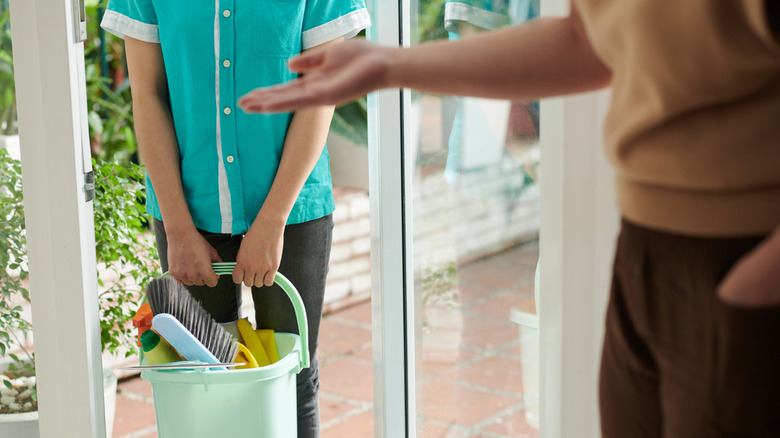
There are a few other basic house cleaner etiquette rules that can actually help to make sure you're getting the most out of your service. You aren't expected to clean before a housekeeper arrives. "However, putting away clutter or miscellaneous things ... can help us to spend our time truly cleaning the surfaces and resetting your home," Ashley Matuska Kidder told Hunker during her exclusive interview. "The best cleaning services happen when clients don't feel like they need to clean before we arrive — they just take a few minutes to clear the runway so we can spend our time delivering the most value."
Spend 15 to 20 minutes before your cleaner arrives clearing off every surface that needs a deeper clean. Stash the same things making your home feel cluttered, like dirty dishes in the sink or toys covering the living room floor. Sticking them in the dishwasher or quickly tossing them in a basket removes obstacles that will keep your housekeeper from doing their best work.
Sometimes even professional house cleaners are having a bad day, so what should you do on those rare occasions where something isn't quite right? Documenting expectations early with a written task list before your first cleaning is a great start because it creates a shared understanding you can both refer to if issues come up. "Communicate early if something is not meeting your expectations ... If there is something we could be doing differently, let us know! Our team genuinely wants the opportunity to fix it before frustration builds," Kidder emphasized.