

Forget Concrete — Homeowners Are Bringing Back This Retro Yard Trend
Having a yard that invites you to hang out and soak up the summer sun means putting just as much design attention into your outdoor spaces as you do inside your home. Just like different flooring sets different moods for your kitchen or living room, so too does the surface material used on your patio or driveway. If you thought a boring concrete slab was your best choice outside, think again. Now, using stone pavers is trending with modern homeowners, just as it was in the middle of the last century. This timeless surface will not only increase the visual interest of your home, but it may also increase its value.
In the 1960s and '70s, a hardscape style called "crazy paving" became popular, with large-scale pavers laid in organic-looking patterns. According to outdoor designers, this trend is back in 2026, with homeowners favoring more natural materials and large-scale stone over boring slab concrete. Jake Leman of Colorado's Singing Hills Landscape, Inc., tells The Edge, "Natural materials such as limestone, warm-toned pavers, and wood accents remain in demand." Warm colors and weathered textures are being favored over grey-toned stone as homeowners lean back into a naturalistic vibe popular in the 20th century.
Getting creative with stone pavers
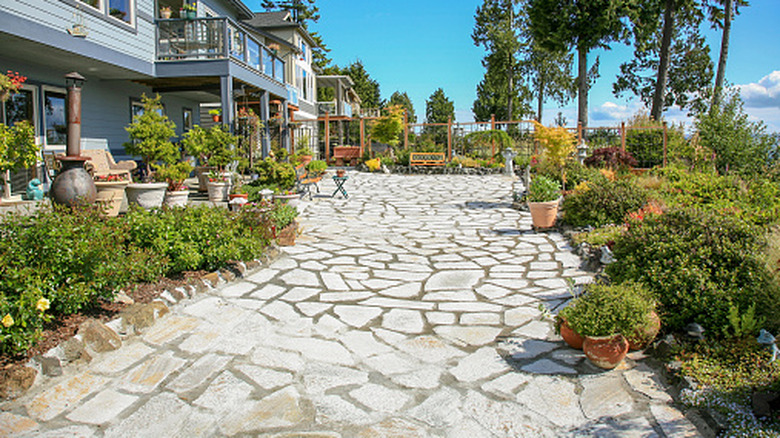
You can do so much more design-wise with stone pavers than you can with simple poured concrete. From making organic freeform layouts to integrating pavers with artificial turf or gravel, there are a lot of ways to get creative with natural stone. You will up your home's appeal with an interesting flagstone driveway or a cozy garden path made of stepping stones in different earthy hues. Landscape stone can also be water-wise. It can be laid with gaps to allow water to pass through and slowly seep into the soil, helping out your neighboring gardens instead of running off to the street after a downpour. This move toward sustainability is also trending in 2026, with more solid concrete driveways being replaced by permeable paving materials.
Although pouring concrete is generally cheaper than installing pavers, stone's durability means the surface may add more value than a concrete slab, giving you a higher return on your investment. One of the downsides to concrete is that it can develop unsightly cracks over time, while stone pavers have more flexibility. And, if one stone paver gets damaged, it can be replaced. The lifespan of stone is also generally longer than concrete (think of Europe's centuries-old cobblestone streets), making this 2026 trend one that is built to last.