

Not Le Creuset: The Neglected Kitchenware Brand You Should Look For At Thrift Stores
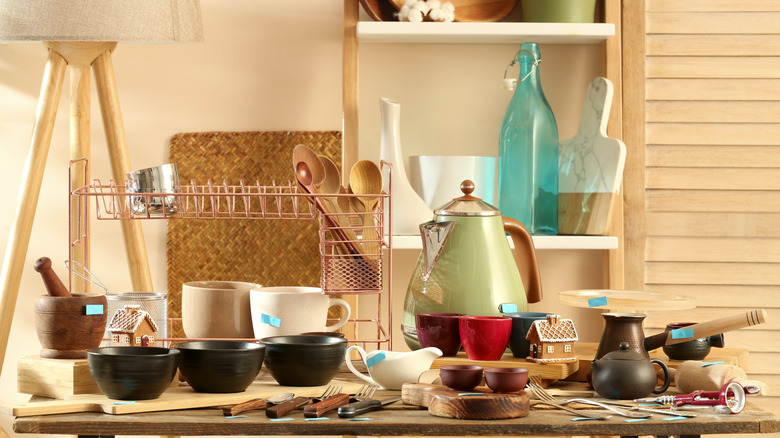
Le Creuset is always fun to find while secondhand shopping because of its bright colors and known durability. In fact, many say that if you thrift one vintage kitchenware brand, the European company is the one to look for. But there is another neglected kitchenware brand that many might overlook at thrift stores. One that comes in similar interesting colors and is just as sturdy, but doesn't have nearly the name recognition. That brand is Copco! Founded in 1960 by American businessman Sam Farber, the company relied heavily on the Nordic-inspired designs of Michael Lax, also an American, but a man who spent time studying in Finland. He brought Finnish clean lines and stark usefulness back to the States with him and poured it into Copco kitchenware. Luckily, he also took things a bit further, adding a touch of whimsy to the collection as well, like teapots shaped like strawberries.
Copco has a full range of kitchenware available, from mixing bowls to saucepans, mugs, and everything in between. Although the brand still exists, its main focus is on drinkware, and it has been sold multiple times. In fact, Farber first sold the company in 1982, which is why the vintage designs of his original collaboration with Lax are now so popular. Plus, vintage Copco tends to be less expensive than Le Creuset, as you can grab skillets for as little as $30. This makes it a much more accessible brand for anyone looking to start a collection, among other overlooked kitchenware brands.
Finding Copco kitchenware while shopping secondhand
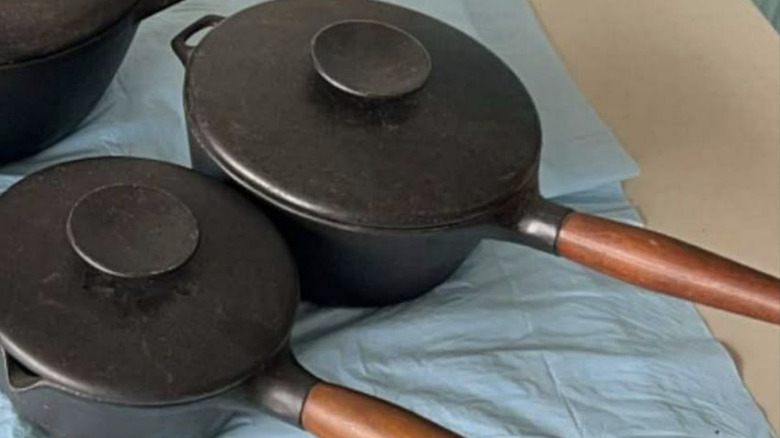
One of the main things that sets Copco kitchenware apart from other vintage options like Le Creuset is its handles. On its saucepans and skillets, the handles are typically made of wood. Using wood like this is oh so Nordic, but also very useful because the handles won't heat up. Some collectors even report that the wood used is teak, which is the vintage wood kitchenware you'd be thrilled to find thrifting because of how durable it is. No matter the wood used, the presence of this material makes cooking with these vintage pieces (as long as the enamel isn't chipped, of course) very convenient. This ease of use was considered quite revolutionary when they were first sold because all of a sudden, cooks didn't have to use different pieces to prepare and serve the food. They could use the same dish for both!
Authentic Copco kitchenware should also have a stamp on the underside. Without the stamp, you can't be sure of the brand. On some pieces, it should have an indented label which reads "Copco Denmark," indicating the place of manufacture. In other instances, the markings read "Copco / Switzerland / Michael Lax Design" printed on the bottom in a circle. Looking for both of these marks will help you choose the real deal.