

Get Rid Of Anthills In Your Yard Using This Easy And Affordable DIY
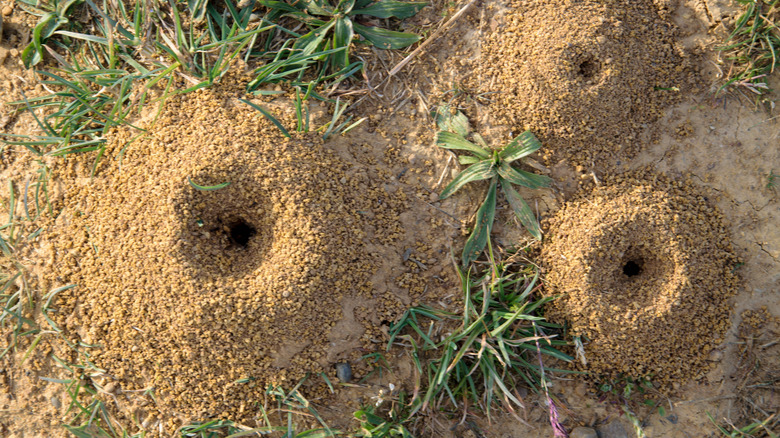
Ants marching one by one might seem cute and playful when you're singing a kids' song, but there's nothing adorable about stumbling upon anthills in your yard — especially when you realize those tiny piles of dirt lead to intricate tunnel systems that can be up to 25 feet deep and house millions of busy bugs. While ants in many parts of the country are relatively harmless, many southern states deal with potentially dangerous fire ants that you don't want to mess with (which is why you should know what to do if you find a fire ant nest in your yard). Regardless of the type of ants, you may want to stop the construction and keep the insects out of your lawn without harsh chemicals. And one method that might help is using boiling water.
When you want to eliminate ants, targeting the nest is an effective option. While there are several insecticides that will work on ants, you may not want those chemicals on your lawn, especially if you have pets or kids who play in the yard. That's why using a non-toxic option, like boiling water, might appeal to you. You can combine hot water with another easy way to get rid of unwanted anthills: leveling them with a rake or shovel.
Keep in mind that this method won't likely kill every ant in the hill — it's effective about 60% of the time, according to Texas A&M Agrilife Extension. Another potential drawback to this anthill solution is that you could end up killing plants if the hot water gets to them.
Kill ants by pouring boiling water in anthills
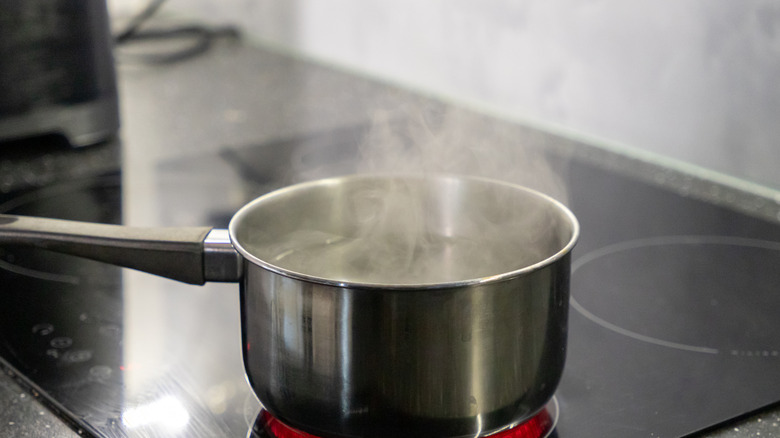
Start by boiling 2 to 3 gallons of water. Yes, it takes a lot of water to kill as many ants as possible. To make this method effective, you need to act quickly. Once the water starts boiling, move directly to the hill and start pouring before it cools off. Just don't rush so much that you splash the water onto yourself, leading to burns or cause damage in areas of the lawn that you want to protect.
Pour the water directly into the anthill to destroy it and kill ants in the area. Keep the container close to the ground to get as much water into the hill as possible while minimizing splashes. Remember that you won't likely destroy the entire colony with this method, so this might end up being more of a quick fix than a long-term solution. In fact, the ants might just move and rebuild somewhere else. You may have better luck using boiling water on small, newer anthills. Keep an eye out for a new anthill being built after the initial water dousing, and repeat the boiling water method there. And if they keep coming back, you may need to try another way to get rid of ants fast.