

10 Timeless Kitchen Countertop Options That Make It Easier To Sell Your Home
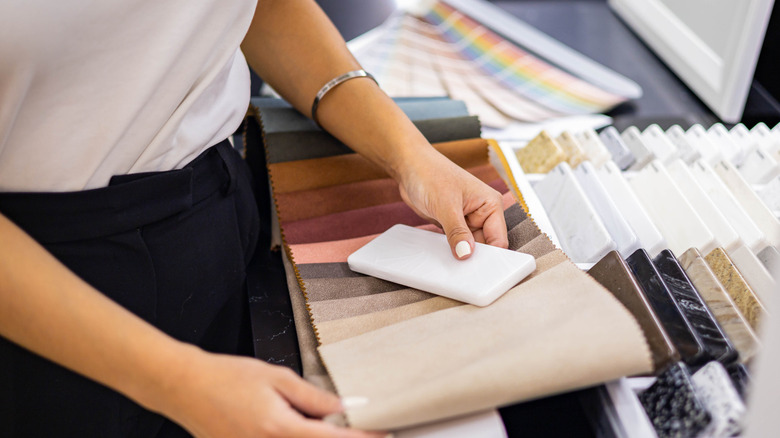
Remodeling your kitchen can be a substantial undertaking, but it can often pay dividends when you're in the process of selling your home. Exactly how much you get back for your investment, however, can vary significantly depending on the size of your project. According to a 2024 study from The Journal of Light Construction (JLC), you're far more likely to recoup most of the costs of a small kitchen remodel than a major kitchen remodel. That means you'll need to be selective about exactly what you're going to replace within your space before you sell. Getting new countertops is a solid option for many homeowners. Doing so can, as stated by Home Advisor, "boost your home's value, with as much as 98.5% ROI." That's in part because new surfaces transform the heart of the home visually, and put your investment in the space's longevity on clear display for potential buyers.
However, when it comes to purchasing a new countertop, there are quite a few options to choose from. Granite, quartz, and marble are just a few of the most attractive materials that can support selling a house. Your surfaces need to leave a lasting impression on anyone who comes for an open house or a showing. They should be timeless, durable, and come in neutral colors, so that they better match your potential buyers' design preferences and visions for the space. You don't want them to be too polarizing, and it's essential that they steer clear of leaning on modern kitchen trends that everyone secretly hates.
Quartz
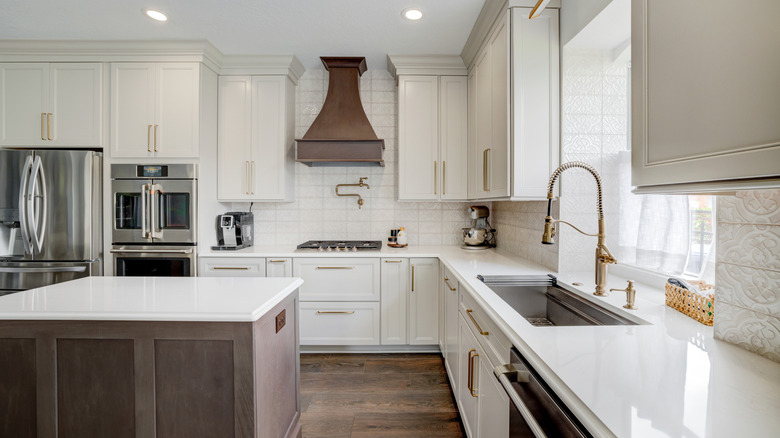
According to Linden Creek, "Quartz countertops have rapidly become the most popular choice among homebuyers and real estate professionals." These surfaces offer equal measures of functional and aesthetic benefits. They're incredibly durable compared to countertops made from natural stone, and part of the reason why is that the engineered material they're made from is non-porous — which essentially means that stains and spills are practically a non-issue. Quartz is also a scratch-resistant material, and doesn't require any sealing. It comes in all sorts of different colors and textures as well, which allows it to boost the look of both contemporary and traditional spaces alike.
Neutral granite
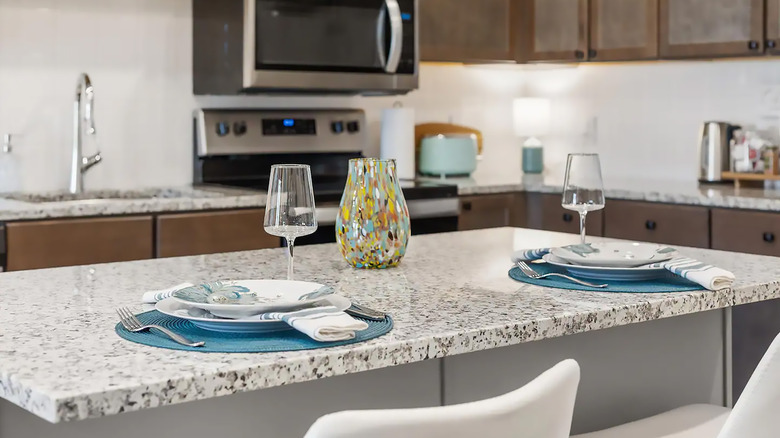
Granite has long been one of the most reliable countertop materials for home sellers, and that probably won't change any time soon. That's because the fact that it's durable, long-lasting, and easy to clean is widely known. Though granite doesn't quite have the same aesthetic flexibility as quartz, it still comes in a range of natural blacks, whites, and beiges that can be undeniably beautiful and suitable for modern interiors. Do note, however, that speckled, warmer-toned granites will be considered outdated to some. Beyond color, the veining of this material also gives it a unique, organic character that many buyers may appreciate.
White marble
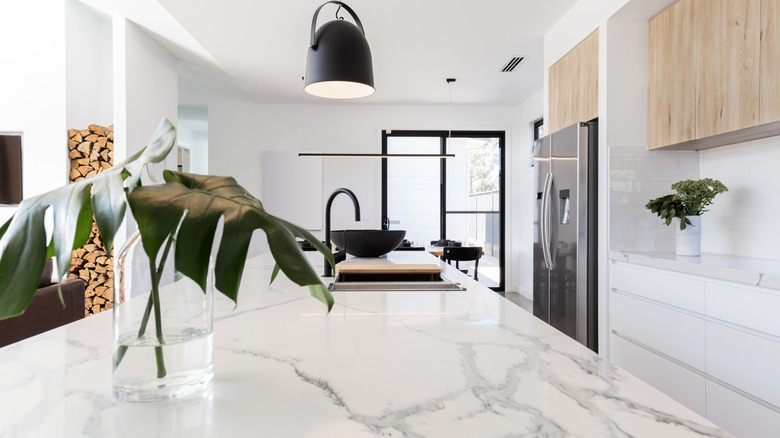
Marble countertops are practically synonymous with luxury kitchen design in large part because of how stunning and refined they look. Like granite, but perhaps even more so, the material's veining and patterns make them one-of-a-kind surfaces with a curated rather than purchased appearance. Marble does have a few notable drawbacks, however. It's softer than other natural stones, making it vulnerable to scratching and etching from acids. It may require sealing multiple times a year, and it comes at a high cost per square foot. However, if you want to ensure that your kitchen looks sophisticated and high-end, this material might still be a worthy investment.
Quartzite
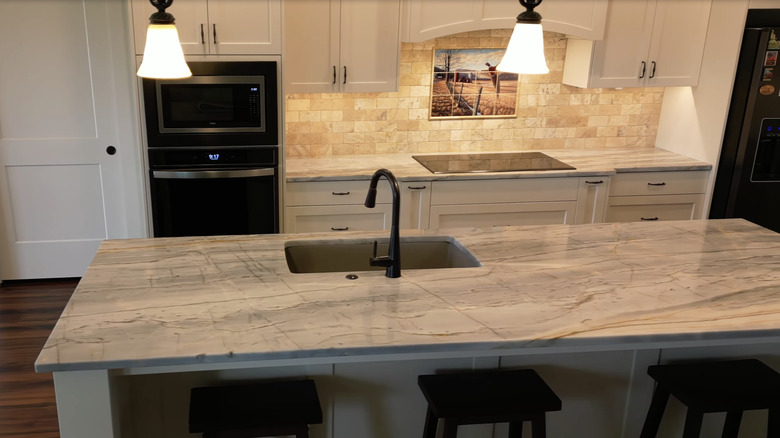
According to SoCal Stone Fabricators, "Buyers love quartzite because it offers the 'wow' factor of marble without the maintenance headaches." That's because quartzite can actually mimic the look of marble, with the exception of its patina. It's a natural stone material that has a hardness rating that's more similar to granite, which equates to it being much less porous than marble. It's also known for being UV-resistant, and it can handle the heat of a hot pan without issue. Its cost, however, will be a major concern for many. In many cases, the price per square foot will be equal to that of marble, or may even exceed it.
Solid surface countertops
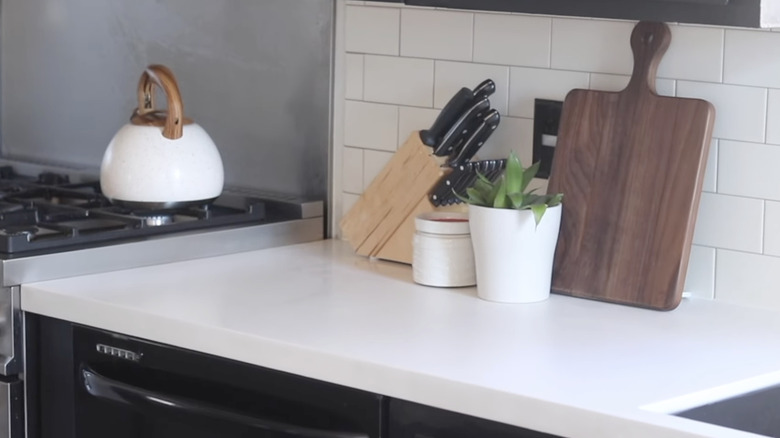
The aesthetics of solid surface countertops are often underrated, especially by homeowners who compare them to high-cost materials like marble at a kitchen design showroom. However, their uniform look can actually be a big plus in spaces that follow a modern interior design style, and they don't have the same seams around the corners that you get when joining stone slabs. Solid surface countertops are also waterproof and bacteria-resistant, and they don't require any sealing. They are surprisingly easy to repair, too, which knowledgeable buyers may understand means less expensive maintenance in the long run.
Porcelain slabs
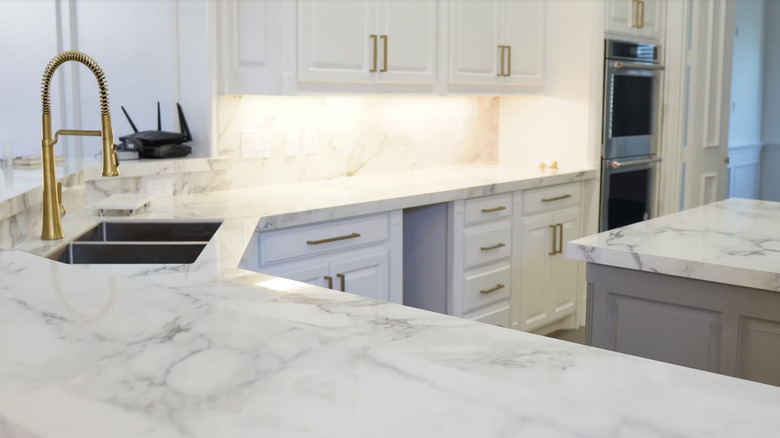
The concept of a porcelain countertop might not immediately appeal to you as a seller — after all, you might ask, isn't porcelain a highly breakable material? In this case, it's actually quite the opposite. Porcelain slab countertops have become renowned in recent years for their exceptional durability. They have a high level of stain and heat resistance, and they're easy to keep clean, too. They won't fade either, even with prolonged exposure to sunlight. Since porcelain is an engineered material, you can also customize its look before installation. Porcelain can also be cut quite thin; however, this can sometimes limit the use of edge profiles.
Soapstone
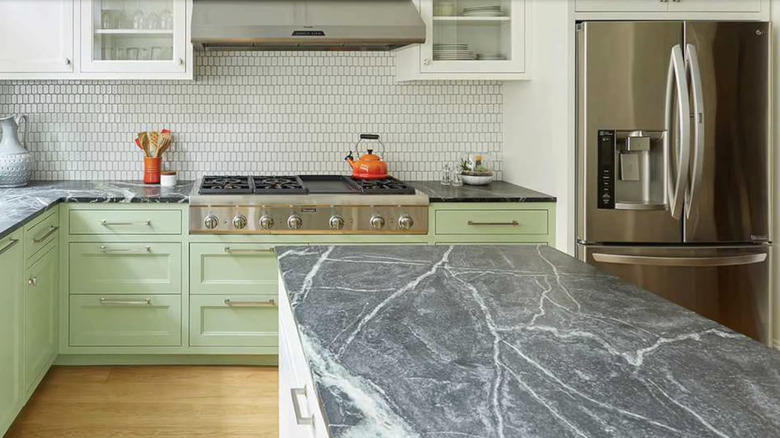
Soapstone has a timeless, soft-looking texture that makes it unique in comparison to other varieties of natural stone. It won't look as bold as the likes of marble or quartz, but this can actually be a good thing depending on the space. Despite the softer look, the material is quite durable. It's stain-resistant, holds up well against heat, and doesn't require sealing, though you may want to apply mineral oil on occasion to keep it looking its best. According to Caesarstone, "once you install soapstone countertops, the value of your home will increase", and "you could even get a 50% return on your soapstone countertop investment" when selling.
Butcher block countertops
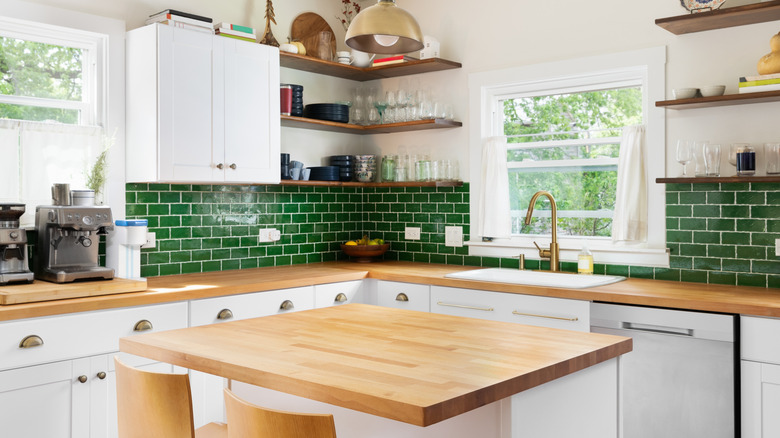
Though natural or engineered stones are often the best sorts of countertop materials for those seeking to sell their home in the near future, there are still a few niche situations in which you might want to opt for butcher block countertops instead. These wooden surfaces have incredible character, and look amazing in homes that lean on a rustic interior design style. Butcher block harmonizes neatly with most modern farmhouse kitchen ideas as well. It's eco-friendly, and is reasonably kind to those with a tight budget, too. It does require regular maintenance, but some buyers may be won over by its visual appeal alone.
Concrete surfaces
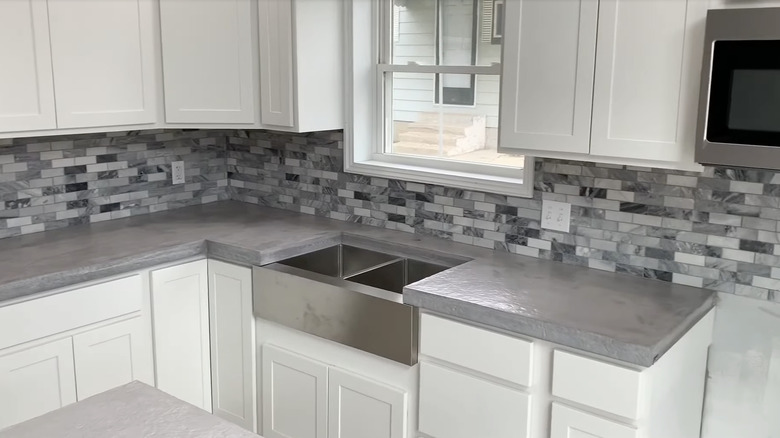
Like butcher block wood, concrete is a material that can help your home stand out from the crowd. Unlike butcher block, however, concrete works best when your space follows a modern or industrial aesthetic. It allows for integrated sinks and drainboards, which look sleek and timeless. It's also highly customizable in terms of both texture and color. Concrete isn't the cheapest countertop material out there, and that's in large part because of the labor costs associated with the complex installation process. However, it has a distinct luxury appeal that can definitely increase the value of your home.
Sintered stone
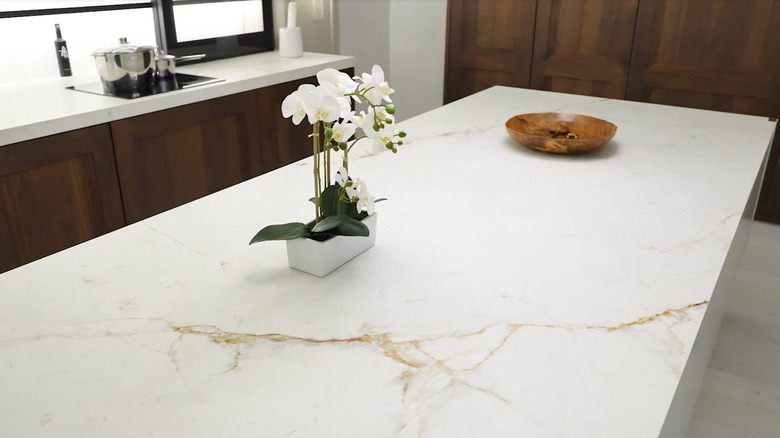
Sintered stone is a high-end countertop material with an exceptional level of durability, and if you have it in your home, it's definitely going to be a selling point. This engineered stone is even more durable than quartz — it's scratch-proof, heat-resistant, and non-porous. It also mimics the appearance of timeless natural stone, with few seams. Its biggest drawback, however, is its price, which can sometimes be higher than that of marble. When you're weighing potential renovation costs, don't forget that there are many amazing countertop upgrades out there that are worth every penny, but that can drive the price tag of your new surfaces up even higher.