

Help Keep Carpenter Bees Away Naturally With Herbs They Hate
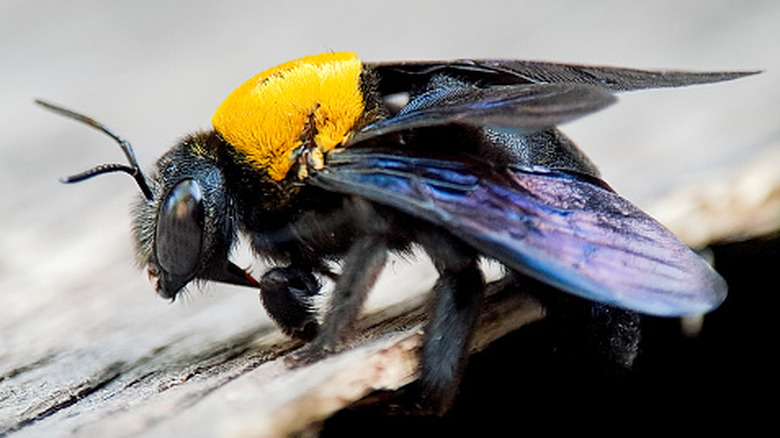
Carpenter bees can cause a lot of damage to wood structures like sheds, decks, and even house siding. You can identify carpenter bee tunnels by the circular holes chewed into the wood and small piles of sawdust left in their wake. Before carpenter bees drill into your deck, however, you have a chance to keep them away by using herbs they hate.
Speaking to Homes and Gardens, pest control expert Georgios Liakopoulos explained that some plants used to repel carpenter bees include strongly scented options like mint, citronella, and eucalyptus. "Bees will stay away from these if you plant them around your property.," he says. "Plant repellent plants near wooden structures to make a natural barrier against carpenter bees." Other gardening blogs and pest control services assert that the powerful scents emitted by such plants, as well as kitchen herbs like thyme and basil, work to repel carpenter bees by throwing off their sense of smell, and they tend to avoid any place their senses don't work in full.
However, it is important to note that no scientific data confirms that planting strongly scented herbs is an effective method of repelling carpenter bees. In fact, there is a decent anecdotal argument that at least certain herbs — like thyme (as well as rosemary) — actually attract carpenter bees instead of getting rid of them. It's also worth taking online information with a grain of salt: Many online bee keepers and pest services say herbs like basil, mint, and eucalyptus flowers can actually attract bees. However, these sites are often focused on European or Africanized honey bees. In fact, there are almost 4,000 native species of bee in the United States, including carpenter bees, and they don't all respond the same way to the same plants. You may need to resort to trial and error to see which plants work best for your yard.
Supplement planted herbs with this tactic
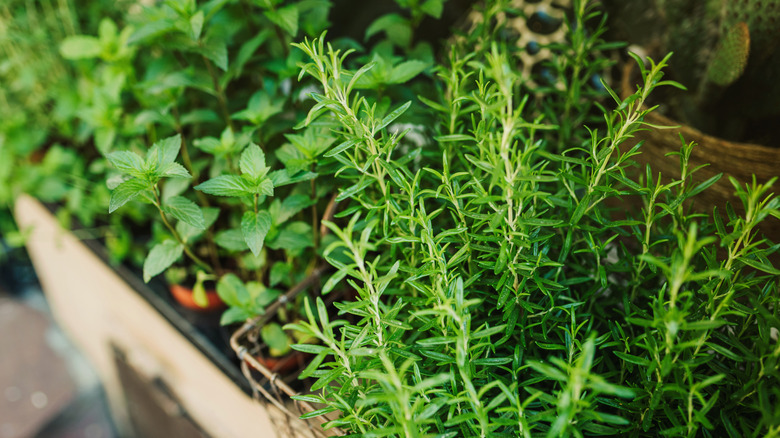
While they may not necessarily be welcome on your property because of the damage they cause, carpenter bees are still vital pollinators, essential to the health of native ecosystems. Like other pollinating bees, carpenter bees will seek out attractive plants to feast. The small purple flowers of thyme, for example, make for a perfect feeding vessel, and again are more likely to attract, rather than repel, these bees.
What then, are some ways you can use herbs like mint or basil to your advantage against carpenter bees? Simple: use essential oils. Since the naturally repellent chemicals present in herbs are distilled and concentrated into essential oils, you may be creating a far more potent repellent than by simply planting them.
Try mixing mint essential oil with castile soap and other bee-repelling scents like almond oil to create a spray you can apply onto the untreated wood areas that have been attacked by the carpenter bees. It's most effective when applied several times in the early spring, before a new female occupies any existing nests or tunnels. Do this in the early morning or evening when the bees aren't active. This way you won't antagonize them. Once again, however, it is important to note that these oils, as well as other holistic deterring methods like wind chimes, are not going to be as effective as using chemical insecticides (particularly with established nests) or building structures out of carpenter bee-impervious materials like metal or heavy duty vinyl.