

The Neat Tomato Cage Alternative That Won't Clutter Your Garden

We may receive a commission on purchases made from links.
Imagine biting into a freshly grown garden tomato, juice dripping down your chin. There's just something special about the flavor, texture, and juiciness of homegrown tomatoes compared to the ones you buy at the store. But to get that delicious fruit reward at the end of the growing season, you need to take proper care of the vines — like knowing if you're overwatering or underwatering your tomato plants and providing a support system for the branches.
When it comes to tomato support, you have options beyond the classic flimsy tomato cage. You can ditch the round tomato cage for a square cage to give them support, for example. But that can still be bulky and take up a lot of space, making your garden look busy and cluttered. To keep as slim a profile as possible, try a spiral stake instead. They're available in a range of heights, from short stakes under 20 inches to taller versions, like these Laknual 58-inch Spiral Tomato Supports.
Tomatoes need support once they start to take off to keep them from hanging down to the ground. Upright growth and support can yield higher-quality tomatoes with fewer disease issues. But traditional tomato cages force the plants to grow in the center, where they're restricted and could promote pest infestations. They also aren't that attractive or sturdy, so they can get pulled over and look messy. The sheer size also adds a lot of extra bulk to your garden that can look like clutter. Sturdy spiral stakes sit in the middle and support your plants compactly to minimize garden clutter.
How to use spiral stakes to support tomato plants
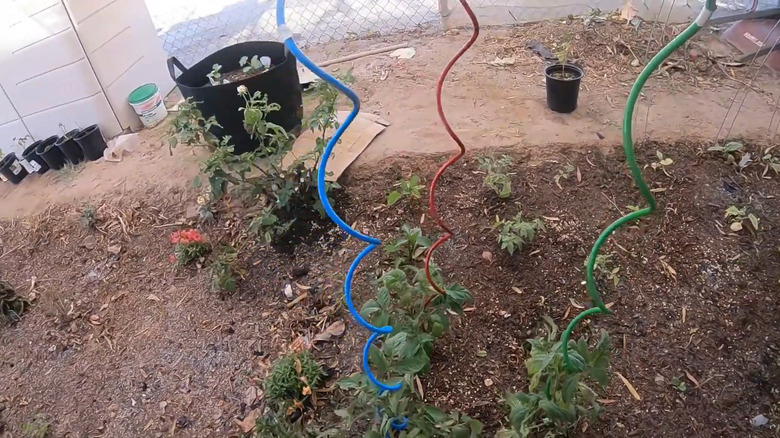
The thick wire spirals designed to support tomatoes are a premade option for staking the plants instead of using a tomato cage. With traditional staking, you need to tie the plant to the stake for support. The spiral design gives vining tomatoes a natural path to follow, so you don't have to tie them on. Simply put the spirals into the ground near the plant while it's still small. You may need to help train the plant around the spiral at first. Make sure to choose the height based on your tomato type. A 3-foot stake is tall enough for determinate varieties, but you'll need a 6- or 7-foot spiral for an indeterminate tomato plant.
With this method, you keep your tomato plant narrower and more upright. Tomatoes growing in cages will have branches that grow randomly through the sides, making them look unkempt. They also tend to crowd the garden area. Plus, spiral supports are often made of much thicker wire to keep them upright and maintain their shape, and the compact design makes them easy to store for the winter and reuse the next year. The spirals can completely replace your old tomato cages. If you already have some on hand, don't throw out old tomato cages — find other ways to reuse them.