

Don't Toss Old Bundt Pans: Turn Them Into Upcycled Succulent Planters
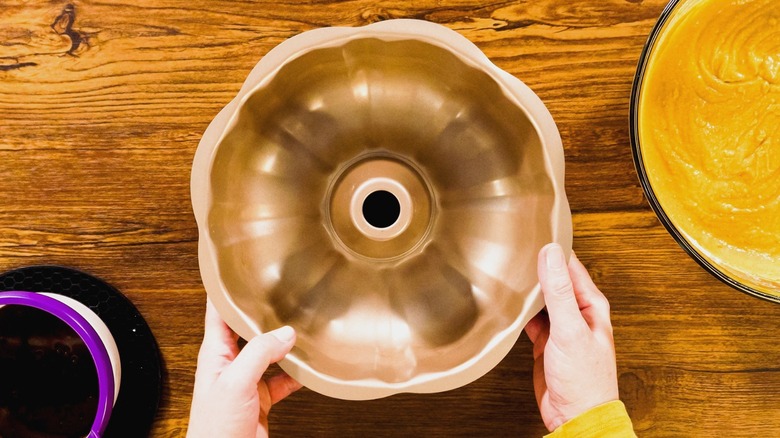
At first glance, a Bundt pan seems like a one-trick pony — it bakes rounded cakes, often shaped with unique patterns on them. But beyond the kitchen, the fancy cake pan can be used for a surprising number of functional and decorative purposes. In fact, you'll find several genius ideas for repurposing old Bundt pans around the home and garden when they're no longer needed in the kitchen. Bird feeders and planters regularly come up as suggested ideas needing little effort, but this repurposing project is slightly different: Instead of upcycling that old Bundt pan into an adorable patio planter, we're using it to create a charming succulent planter.
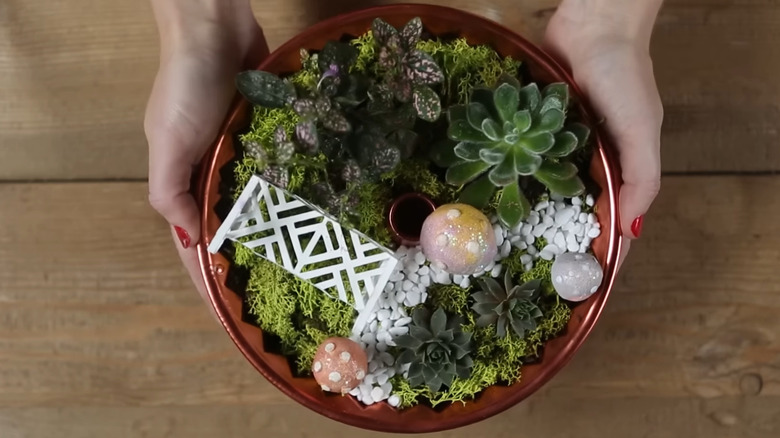
Since Bundt pans aren't super deep, they're best as planters for species with small root systems. Shallow pots are typically ideal for succulents, which makes an old Bundt pan a great option if you're looking for a unique planter. The shape of the pan gives the succulent planter a decorative look, while little accents like rocks and sculptures tucked among the plants enhance the design.
One issue you might run into with a Bundt pan planter is drainage. While succulents do occasionally need water, too much moisture is detrimental. You will need to drill holes in the bottom of the pan, or you could treat it like a terrarium by adding layers of horticultural charcoal and rocks before the soil.
Prep your Bundt pan, and arrange your succulents
If you don't have an old Bundt pan at home, secondhand shops are a good place to look. Compare the designs and materials of the pans to find one that stands out as unique. Keep in mind that you can embellish the pan to make it more fitting for your home. Clean it well before you start, and drill drainage holes in the bottom of the pan. You could even drill equally spaced holes around the rim where you can hook chains onto it to make it a hanging planter. If desired, spray paint the pan a color to suit your interior design scheme and complement the succulents in it.
When choosing plants, look for a variety of succulents to keep the planter interesting. Check for differences in key features, like the leaf size, shape, and color. Trailing plants, like string of pearls (Curio rowleyanus), work well around the edges of the pan. Consider upright options for the center near the hole to create height variation. There are plenty of good succulents for beginners if you're not sure where to start. They don't need a lot of space, so stock up on several of the mini plants to fill out the display.
Fill the Bundt pan with layers of charcoal, rocks, and succulent soil in preparation for planting. Avoid regular potting soil — it often won't provide enough drainage for succulents. Then, test different layouts for the plants until you find the perfect spot for each one. After planting the succulents, add decorative rocks and accents around them to complete a delightful rounded arrangement.