

How Long Should A Washing Machine Really Last? An Appliance Expert Explains
A washing machine is a significant investment. After all, you'd be spending anywhere between hundreds to thousands of dollars on a new one. And the overall cost will be higher if you go for a matching dryer. Considering this, you'd want the appliance to last you at least 10 years on average. But do these devices really last that long? We asked Steve Schmahl, a virtual appliance expert at American Home Shield, for his opinion on the matter. In an exclusive sit-down with Hunker, he reveals, "The lifespan of a washing machine depends on how frequently it's used and how well it's maintained. Machines that run more loads will naturally wear out sooner, and consistently overloading the washer accelerates that wear even more."
When prompted to share a figure, our appliance expert says, "Some manufacturers estimate a lifespan of 5 to 8 years under typical household use, but heavy or improper use can shorten that range." And even if you maintain it well, there's a good chance your machine will start breaking down and require expensive repairs or replacements (the actual cost will depend on its warranty policy) post this period. But this will also depend on your washer's style since not all kinds of machines have the same longevity period, notes our expert.
"Front-load washers generally have a longer lifespan than top-load models, but durability varies among top loaders," he illustrates. So, there's no need for you to regret buying a top-load washer just yet. Moreover, he comments that commercial-grade washers are "sturdier and typically longer-lasting than standard residential units." Given this, it's not surprising that laundromat washing machines withstand years (think 10 to 15) of heavy use.
Common mistakes that contribute to a shorter washing machine lifespan
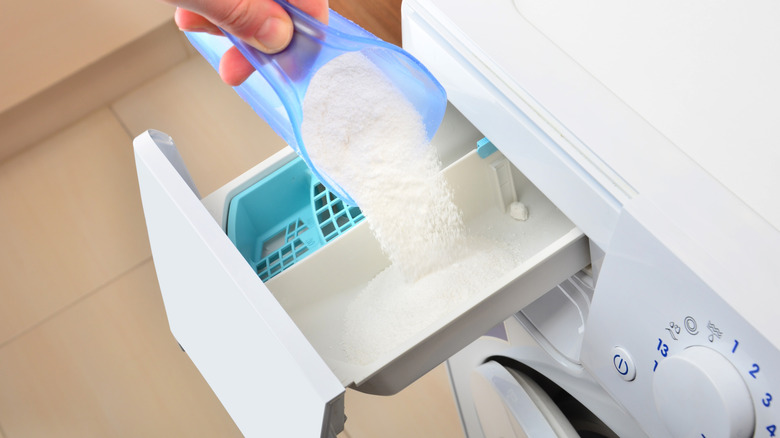
To ensure your washing machine ages well, Steve Schmahl shares his top laundry mistakes with Hunker exclusively. "Using too much detergent and overloading the tub are two common mistakes that shorten your washer's lifespan," he tells us. While you may think that more detergent will automatically lead to cleaner clothes, that's not the case.
In fact, it'll be more difficult for your washer to rinse away the excess suds and trap dirt effectively. With time, the excess detergent particles will build up inside your appliance and negatively impact its cleaning capacity. This will be particularly bad for HE (high-efficiency) models since they use less water. Generally, one and a half ounces of detergent is enough for a regular load. Add slightly more if your clothes are too dirty or less if you're only washing a few articles. Similarly, overloading is bad for your appliance as it puts "strain on the motor and drum," our expert says.
"Additionally, not checking clothing pockets for small foreign objects can negatively impact the washer over time," warns Schmahl. Your spare set of keys and loose change might not look capable of damaging an appliance several times their size, but these metal pieces can clog the drain pipe, shred your device's outer tub as well as inner drum, and lead to leaks. In extreme cases, they can even cause splinters in the glass door of a front-loader. "Finally, operating your washer with hard water can shorten its lifespan," he mentions.
Tips to help extend the life of your washing machine
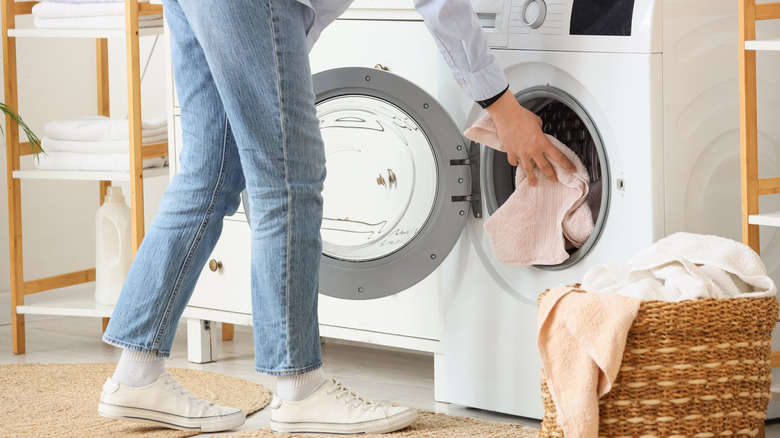
Though it might not be apparent outright, "Washing machines require proper care and maintenance, just like your vehicle," notes Steve Schmahl in an exclusive chat with Hunker. And you can prolong the life of your washing machine by following a few maintenance tips. As our appliance expert suggests, "Extend the life of your washing machine by consistently ... keeping the lid or door slightly open after each use to promote airflow." So, make it a point to leave the door open for a while after each cycle to allow the drum to dry out, keeping moisture-loving bacteria and mold and mildew at bay. This simple practice will also keep nose-curling odors to a minimum and ensure your washed garments don't come out smelling foul. Additionally, there'll be fewer chances of rust settling over the inner components. "Run a monthly clean cycle with a washer cleaner, and if you have a front-load model, regularly empty the cleanout trap to maintain performance," he emphasizes.
Finally, he advises against overloading your machine so it wears out slower. Not sure when to stop? Schmahl lists a few things you should look out for. "Some signs of an overloaded washer include unusual noises or vibration, the lid won't close, or the clothes aren't getting clean," he says. In case you notice either sign after putting in your dirty laundry, fix your overloaded washing machine immediately. And to avoid such instances in the future, he recommends, "For front-load washers, fill the drum no more than half to two-thirds full ... For top-load washers, you can typically fill the drum up to about three-quarters full." Essentially, don't pack in your clothes tightly; drop them in loosely so water can circulate properly, concludes Schmahl.