

17 Flowers To Plant In June To Attract Hummingbirds All Summer & Fall
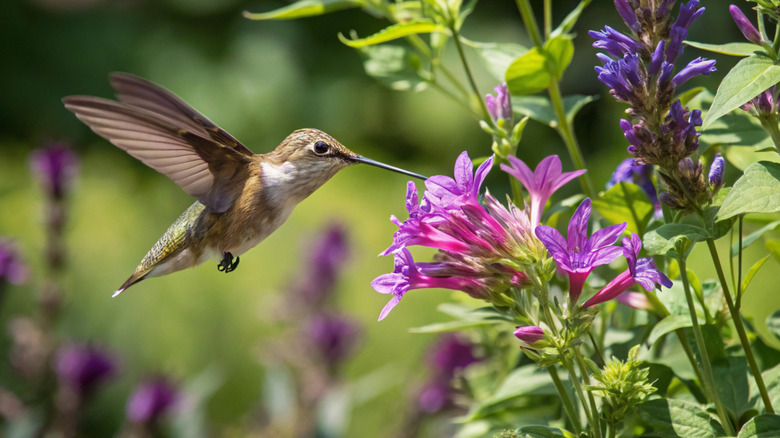
If you want to start a hummingbird garden, then your first step is to fill it with an array of gorgeous flowers. These little birds eat a lot during the summer, sometimes up to three times their body weight each day. And while feeders are great, nothing quite beats fresh nectar straight from the source. Additionally, in summer and fall, hummingbirds begin preparing for migration, and they'll need a lot of fuel on their journey. By planting summer and fall-blooming flowers, you can help keep these small birds fed through some of the most demanding months of their year. Plus, a yard filled with hummingbirds zipping around means you'll get nearly endless entertainment when spending time in your backyard.
You may have already heard that hummingbirds favor the color red, though there are other traits you'll want to look for. Color is typically what initially catches their eye, as they're able to see warm shades more clearly. However, it's the nectar content and the shape of the blooms that will keep them coming back for more. Typically, native plants will be the best sources of nectar for pollinators. Once hummingbirds find blooms that provide adequate nutrition, they use their long tongues to lap up the sugary liquid. For this reason, tubular flowers are the perfect shape to accommodate their bills and tongues. From sage varieties to yellow bells, there are luckily plenty of nectar-rich, tubular blooms that will keep hummingbirds visiting your garden from summer into fall.
Cardinal flower
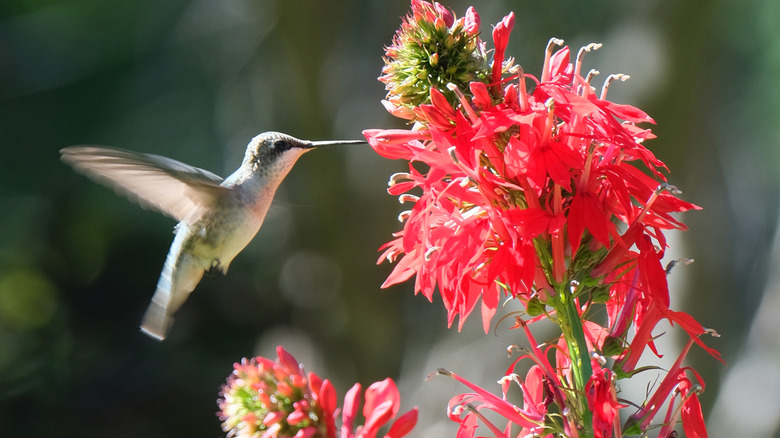
The cardinal flower (Lobelia cardinalis) is exclusively pollinated by hummingbirds. Its tubular flowers aren't suited for a bee's anatomy, and although butterflies may stop by, they aren't as efficient at gathering and spreading pollen. Cardinal flowers are perfectly shaped to suit a hummingbird's bill, however, and the little birds are quickly drawn in by their bright red clusters. In USDA hardiness zones 3 through 9, these pretty flower spikes last from summer to fall. It's a relatively low-maintenance perennial that grows best in moist soil, and it enjoys part shade to full sun.
Bergamot
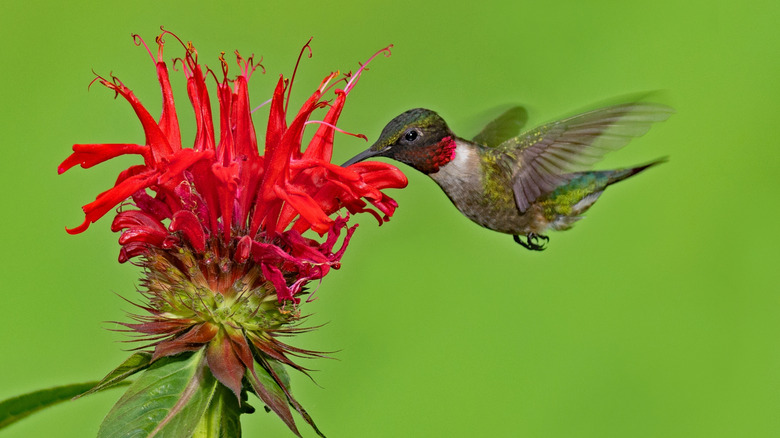
This plant may go by the nickname "bee balm," but bergamot (Monarda didyma) is beloved by a range of pollinators, including hummingbirds. It's a pretty perennial in the mint family that's easily grown in USDA zones 4 through 9. The lush red flowerheads are made up of tubular blooms that attract hummingbirds like magnets from summer into fall. This nectar-rich native makes a beautiful addition to pollinator gardens, but looks just as stunning used as a border or even in solo plantings. All it asks for is moist, well-drained soil and part shade to full sun.
Sunset hyssop
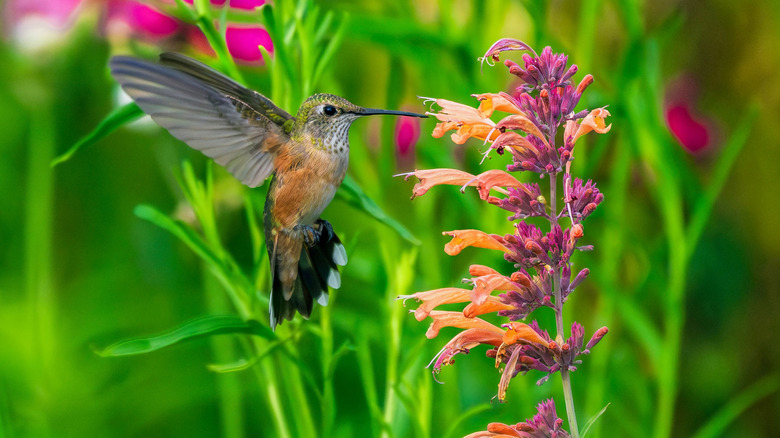
Sunset hyssop (Agastache rupestris) is another stunning perennial in the mint family that hummingbirds and other pollinators can't get enough of. As a bonus, deer tend to stay away from the licorice-scented foliage. From summer and into fall, it puts out orangish flowers with showy purple calyxes. This sunset-inspired color combination is what gives it its common name. This plant is hardy in zones 5 through 8 and grows best in sandy to rocky soils with excellent drainage in full sun to part shade. Stay on top of deadheading so you can enjoy repeat blooms all season long.
Scarlet sage
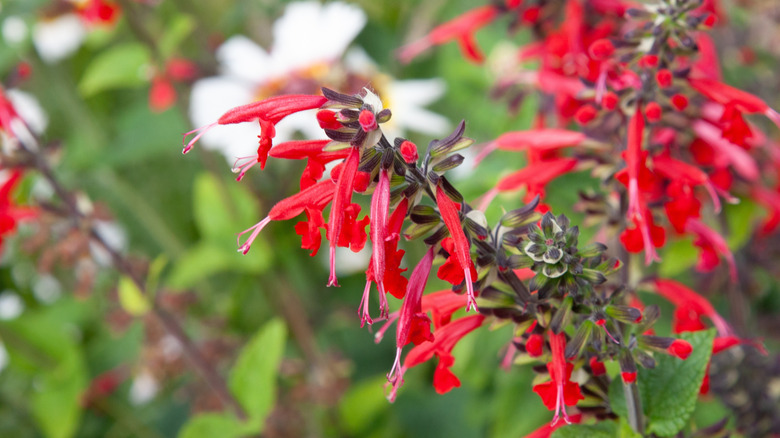
You'll want to plant scarlet sage (Salvia coccinea) if your goal is to attract birds and pollinators with one vibrant flower. The fiery red, tubular blooms draw in hummingbirds and butterflies from summer to frost. In autumn, goldfinches also enjoy snacking on the seeds. Although scarlet sage is grown as an annual outside of USDA zones 8 to 10, it readily self-seeds. It can withstand high heat, drought, and dry soil, and can even tolerate clay soil as long as it's well-drained. That said, it grows best in fertile, sandy soil in full sun to part shade.
Autumn sage
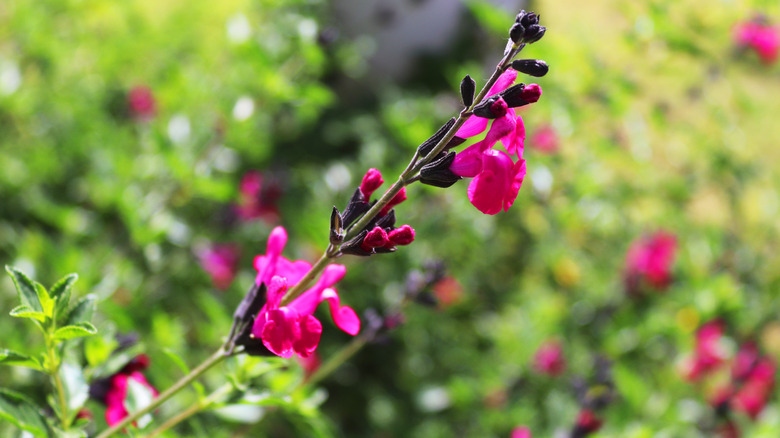
Autumn sage (Salvia greggii) is a perennial subshrub with gorgeous pink or burgundy blooms that last all the way from spring through fall. Hummingbirds can't get enough of the rich nectar tucked inside the pretty, tube-shaped blossoms. Other birds will also swoop down for a treat once the flowers go to seed, too. This plant is hardy in USDA zones 6 to 9, though the 'Wild Thing' cultivar is more tolerant of cool winter temperatures. For best growth, plant autumn sage in a sunny area in well-drained soil. Some shade from the hot afternoon sun can be beneficial.
Pineapple sage
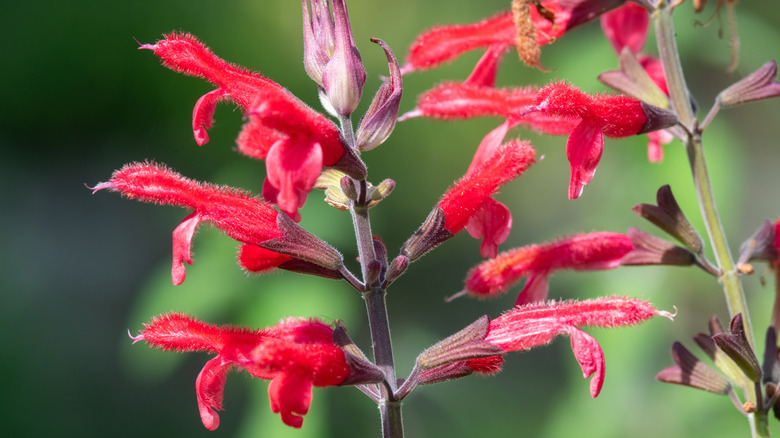
Pineapple sage (Salvia elegans) is another gorgeous sage plant with bright red flowers that are irresistible to hummingbirds. It gets its name from the pineapple scent that comes from its leaves when crushed. Because it blooms in late summer to early fall, it's a beneficial food source for migrating hummers. The flowers are edible for humans too, and have a sweet, fruity flavor. To get the healthiest growth, plant pineapple sage in moist, well-drained soil and choose an area that receives plenty of light. It's hardy in USDA zones 8 to 10, so treat it as an annual in cooler climates.
Red yucca
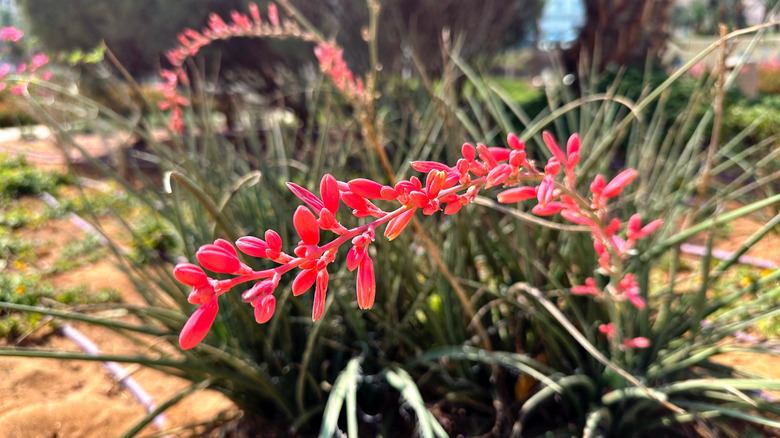
There's one red flower hummingbirds can't resist, and it's the red yucca (Hesperaloe parviflora). This is a member of the asparagus family that thrives in hot, arid regions. Hummingbirds are attracted to its abundant red flowers, which last for months. In warmer climates, the plant will provide nectar for hummingbirds almost the entire year. That said, the blooming season spans from summer through fall even in cooler areas. It's hardy in USDA zones 6 to 10 and grows best in well-drained soil in full sun.
Turk's cap
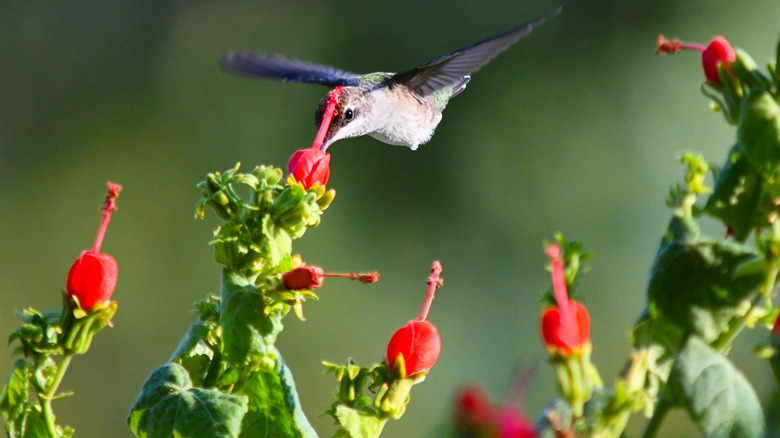
Also known as wax mallow, Turk's cap (Malvaviscus arboreus var. drummondii) is a subshrub or shrub with velvety heart-shaped leaves and pretty, dome-shaped red flowers. Hummingbirds love the rich nectar, and it's especially valuable to female and young ruby-throated hummingbirds. Although it typically grows to 3 to 4 feet tall, it can get even larger in the right conditions. It thrives in part or dappled shade, making it a great landscaping solution for shady areas. It's hardy in USDA zones 7 to 10 and likes moist, fertile, well-drained soil.
Firecracker plant
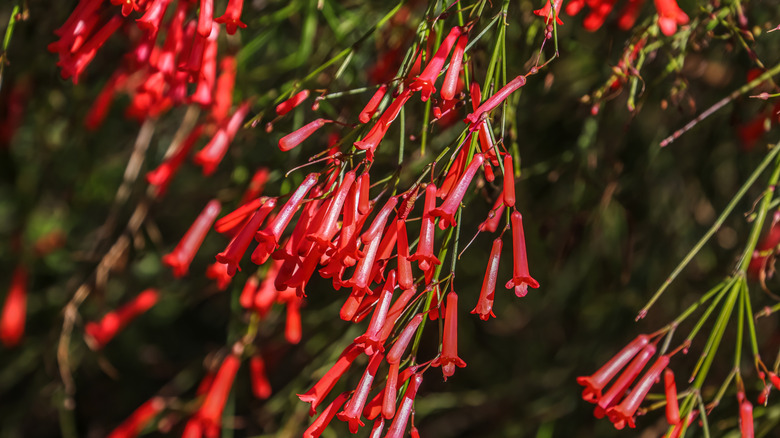
What better way to celebrate the summer than to grow a gorgeous plant that puts on a firework-like show? The aptly named firecracker plant (Russelia equisetiformis) is a perennial shrub with arched branches that are decorated with bright red, tubular flowers. It's a great plant to turn your backyard into a hummingbird hotspot, as the profuse blooms offer nearly endless nectar year-round in USDA zones 9 through 11. In cooler climates, you can grow it in hanging baskets or containers and overwinter indoors. Grow firecracker plants in moist, well-drained soil in full sun.
Firebush
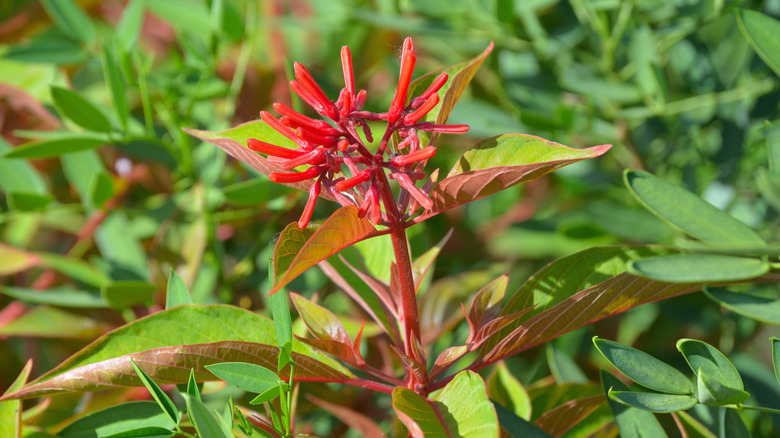
Firebush (Hamelia patens) is one of the best plants to attract hummingbirds — it's even known to some as the hummingbird bush. This small shrub puts out an abundance of orangish-red clusters of tubular blooms that offer a feast for hummers from June to September. Because it's only hardy in USDA zones 9 through 10, firebush is often treated as an annual. That said, it's another plant that can easily be brought indoors once the temperatures cool. It's a beginner-friendly shrub that grows best in well-drained soil that's high in organic matter, and it prefers full sun to part shade.
Yellow bells
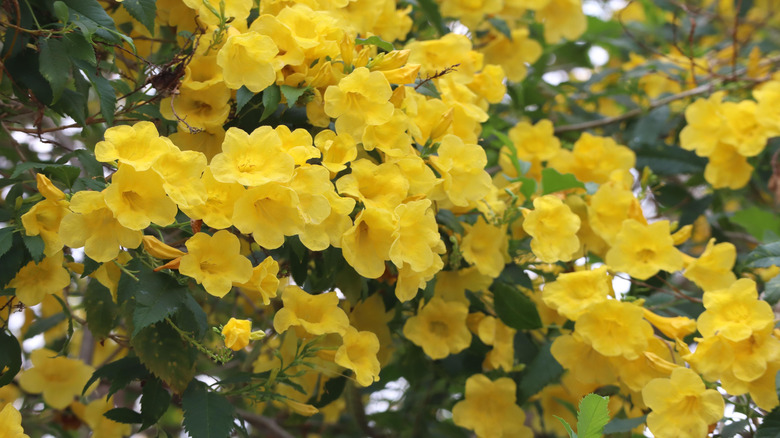
If you don't want an endless sea of red blooms bringing in the hummingbirds, you can add a little sunshine with yellow bells (Tecoma stans). This gorgeous shrub puts out vibrant clusters of golden-yellow blooms from spring to frost. It typically stops growing at 3 to 5 feet tall, though it can grow up to 25 feet. It doesn't tolerate frost, so you'll need to bring it indoors over winter if you're outside of USDA zones 10 to 11. Yellow bells will grace you with their best blooms when given plenty of sunshine and moist, rich, well-drained soil.
Cigar plant
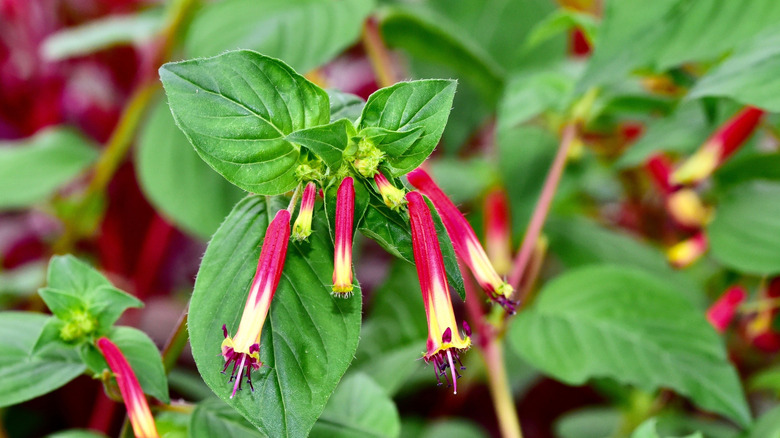
Cigar plant (Cuphea ignea) is a gorgeous perennial that hummingbirds will be sure to stop by again and again. Its bright orange or red flowers may be small, but they're highly attractive to bees, butterflies, and hummingbirds. The blooms appear in spring and last all the way to frost. This is another plant that doesn't fare well outside of warmer climates, being hardy to USDA zones 10 to 12. However, its compact growth makes it great for containers, so you can easily move it indoors once winter arrives. It typically grows best in moist, well-drained soil in full sun to part shade.
Petunias
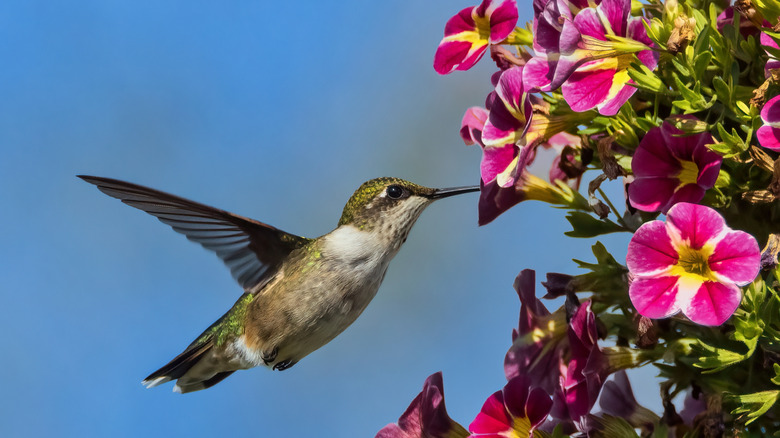
Petunias (Petunia x hybrida) are one of the best container plants to attract hummingbirds. In particular, the 'Wave' variety looks gorgeous draping over the edges of hanging baskets. They have a long bloom season, often lasting from summer to frost, and are hardy to USDA zones 10 to 11. They're also extremely low maintenance, so even beginner gardeners can easily care for these flowers. All you need is well-drained soil and a spot that receives full sun to part shade. Keep up with deadheading to get repeated blooms all summer long.
Pentas
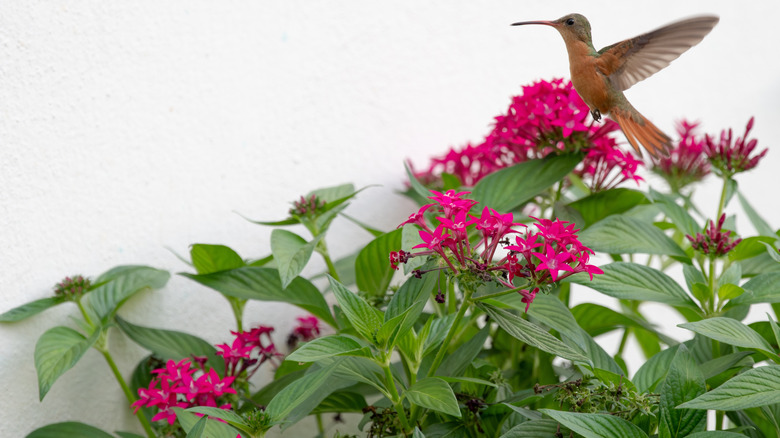
Pentas (Pentas lanceolata), sometimes referred to as Egyptian star cluster or star flower thanks to its starry blooms, is a great addition to a pollinator garden. If your goal is to bring in more hummingbirds, opt for red flowers. That said, they'll happily sip nectar no matter which color you plant. This perennial puts out its clusters of star-shaped blooms from summer to frost outside of USDA zones 10 to 11. If you grow it within its hardiness zone, you'll get blooms year-round. The best flowering occurs in full sun, though pentas can tolerate some shade. Plant in well-drained soil.
Mexican sunflower
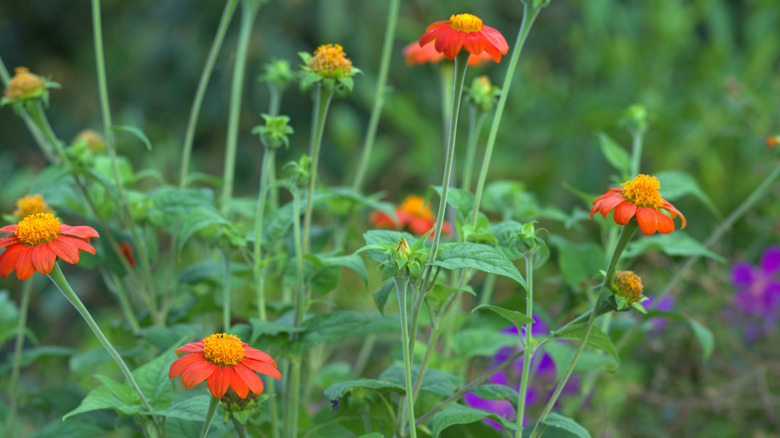
Mexican sunflowers (Tithonia rotundifolia) produce colorful orange blooms with yellow centers from mid-summer to first frost. These pretty flowers are a huge hit with pollinators, including hummingbirds, butterflies, and bees. They're easy to grow, too. They easily withstand dry soil, drought, and heat, and deer tend to avoid them. As a bonus, you can snip off some stems to bring them in as cut flowers. Just make sure to leave some outside for the hummingbirds. Grown as perennials in USDA zones 9 to 11, these plants prefer a sunny site with well-drained soil.
Hardy fuchsia
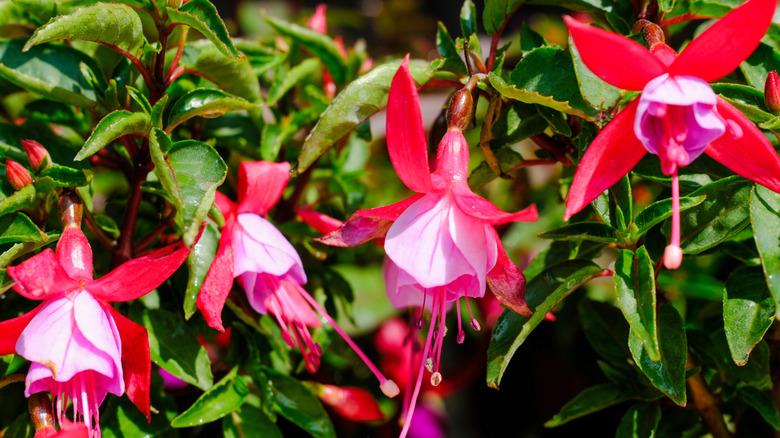
Hardy fuchsia (Fuchsia magellanica) is a hummingbird-favorite shrub — and you'll love it too. This is another plant that grows well in shady conditions, making it a good option for tricky areas where you have limited options for pollinator flowers. Despite how easy it is to care for, the showy flowers look almost exotic, with magenta or red tubular blooms and long stamens. It's one of the hardiest fuchsias, too, growing well in USDA zones 5 through 10. For best growth, plant it in fertile, well-drained soil.
Lion's tail
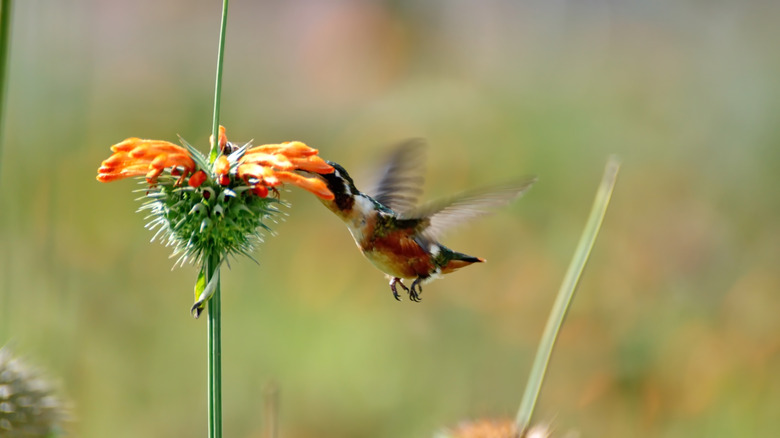
If you're looking for an interesting flower with attractive foliage, you may want to consider planting lion's tail (Leonotis leonurus). From spring to fall, this plant puts out bright orange flowers that circle the stem in whorls. It's adored by a variety of pollinators, including hummingbirds, bees, and butterflies. Native to South Africa, it thrives in hot climates, so it's best suited for USDA zones 8 to 11. Otherwise, you can grow it as an annual or bring it indoors over winter. It thrives in full sun and isn't picky about soil type, so long as the soil is well drained and stays regularly moist.