

4 Backsplash Trends On The Way Out In 2026 (So Far)
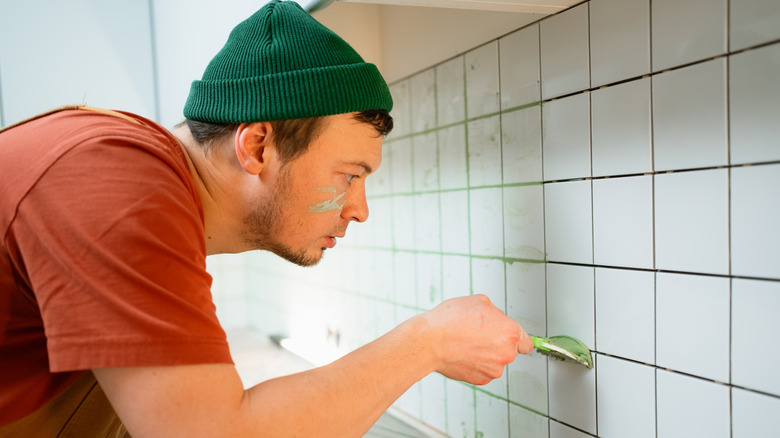
One of the make-or-break parts of the kitchen is the backsplash, as, like countertops, it's hard to change once it's installed. You can't just paint over it like you might with cabinets, or swap it out like you would with drawer pulls or light switch covers. And of course, kitchen remodels are expensive, so most homeowners want to get them right the first time. This is why you'll want to take great care when updating your kitchen: Getting stuck with a backsplash that's too loud, or one that brings up every single watermark, could turn out to be an absolute nightmare.
Just like more chic backsplash styles are kicking dated small tiles to the curb, a few backsplash trends have been teetering on the edge of obscurity for a while now. 2026 will likely be the year that designers pull the plug on these styles altogether. So pay special attention — as you don't want to install something in your kitchen that's already on its way out!
Glass tile backsplashes that show every spot are out
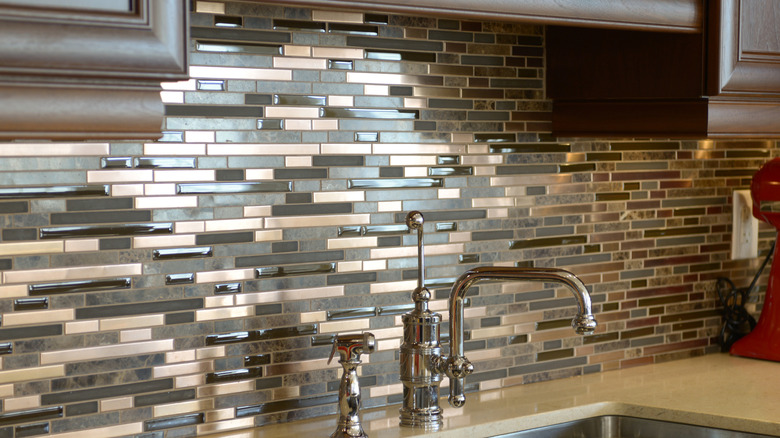
Glass tile backsplashes were once thought to be the next best thing in kitchen design. Since glass isn't very porous, designers loved the material for such a wet space. The tiles were also reflective, creating an optical illusion that made even the smallest kitchens appear larger than they were. In an era obsessed with builder-grade style, they were a great fit. Yet, after years of use, 2026 has become a real turning point for glass tile backsplashes. As it turns out, this is because the cracks have started to show. "Homeowners learned what we knew: Huge glass surfaces reveal every water spot, fingerprint, and grease splatter — with maintenance that isn't congruent with real-life cooking use," contractor Cliff Gielow told Apartment Therapy about the tiles' demise.
For the best of both worlds, consider moving glass panels up into the top bank of cabinets, or using glass backsplashes sparingly as accent pieces alongside porcelain or ceramic options. "This change in direction acknowledges the function of kitchens should be more important than how photogenic they are," Gielow continued, highlighting that, in 2026, how your kitchen functions matters more than aesthetics alone.
Contrasting grout makes the wrong statement
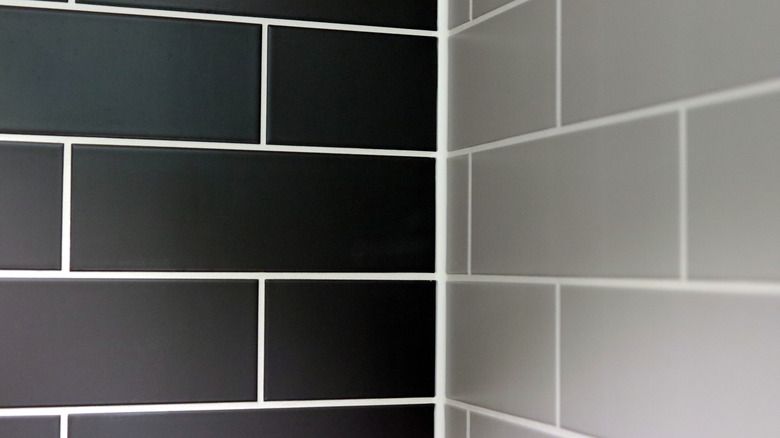
Whatever you do, stay away from contrasting grout on your kitchen's backsplash – particularly black grout on white tiles. This timid trend has been trying to find its feet for a few years now, but to no avail. 2026, then, could be the year to finally leave it behind for good. "While I do see contrasting grout, I would stay away from it," interior designer Andrea Sinkin told The Spruce about this year's false start. "I think it's a particularly time-stamped trend and doesn't have lasting power."
Sinkin admitted that there are a select few instances in which the contrast could create an interesting focal point, but added that they're few and far between. For the most part, this kind of contrast makes the tile too grid-like, which can become visually busy and draw attention away from other statement pieces. "I wouldn't look at grout as a moment to make a statement," Sinkin said. Instead, in 2026 and beyond, stick with grout that blends in with your kitchen's tiles. Especially when used with a statement tile — like zellige, the Erin Napier-favored trend that's making a comeback in 2026 – you don't want to create a visual competition. Let the tile itself do the heavy lifting.
Interest in subway tile is waning
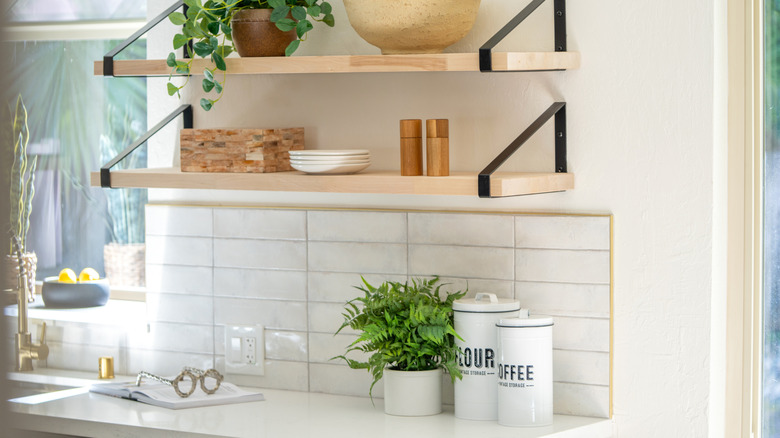
Subway tile kitchen backsplashes were popular long before 2026. Since its inception at the turn of the 20th century, this style has been through many renaissances, with the most recent led by HGTV star Joanna Gaines in the 2010s. Gaines used the material often on "Fixer Upper" and widely spoke about how it was her favorite material for kitchens. Clearly, subway tile backsplashes have been much loved for a while — but that's just the issue. When something is everywhere, people quickly grow tired of it. Interest in this material isn't waning because it's nonfunctional, or even because it's aesthetically unappealing. It's just overdone.
Luckily, designers still have some workaround backsplash ideas to use during these transitional years. "If you are in love with subway tile, I'd encourage you to find a subway-esque tile, such as one that features a decorative glaze, texture, or irregular edges," designer Thomas Borcherding told Apartment Therapy. This way, you still get your fix, but your kitchen doesn't just look like everybody else's. You can even take a page out of Gaines' book by skipping the traditional subway tile backsplash for a better idea. She continued to use this material in later episodes, but made use of new patterns rather than the common stacked appearance. That way, it remained a bold statement that never seemed too dated.
Short backsplashes don't anchor spaces
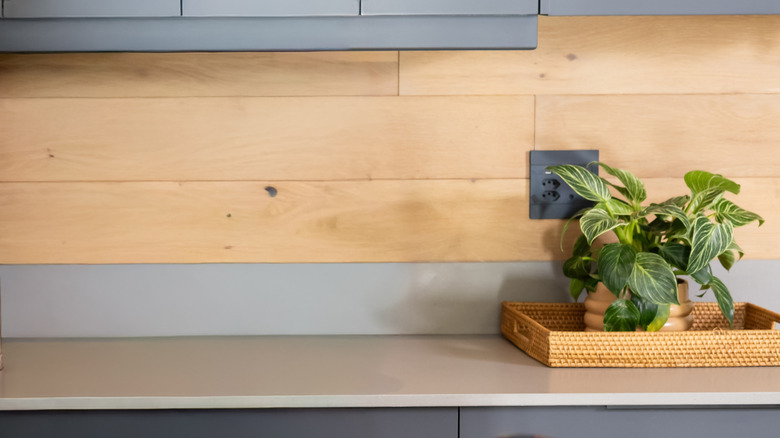
In addition to patterns and materials, the height of kitchen backsplashes is also under scrutiny in 2026. While things are trending towards more seamless countertop/backsplash integrations, there is one option that's been on the chopping block for a while — and it might finally meet its end this year. While some designers still enjoy them as a budget alternative to full backsplashes, shorter versions — typically around 4 inches — are considered by most to be outdated. In a Reddit thread from 2024, users mostly agreed that this style is well past its prime. "Absolutely outdated," said one, while another added: "They've been outdated for years already."
In reality, short backsplashes are hardly even backsplashes at all. Instead, they're more just pieces of stone that sit on the back of the countertop, providing just enough coverage to protect the wall. They are cheaper overall, which might be why they're hanging on, but this comes at a visual cost. Stay away from this dying trend, lest your kitchen look dated the second the renovation is finished.