

Ditch The Chemicals: The Companion Plant That'll Block Out Weeds In Your Tomato Garden
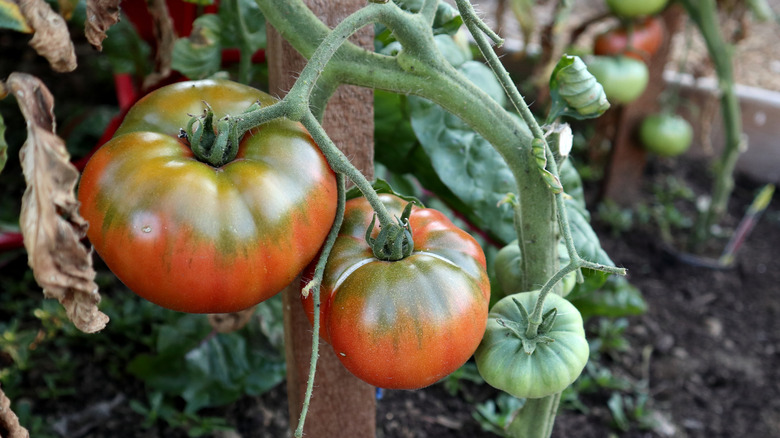
If you're hoping for a harvest of ripe tomatoes this year, then you need to keep up with the weeding. Weeds have the uncanny ability to pop up relentlessly, and the weeds in your tomato patch are particularly nefarious because they rob the plants of the nutrients needed to produce a good yield of fruit. To get rid of weeds, many turn to chemical herbicides. These are highly effective, but very often have negative side effects on the surrounding ecosystem. Instead, you should ditch the chemicals and sow white clover (Trifolium repens) as a companion plant for your tomatoes instead.
Companion plants mutually support one another by repelling pests, sharing nutrients, attracting pollinators, or, in the case of white clover, blocking out weeds. A member of the legume family that's hardy to USDA zones 3 to 10, white clover is often mistaken for grass owing to the fact that it grows in large swaths of luscious green. This vigorous growth is why white clover is so excellent as a ground cover companion plant for tomatoes. It creates a dense canopy that outcompetes the weeds and reduces the light they need to grow.
Other excellent companion plants for tomatoes include herbs like basil, parsley, and rosemary. As effective as they may be, those herbs are lacking in a key area where white clover excels: fixing nitrogen. See, white clover does more than just choke out weeds — it actually helps enrich the soil underneath to give you healthier tomato plants.
How to use white clover as living mulch for tomatoes
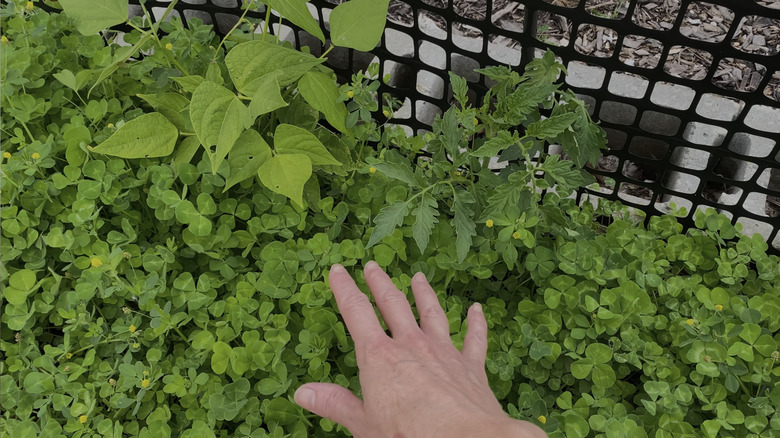
White clover is a living mulch that benefits the soil in numerous different ways. A living mulch is, by definition, a plant that acts as a ground cover, moisture retainer, and nutrient booster. In the case of white clover, that nutrient is nitrogen. What nitrogen does for plants is help them photosynthesize, which is vital to their health and growth. However, since plants cannot utilize atmospheric nitrogen, it needs to be converted into ammonia that can be absorbed by the roots. White clover, along with fellow self-seeding legumes like partridge peas, make that conversion possible.
In terms of planting your tomatoes and white clover together, you cannot sow both at the same time. Since white clover grows so quickly, it could easily shade out a young tomato plant the same way it would with weeds. As such, you will need to plant the clover first, then transfer a tomato plant start into the soil once the ground cover is established. If the clover begins to grow a little too high around your tomato plant, all you need to do is take some scissors and cut the clover back a little bit so the tomato can get light. It's easy to grow, and the presence of the mulch will make sure your tomatoes grow well and maintain a consistent level of moisture.