

Not Eggshells, Not Coffee Grounds: The Natural Fertilizer Pepper Plants Love
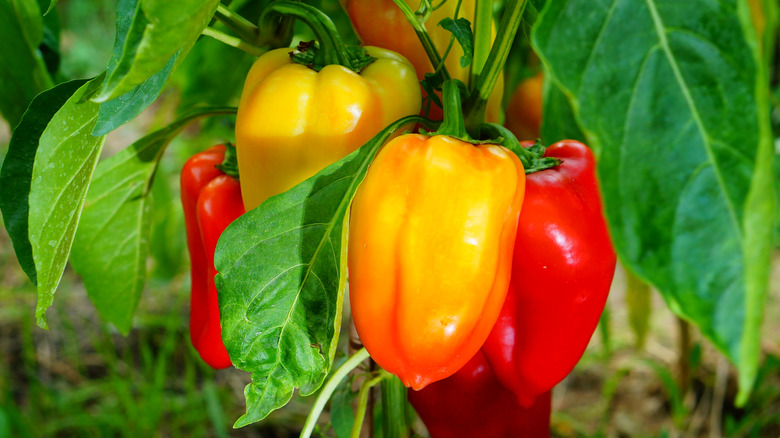
We're suckers for a DIY fertilizer made from kitchen scraps. Not only does it make use of something we would ordinarily consider waste, but it often serves as a super bioavailable source of nutrients for our plants. The primary nutrients plants need to prosper are nitrogen, phosphorous, and potassium. While you might use coffee grounds to give plants a boost of nitrogen, banana peels are an excellent source of potassium.
When it comes to peppers, these three nutrients are needed in different quantities at different stages of the growing season. As your plants start flowering, you're going to want your fertilizer to contain a little less on the nitrogen front, and a little more in the way of phosphorus and potassium. That's where your homemade banana fertilizer comes in.
The peel of a banana contains upwards of 1,000 milligrams of potassium — that's more than double the amount of potassium in an actual banana. Allowing the peel to slowly decompose in the soil beside your pepper gives the plants access to all that juice. And since potassium is a key factor in the transport of sugars, plants rely heavily on this process as they go into fruit-making mode. As their need for potassium kicks up, supplying them with all the goodies in banana peels can be in effective method in maximizing your yield as it supports the formation of blooms — and more blooms means more fruit!
How to use bananas to fertilize your peppers
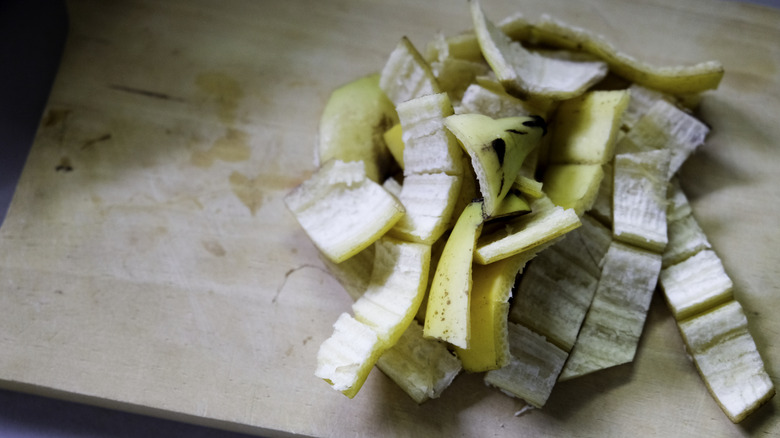
While you might use a fish emulsion or worm castings to boost phosphorus in your garden, bananas are your go-to guy for potassium. There are a few ways you can go about supplying your plants with a boost of banana's nutrients. As you go through your bananas for the week, save your peels in a tupperware or paper bag. It's totally okay that some of them will be dryer than others by the end of the week. Simply cut up the peels and bury them around the root systems of your pepper plants. In this scenario, the bananas slowly break down in the soil, supplying the plants roots with a steady stream of the sustenance they need to flower.
Alternatively, you can soak the peels in water and make a sort of compost tea to use when watering the plants. Folks typically recommend soaking peels at a 1:2 water-to-peels ratio for up to 3 days before combining it with more water to dilute it and using that to infuse plants with a boost of potassium. You might even boil the peels in the water for 30 to 40 minutes to break down the fibers right before straining them out. However, the efficacy of this method is up for debate, so burying the peels in the soil is our recommendation.